A trip through the city of Los Angeles reveals the largely overlooked challenges that people with physical disabilities must overcome.


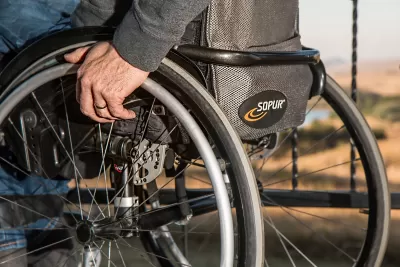
Nita Lelyveld spent a day navigating Los Angeles with two people who use wheelchairs, and she better understands the immense mobility obstacles that they face. "Yes, messy sidewalks are hard. But so are shops and restaurants with steps at their entrances. So are blocks that lack curb cuts or have ones that are poorly designed. So are broken elevators."
Lelyveld travels on the Red Line with David Radcliff, who has cerebral palsy. At one station, they find an elevator out of service, which means they cannot reach the street to exit the station. "So we had to backtrack to another station — which, because we’d already been through the turnstiles, meant we had to pay another fare to get back on a train. It was one headache of many."
She points out that these accessibility issues are invisible to many people, but they need to be recognized and addressed. "Because we all — individuals, urban planners, architects, developers, designers, city employees — need to work harder to make the way smoother for Radcliff, [Kat] Kath and others. And to think about how to more fully accommodate and respect those who have greater needs than the majority of us."
FULL STORY: Column: For L.A.’s disabled people, scooters and bad sidewalks aren’t the only hazards

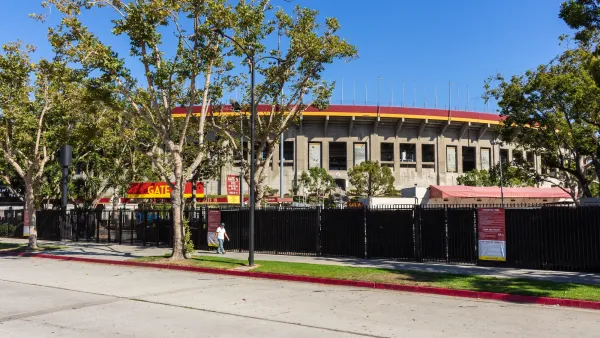
LA authorizes $9.5M for sidewalk repairs around Olympic venues
The city is hosting the Olympic and Paralympic Games in 2028.
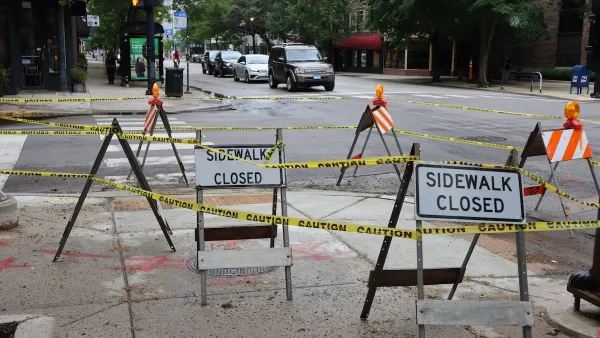
Chicago Residents Sue City Over Inaccessible Sidewalks
The suit alleges the city has failed to create a “coordinated, proactive system” for complying with ADA and ensuring accessibility on the city’s sidewalks and crosswalks.
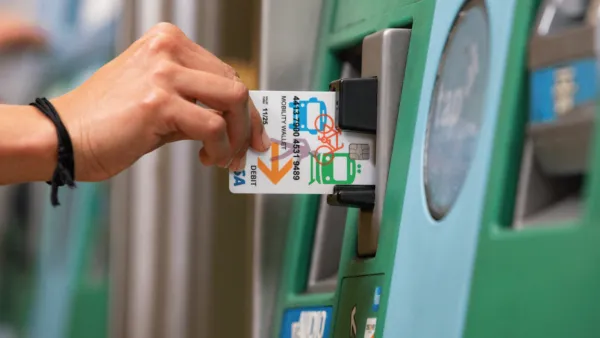
LA’s ‘Mobility Wallet’ Helps Bridge Transportation Gaps
The city gave 1,000 residents a $150 monthly transportation stipend that covered transit, bike share, ride hailing, and car rentals.

The state-sanctioned urbicide of Austin
People don’t kill cities. Freeways do.

US to reduce Colorado River water deliveries to Mexico
A new Colorado Treaty amendment reduces Mexico’s Colorado River water allocation by 250,000 acre feet.

New Jersey’s second-largest city bans standalone data centers
Jersey City will continue to allow co-location facilities, such as those meant for research institutions that store their own data.

Amtrak not solely to blame for New Jersey commuter rail's unreliability, report finds
A new study from the Garden State Initiative found that NJ Transit’s budget grew 20% across a 4 year period, but reliability declined significantly over the same period.

EPA erases limits on planet-warming pollution from power plants
Under Monday’s plan, power plants would still have some limits on how much mercury, arsenic and other contaminants they can emit.

Phoenix announces new on-demand transit service, more frequent RAPID buses
Both new services will launch in October, and are part of Phoenix's Project Effective Access Solutions for Easing Congestion.

FREE Course: Walkable City 1: Why Walkability?
After describing his path towards focusing on walkability as the essence of good planning, Jeff Speck marches through his five principal reasons for making more walkable places.
Reinventing Malls: Planning Alchemy—Turning Gray Fields Into Gold
The course focuses on the opportunities and imperatives that shape reinvention of mall sites.

Eagle County Government
Harvard University Graduate School of Design
Nashville Planning Department
The Architects Foundation
University of Cincinnati Online
The Pocatello Development Authority
The Urban Renewal Agency of the City of Pocatello
Journal of the American Planning Association