The Baltimore Sun Editorial Board finds numerous faults with the state of Maryland's preliminary investigation of an idea to add another bridge across the Chesapeake Bay near Annapolis.


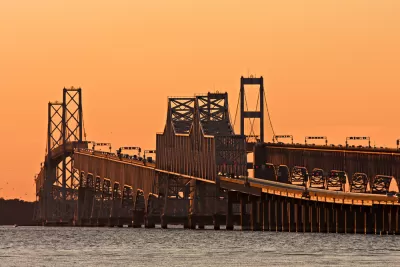
"Maryland’s $5 million study of how best to relieve congestion at the William Preston Lane Jr. Bridge, more commonly known as the Chesapeake Bay Bridge, has winnowed down the potential options regarding an additional bay crossing, and they are, with one exception, pretty ugly," according to an editorial written by the Baltimore Sun a few days after news broke about the state settling on three potential options for a new bridge.
The editorial helpfully clarifies specifics about the status of the plans, noting the preliminary and speculative nature of plans so far. When the plan encounters real world considerations like how to pay for the new bridge, the editorial suggests another alternative: not building anything at all.
Other real world considerations that would suggest a no-build option as the most prudent course include environmental and habitat protection. While the wetlands in the area have been shrinking as development spreads, the region is also vulnerable to sea-level rise.
The editorial's kicker is a scathing indictment of car-oriented transportation planning—a status quo Maryland Governor Larry Hogan has shown a preference for in multiple instances during his tenure.
Read the full story: The best place for a new Bay Bridge? Nowhere.

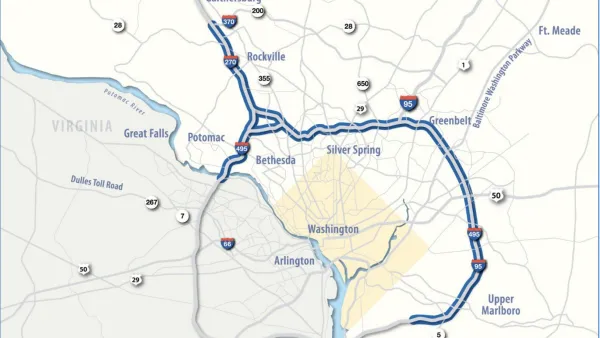
Maryland's Controversial Highway Widening Proposal Scaled Back
Interstate 270, the Capital Beltway, will no longer by widened as part of the I-495/I-270 Managed Lanes Project.
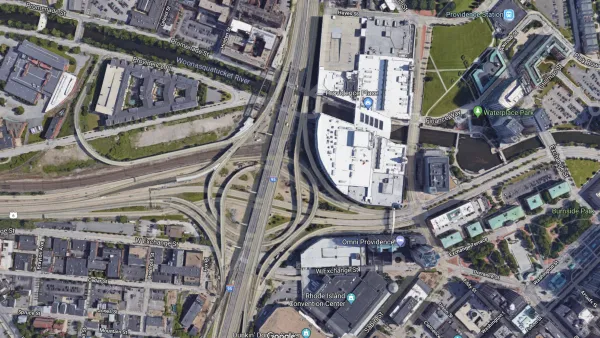
The Foundational Myth of America's Interstate Highway System
The erroneous belief that the negative impacts of interstate highways are simply "unintended consequences" fails to demand accountability for the project's failures.
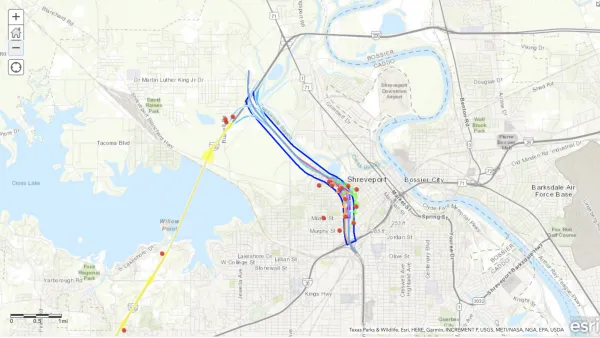
I-49 'Connector' Planned for Historic Black Neighborhood in Louisiana
A record of decision is expected soon for a plan to build a freeway connector through the neighborhood of Allendale in Shreveport, Louisiana.

Planetizen Federal Action Tracker
A weekly monitor of how Trump’s orders and actions are impacting planners and planning in America.

The state-sanctioned urbicide of Austin
People don’t kill cities. Freeways do.

US to reduce Colorado River water deliveries to Mexico
A new Colorado Treaty amendment reduces Mexico’s Colorado River water allocation by 250,000 acre feet.

Nation's most wind-powered state turns to coal as data centers increase energy demand
For the first time in decades, Iowa has increased its generation of coal power.

NYC cools commuters with city's first rain garden above a bus stop
New York City officials say the plants in the rain garden can absorb 16 gallons of rainwater during heavy storms.

Brightline West’s future may rely on $6 billion federal loan
The company has until Nov. 2 to make a $400 million equity investment into its proposed high-speed rail line.

FREE Course: Walkable City 1: Why Walkability?
After describing his path towards focusing on walkability as the essence of good planning, Jeff Speck marches through his five principal reasons for making more walkable places.
Reinventing Malls: Planning Alchemy—Turning Gray Fields Into Gold
The course focuses on the opportunities and imperatives that shape reinvention of mall sites.

Eagle County Government
Harvard University Graduate School of Design
Nashville Planning Department
The Architects Foundation
University of Cincinnati Online
The Pocatello Development Authority
The Urban Renewal Agency of the City of Pocatello
Journal of the American Planning Association