Drivers are a powerful enough lobby to overcome all evidence of the need to redesign streets for safety. Examples from Maryland and Virginia provide the latest case studies in Vision Zero futility.


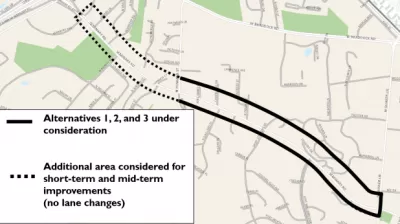
Canaan Merchant doesn't like the current trends in road safety politics in the Washington, D.C. region:
Some local road projects designed to calm traffic and increase safety for all users have been met with a surprising amount of resistence [sic]. Worse, regional officials seem to be prioritizing voices of opposition over actual studies, and it’s keeping our communities unsafe.
Traffic calming proposals in Alexandria, Virginia, and Montgomery County, Maryland were nixed after vocal opposition from drivers worried about delays, "despite evidence to the contrary," according to Merchant.
Merchant digs into the specifics of each example, where both jurisdictions made a choice that will knowingly lead to more death and injury, despite evidence that safety changes could be made with only a few seconds of delay for drivers. Merchant's conclusion from the process in both these examples: "the evidence doesn't seem to matter."
FULL STORY: These “road diets” would make streets safer and barely affect traffic. Why do people oppose them?

Cleveland Ready for Vision Zero
Cleveland is working to become the latest U.S. city to set a goal to eliminate traffic fatalities.
New York City Traffic Fatalities Pass 2019 Totals
The visions of a car-free utopia that might have seemed like a potential silver lining in March and April have given away to a tragic reality.
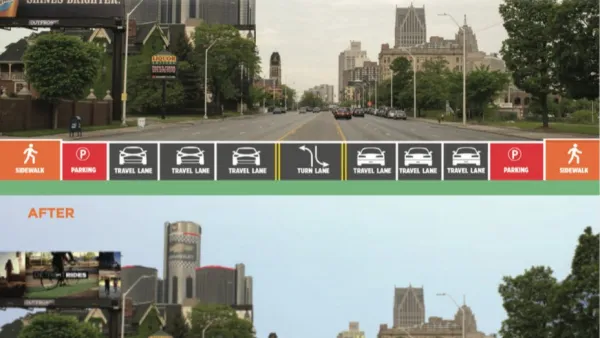
Major Street Reconfiguration Underway in Detroit
A $1 million project to reduce vehicle lanes on Detroit's Jefferson Boulevard is designed to increase safety along the busy corridor.

Planetizen Federal Action Tracker
A weekly monitor of how Trump’s orders and actions are impacting planners and planning in America.

The state-sanctioned urbicide of Austin
People don’t kill cities. Freeways do.

US to reduce Colorado River water deliveries to Mexico
A new Colorado Treaty amendment reduces Mexico’s Colorado River water allocation by 250,000 acre feet.

Mamdani overhauls NYC's Vision Zero plan with 100 new policy goals
The overhaul aims to reduce traffic deaths and make streets safer for pedestrians, cyclists and drivers through lower speed limits, new safety infrastructure and more.

Amtrak not solely to blame for New Jersey commuter rail's unreliability, report finds
A new study from the Garden State Initiative found that NJ Transit’s budget grew 20% across a 4 year period, but reliability declined significantly over the same period.

EPA erases limits on planet-warming pollution from power plants
Under Monday’s plan, power plants would still have some limits on how much mercury, arsenic and other contaminants they can emit.

FREE Course: Walkable City 1: Why Walkability?
After describing his path towards focusing on walkability as the essence of good planning, Jeff Speck marches through his five principal reasons for making more walkable places.
Reinventing Malls: Planning Alchemy—Turning Gray Fields Into Gold
The course focuses on the opportunities and imperatives that shape reinvention of mall sites.

Eagle County Government
Harvard University Graduate School of Design
Nashville Planning Department
The Architects Foundation
University of Cincinnati Online
The Pocatello Development Authority
The Urban Renewal Agency of the City of Pocatello
Journal of the American Planning Association