Regional governance and more bus lanes are needed to improve ridership, according to a new study.


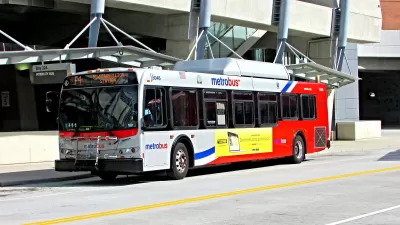
Faiz Siddiqui reports on initial findings from an analysis of Washington D.C.’s regional bus network that seeks to identify the reasons for declines in ridership.
The study, a joint effort between the Eno Center for Transportation and the Boston Consulting Group, finds that bus lanes have not been a priority in the metropolitan region and, as a result, bus speeds have decreased and led to $30 million of additional labor and fuel costs.
The analysis also provided detailed characteristics about Metrobus riders, who make up about three-quarters of the region’s bus riders. Almost half are low-income and travel during off-peak times, most live in the District, and 85 percent do not transfer to the rail system.
"[The project] will likely recommend a more regional governance structure and a clearer delineation of funding sources — rather than disparate jurisdictional bus subsidies covering routes in their municipalities," says Siddiqui.
Read the full story: Region’s bus network is too slow, complex, and increasingly threatened by competition, analysis says


Smartphone Fare Cards Now Available for D.C. Metro
The future is now.
No Quick Fixes for L.A.’s Transit Ridership Woes
One of the largest transit systems in the country continues to lose large numbers of riders. But the causes behind the drop and the solutions to stop it are hard to pinpoint.
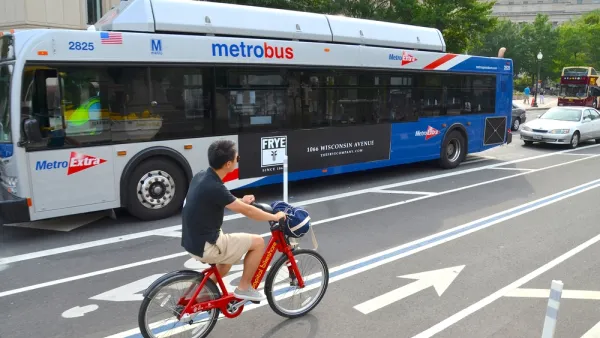
Report Lays Out a New Path for Bus Service in the D.C. Region
Ridership on the WMATA bus system, down an estimated 13 percent between 2012 and 2017, will need drastic innovations to reverse, according to a new report by the Bus Transformation project.

Planetizen Federal Action Tracker
A weekly monitor of how Trump’s orders and actions are impacting planners and planning in America.

California plans to bury El Niño’s downpour
If the state plays its cards right, it may be able to store a billion acre-feet of El Niño’s water in aquifers.

Desperate measures: Advocates weigh draining Lake Powell to fill Colorado River
Draining the reservoir could reduce evaporation losses by a couple hundred thousand acre-feet.

MTA gives itself 30 days to transform pit into basketball court
The site has been under construction since 2022; the city originally estimated it would finish the court in 2024.

Non-stop party: Chicago voters weigh permanent festival grounds
A stable place for bleachers, stages and drainage may streamline the setup and teardown of large events.

Metra may invest $9.1 billion in regional rail
The agency released a draft of a study examining potential ways to offer more frequent train service.

FREE Course: Walkable City 1: Why Walkability?
After describing his path towards focusing on walkability as the essence of good planning, Jeff Speck marches through his five principal reasons for making more walkable places.
Reinventing Malls: Planning Alchemy—Turning Gray Fields Into Gold
The course focuses on the opportunities and imperatives that shape reinvention of mall sites.


City of Rosemead
Rutgers University, Edward J. Bloustein School of Planning and Public Policy
One Hundred Miles
Hunter College, City University of New York (CUNY)
The Architects Foundation
University of Cincinnati Online
City of Cambridge
Montrose County
The Pocatello Development Authority