In Minneapolis and San Francisco, public transit agencies are considering loyalty programs to boost ridership.



Sallie Burnett, business consultant, argues that loyalty programs like those used by airlines, hotels, and other businesses could help increase transit ridership. She points to what she sees as successful pilot programs in Minneapolis and San Francisco. "One example is Minnesota's Ride to Rewards programs, the first public transit frequent rider program in the nation," Burnett writes in Forbes. 80% of participants in that program said the perks they accrued riding transit would make them more likely to ride in the future.
Rewards programs could also be used to shift demand, "BART Perks was a test program conducted in the Bay Area that experimented with offering customers rewards for using transit outside of peak travel times. It lasted six months and encouraged participants to shift their commute away from the peak time of 7:30 a.m. Nearly twice as many people signed up than predicted," Burnett writes. The program also had the secondary benefit of getting people to post about their commutes on social media pages. Connecticut and Nashville transit agencies have also experimented with loyalty programs.
Burnett think the industry has an opportunity to take advantage of a tactic that, when properly implemented, has proven in other industries to be successful.
FULL STORY: Can Loyalty Programs Reverse Declining Public Transit Ridership?

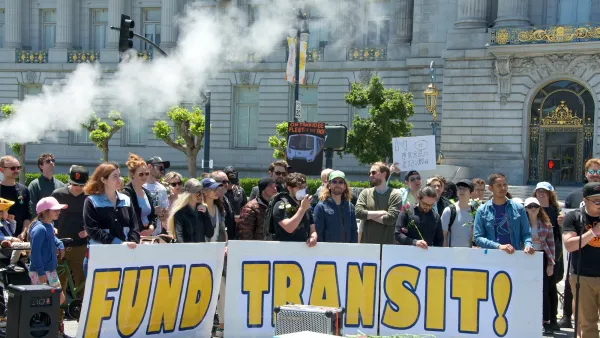
BART approves 2027 budget with no cuts, banking on November ballot measure for new funding
The Bay Area transit agency hopes to move forward without service cuts or fare increases.
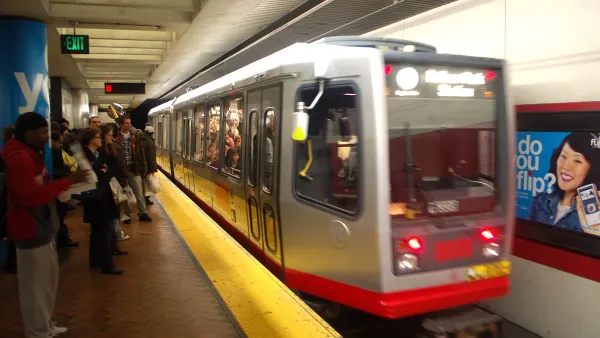
California Revives $750M Loan to Save Bay Area Transit
The state approved a $750 million loan as a stopgap measure to fund regional transit agencies until a 2026 ballot measure that could bring more permanent funding.
California Rejects Loan to Save Bay Area Transit
The state’s Department of Finance wants to extend negotiations about the loan, making it unlikely transit agencies will receive any assistance before the end of the year.

Planetizen Federal Action Tracker
A weekly monitor of how Trump’s orders and actions are impacting planners and planning in America.

The state-sanctioned urbicide of Austin
People don’t kill cities. Freeways do.

US to reduce Colorado River water deliveries to Mexico
A new Colorado Treaty amendment reduces Mexico’s Colorado River water allocation by 250,000 acre feet.

5 New England states march closer to 800 megawatt wind energy project
Securing federal approval for the project may be complicated under the Trump administration, which has historically been hostile towards domestic wind power.

Baltimore to break ground on $50 million Transit Priority Project
The project will bring faster bus trips, safer streets and better bike connections to Baltimore.

Airbnb launches $250 million 'last-dollar financing' housing accelerator, makes first investment in Austin
The company will put $6.4 million towards affordable housing development in Texas’ capital.

FREE Course: Walkable City 1: Why Walkability?
After describing his path towards focusing on walkability as the essence of good planning, Jeff Speck marches through his five principal reasons for making more walkable places.
Reinventing Malls: Planning Alchemy—Turning Gray Fields Into Gold
The course focuses on the opportunities and imperatives that shape reinvention of mall sites.

Eagle County Government
Harvard University Graduate School of Design
Nashville Planning Department
The Architects Foundation
University of Cincinnati Online
The Pocatello Development Authority
The Urban Renewal Agency of the City of Pocatello
Journal of the American Planning Association