With a tweet from the president on Saturday morning, the public learns that yet another embattled cabinet member will lose his job. Zinke, a former congressman from Montana, is the subject of numerous investigations and controversies.


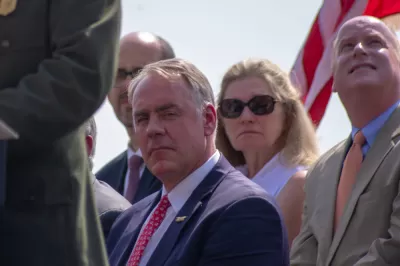
“Secretary of the Interior @RyanZinke will be leaving the Administration at the end of the year after having served for a period of almost two years,” Mr. Trump wrote on Twitter, report Julie Turkewitz and Coral Davenport for The New York Times. Zinke was tapped in December 2016 to be the nominee for Interior secretary.
Interior Secretary Ryan Zinke's departure comes amid numerous ethics investigations into his business dealings, travel and policy decisions. ... Mr. Trump had tolerated the seemingly endless drips of scandal surrounding Mr. Zinke in part because he liked him personally.
Zinke submitted his resignation, according to Washington Post reporters Juliet EilperinJosh Dawsey, Darryl Fears.
[T]he White House had been pushing Zinke to resign for weeks, administration officials said. Last month, these officials said, Zinke was told he had until the end of the year to exit or be fired.
"Rather than working across the aisle and across the country to preserve our country’s natural legacy, Zinke will be remembered for his corrupt behavior and his constant attacks on the lands, waters and wildlife that we all hold dear," stated Sierra Club Executive Director Michael Brune.
Similarities to another controversial cabinet member
In an Oct. 30 Times article about an inquiry into a Montana land deal involving Mr. Zinke and the chairman of the energy giant Halliburton, Davenport noted the comparison made to Scott Pruitt, former administrator of the Environmental Protection Agency, who resigned in July.
“It’s similar to Pruitt,” said Patrick A. Parenteau, an expert in energy and environment law at Vermont Law School. “It suggests someone who doesn’t really have a deep respect for law and procedure, who likes to cut corners and go right up to the edge of the law.”
Elections have consequences
Another factor that played into Zinke's decision to submit his resignation was the result of the midterm elections which saw the Democrats gain control of the House of Representatives. Zinke has feuded with Representative Raúl M. Grijalva (D-Tucson, Ariz.), the incoming chairman of the House Natural Resources Committee.
A few months ago, the White House Counsel’s Office indicated to some West Wing aides that officials would be less likely to be subpoenaed by the new House majority if they left before the new Congress was sworn in in January.
"[A]fter 30 years of public service, I cannot justify spending thousands of dollars defending myself and my family against false allegations," tweeted Zinke.
Replacement?
Waiting in the wings is Deputy Secretary David Bernhardt, also a subject of considerable controversy. "Democrats called him a 'walking conflict of interest' for representing corporate interests opposed to regulations at the department that aim to help clean air and water," notes a July 2017 post on his confirmation by the Senate.
FULL STORY: Ryan Zinke, Face of Trump Environmental Rollbacks, Is Leaving Interior Department

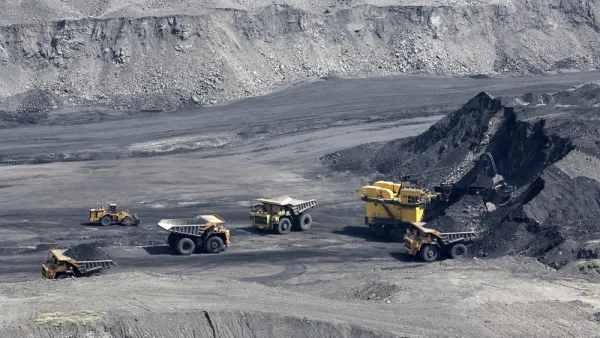
Judge Halts Sales of New Coal Mining Leases on Federal Lands
Once again, the president's efforts to undo his predecessor's environmental legacy were thwarted by a court ruling. In this case, the Interior Department's failure to conduct an environmental review of a Trump executive order ran afoul of NEPA.

Despite Bipartisan Opposition, Trump Administration Opens Offshore Oil and Gas Drilling
In a major blow to former President Obama's restrictions on offshore drilling in sensitive areas, Interior Secretary Ryan Zinke announced that he would open the Outer Continental Shelf in four regions: Pacific, Arctic, Atlantic, and the Gulf Coast.
Appeals Court Rebuffs Trump's EPA on Methane Emissions Suspension
In a win for the environment, a D.C. Circuit panel ruled that EPA Administrator Scott Pruitt could not arbitrarily suspend the starting date of a landmark Obama rule that would reduce methane emissions from new and modified oil and gas wells.

The state-sanctioned urbicide of Austin
People don’t kill cities. Freeways do.

US to reduce Colorado River water deliveries to Mexico
A new Colorado Treaty amendment reduces Mexico’s Colorado River water allocation by 250,000 acre feet.

New Jersey’s second-largest city bans standalone data centers
Jersey City will continue to allow co-location facilities, such as those meant for research institutions that store their own data.

Amtrak not solely to blame for New Jersey commuter rail's unreliability, report finds
A new study from the Garden State Initiative found that NJ Transit’s budget grew 20% across a 4 year period, but reliability declined significantly over the same period.

EPA erases limits on planet-warming pollution from power plants
Under Monday’s plan, power plants would still have some limits on how much mercury, arsenic and other contaminants they can emit.

Phoenix announces new on-demand transit service, more frequent RAPID buses
Both new services will launch in October, and are part of Phoenix's Project Effective Access Solutions for Easing Congestion.

FREE Course: Walkable City 1: Why Walkability?
After describing his path towards focusing on walkability as the essence of good planning, Jeff Speck marches through his five principal reasons for making more walkable places.
Reinventing Malls: Planning Alchemy—Turning Gray Fields Into Gold
The course focuses on the opportunities and imperatives that shape reinvention of mall sites.

Eagle County Government
Harvard University Graduate School of Design
Nashville Planning Department
The Architects Foundation
University of Cincinnati Online
The Pocatello Development Authority
The Urban Renewal Agency of the City of Pocatello
Journal of the American Planning Association