The Trump administration's denial of climate change may serve a political purpose, but in the courtroom, it can prove a liability. A federal judge in Montana took into account the administration's "discarding" of climate science in its ruling.



For the second time in three months, the U.S. District Court of Montana dealt a setback to Calgary-based TransCanada Corp. and the U.S. Department of State when Judge Brian Morris, an Obama appointee, on Nov. 9 "blocked all further work on the Keystone XL pipeline, saying the Trump administration had failed to justify its decision to reverse a prior decision by the Obama administration and to approve the tar sands oil delivery project," reports Phil McKenna for InsideClimate News.
"The Department instead simply discarded prior factual findings related to climate change to support its course reversal," states Morris in the 54-page ruling, "Indigenous Environmental Network v. United States Department of State." The ruling blocks construction on the 1,179-mile pipeline within the U.S. that terminates at Steele City, Neb.
The judge's decision underscored the value of the landmark National Environmental Policy Act (NEPA) as a tool for environmentalists at a time when the Trump administration is seeking a wholesale reversal of regulations that limit the use of fossil fuels or reduce the pollution they produce.
President Trump on Friday morning [Nov. 9] called the ruling "a political decision made by a judge. I think it's a disgrace." Trump added that the case will likely be appealed to the Ninth Circuit Court of Appeals and "we're slowly putting new judges in the Ninth Circuit."
Tom Goldtooth, executive director for the Indigenous Environmental Network, was not surprised by the decision.
"This decision vindicates what we have been saying all along: Trump's approval of this pipeline was illegal, violated environmental laws and was based upon fake facts," said Goldtooth.
“We’re thrilled with Judge Morris’s ruling today," said Becky Mitchell, chairwoman of the Northern Plains Resource Council, a conservation and family agriculture group that is a co-plaintiff whose name appears on the lawsuit [pdf].
"In essence, this decision sends TransCanada back to the drawing board. It’s nearly as good a ruling as we could have hoped for – he decided in our favor on almost all of our claims."
A TransCanada spokesperson said the company plans to continue moving forward on the project. "We remain committed to building this important energy infrastructure project," said Terry Cunha.
"The decision could thrust the White House into a contentious new legal battle over climate change," report Coral Davenport and Lisa Friedman in a more comprehensive article on the ruling for The New York Times.
The decision leaves plenty of room for the Trump administration or TransCanada...to appeal. Analysts said that if it did so armed with a deeply researched analysis arguing its position, it could well reverse the finding.
FULL STORY: Judge Blocks Keystone XL Pipeline, Says Climate Impact Can't Be Ignored

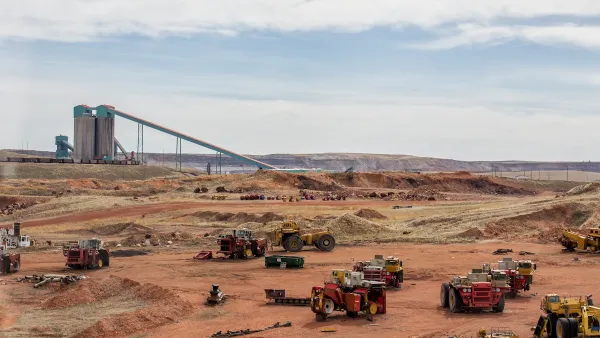
A Win for ‘Keep it in the Ground’
Coal mining in Wyoming will take a major hit as a result of a U.S. Department of Interior plan to cease future leasing of coal mines in the nation's most productive coal mining basin. The decision casts a spotlight on the presidential election.
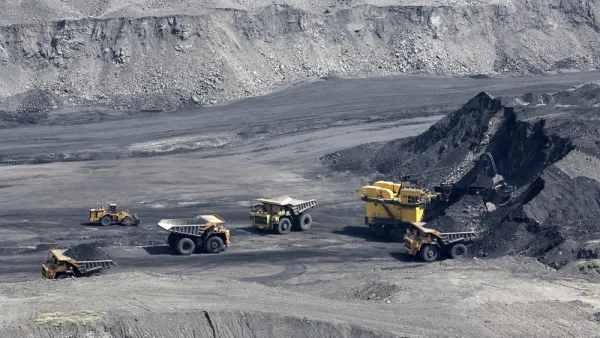
Judge Halts Sales of New Coal Mining Leases on Federal Lands
Once again, the president's efforts to undo his predecessor's environmental legacy were thwarted by a court ruling. In this case, the Interior Department's failure to conduct an environmental review of a Trump executive order ran afoul of NEPA.
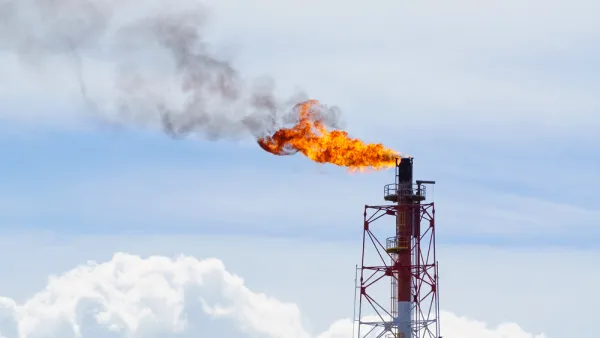
Big Oil Not Happy With Methane Regulation Rollback
The Trump administration's rollback on August 29 of an Obama-era regulation to reduce methane emissions in the production and distribution of oil and natural gas did not sit well with large oil and gas companies who see value in reducing emissions.

Planetizen Federal Action Tracker
A weekly monitor of how Trump’s orders and actions are impacting planners and planning in America.

The state-sanctioned urbicide of Austin
People don’t kill cities. Freeways do.

US to reduce Colorado River water deliveries to Mexico
A new Colorado Treaty amendment reduces Mexico’s Colorado River water allocation by 250,000 acre feet.

5 New England states march closer to 800 megawatt wind energy project
Securing federal approval for the project may be complicated under the Trump administration, which has historically been hostile towards domestic wind power.

Baltimore to break ground on $50 million Transit Priority Project
The project will bring faster bus trips, safer streets and better bike connections to Baltimore.

Airbnb launches $250 million 'last-dollar financing' housing accelerator, makes first investment in Austin
The company will put $6.4 million towards affordable housing development in Texas’ capital.

FREE Course: Walkable City 1: Why Walkability?
After describing his path towards focusing on walkability as the essence of good planning, Jeff Speck marches through his five principal reasons for making more walkable places.
Reinventing Malls: Planning Alchemy—Turning Gray Fields Into Gold
The course focuses on the opportunities and imperatives that shape reinvention of mall sites.

Eagle County Government
Harvard University Graduate School of Design
Nashville Planning Department
The Architects Foundation
University of Cincinnati Online
The Pocatello Development Authority
The Urban Renewal Agency of the City of Pocatello
Journal of the American Planning Association