The first examples of bus rapid transit built int he United States, all within the last ten years, are improving speeds and outperforming ridership projections, according to analysis by Streetsblog USA.


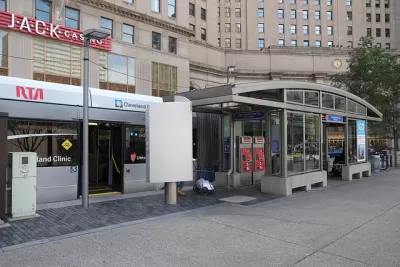
Angie Schmitt writes:
Last week, Cleveland celebrated the 10th anniversary of its famous Bus Rapid Transit line, the Healthline. Inspired by the success of Curitiba, Brazil’s famous Transmilenio BRT line, the project was meant to serve as a demonstration project for bus rapid transit in U.S. cities.
The “demonstration” worked as planned. Cleveland’s $200-million, nine-mile project has inspired cities around the country, including Albuquerque’s soon-to-open ART and Indianapolis’s under-construction Red Line, and Richmond’s just-opened “the Pulse.”
After noting the influence of the first bus rapid transit project, Schmitt goes on to check in on the performance of the other examples of bus rapid transit around the county, from Pittsburgh to Los Angeles to Eugene and Connecticut.
FULL STORY: America’s Early Bus Rapid Transit Systems Are Working Well

The HealthLine's Impact on Cleveland
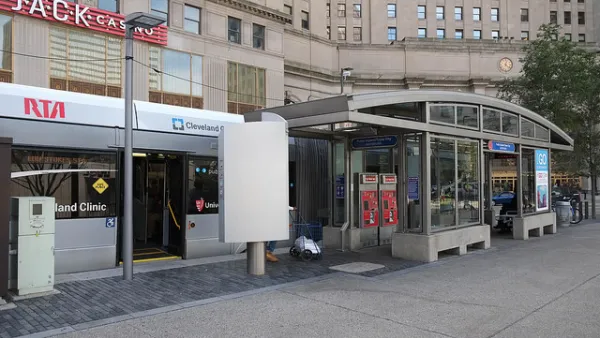
The bus rapid transit route known as the HealthLine has been in operation in Cleveland for ten years, with a measurably positive impact on the city, measured in development investment.
HealthLine Pumps Life into Cleveland
Cleveland's bus rapid transit system, called the HealthLine, only opened in 2008, but it has already shown signs of "stimulating economic growth significantly" along Euclid Avenue.
Learning From Cleveland's Healthline BRT
With a plan to distribute $775 million in federal funding for urban bus projects, Next American City's Yonah Freemark suggests using it to fund projects like Cleveland's Healthline BRT.

Planetizen Federal Action Tracker
A weekly monitor of how Trump’s orders and actions are impacting planners and planning in America.

The state-sanctioned urbicide of Austin
People don’t kill cities. Freeways do.

US to reduce Colorado River water deliveries to Mexico
A new Colorado Treaty amendment reduces Mexico’s Colorado River water allocation by 250,000 acre feet.

LA Metro’s ultimatum: no extra buses for LA28 if federal funding isn’t imminently secured
If Metro does not provide additional buses, LA28 organizers will have to find a new way to manage Olympic traffic. LA28’s budget does not include a line item for transit.

Colorado’s Largest Data Center Could Rise Next to Homes — Without a Public Hearing
The proposed campus would consume 11 times the power of Denver International Airport; as it has across the country, opposition mounts.

5 New England states march closer to 800 megawatt wind energy project
Securing federal approval for the project may be complicated under the Trump administration, which has historically been hostile towards domestic wind power.

FREE Course: Walkable City 1: Why Walkability?
After describing his path towards focusing on walkability as the essence of good planning, Jeff Speck marches through his five principal reasons for making more walkable places.
Reinventing Malls: Planning Alchemy—Turning Gray Fields Into Gold
The course focuses on the opportunities and imperatives that shape reinvention of mall sites.

Eagle County Government
Harvard University Graduate School of Design
Nashville Planning Department
The Architects Foundation
University of Cincinnati Online
The Pocatello Development Authority
The Urban Renewal Agency of the City of Pocatello
Journal of the American Planning Association