With a plan to distribute $775 million in federal funding for urban bus projects, Next American City's Yonah Freemark suggests using it to fund projects like Cleveland's Healthline BRT.


"The Federal Transit Administration's grants, which will be announced late this summer, will be distributed to local public transportation agencies based on merit after undergoing competitive review. Cities are already lining up for the money (Baltimore, Dallas, etc). Funding will go towards new buses, equipment, and facilities, of which local agencies will be expected to pick up 20% of costs. The Healthline sets a precedent worth examining: people will respond to nice buses, frequent services, and comfortable stations. It's nice to see Washington demonstrate its support of similar projects elsewhere."
Ridership has increased by 50% since the $200 million project opened in Fall of 2008. Freemark suggests that even though the project isn't particularly "rapid", new bus facilities and vehicles are a draw.
Read the full story: With a $775 million downpayment, the feds rush in to rescue bus service

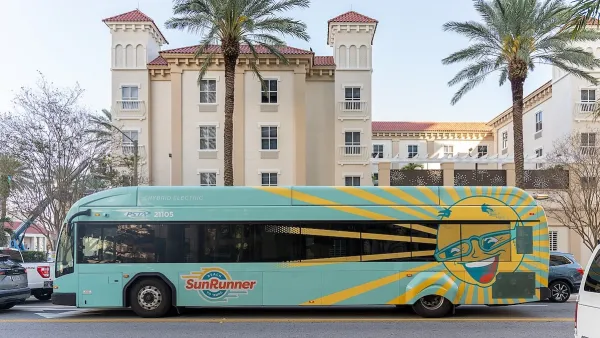
Florida DOT Orders Removal of St. Pete Bus Lane
The state says a popular BRT line has increased crashes and traffic on a state-owned portion of its corridor, prompting it to call for its reversal.

Miami to Launch America's First Fully Electric Bus Rapid Transit Line
The project, led by Miami-Dade County, will link Dadeland South to Florida City via a 20-mile dedicated lane.
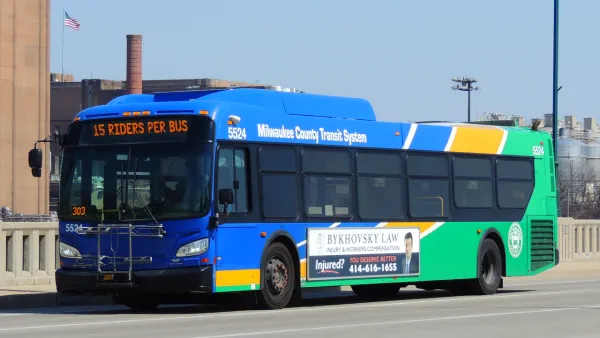
Postponed Milwaukee BRT Project at Least a Decade Away
The county’s transit system won’t pursue a second rapid bus line due to financial constraints.

Planetizen Federal Action Tracker
A weekly monitor of how Trump’s orders and actions are impacting planners and planning in America.

California plans to bury El Niño’s downpour
If the state plays its cards right, it may be able to store a billion acre-feet of El Niño’s water in aquifers.

Chicago breaks ground on $3 billion megadevelopment
The new neighborhood, titled Foundry Park, will one day host 3,700 residences.

California High-Speed Rail Authority CEO resigns after $600,000 scandal
Under Ian Choudri, the authority used taxpayer dollars to fund first class flights and trips to nightclubs.

Want to study the Missouri River? Soon, you may need unanimous approval from 10 states
Legislation would require 10 governors’ permission to study or build projects moving water outside the basin.

Desperate measures: Advocates weigh draining Lake Powell to fill Colorado River
Draining the reservoir could reduce evaporation losses by a couple hundred thousand acre-feet.

FREE Course: Walkable City 1: Why Walkability?
After describing his path towards focusing on walkability as the essence of good planning, Jeff Speck marches through his five principal reasons for making more walkable places.
Reinventing Malls: Planning Alchemy—Turning Gray Fields Into Gold
The course focuses on the opportunities and imperatives that shape reinvention of mall sites.

City of Rosemead
Rutgers University, Edward J. Bloustein School of Planning and Public Policy
One Hundred Miles
Hunter College, City University of New York (CUNY)
The Architects Foundation
University of Cincinnati Online
City of Cambridge
Montrose County
The Pocatello Development Authority