The state of a city's bus stops is a good indicator of its commitment to public transit option as a mobility option for all its residents.


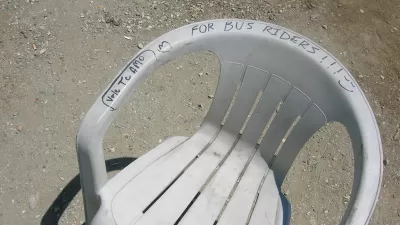
TransitCenter's new "From Sorry to Superb" report details the ways transit agencies can improve that critical element of bus service: the bus stop.
"From Sorry to Superb" details how transit agencies and cities build great bus stops by showcasing ways in which transit agencies can work with city staff. Case studies, informed by policy documents and interviews with experts, explore how five regions — Minneapolis St-Paul, Portland, Pittsburgh, Los Angeles, and New York City — manage their bus stops.
According to the report, declining bus and transit ridership require immediate attention to the condition of bus stops. Research suggests that better stops and walks to stops can encourage ridership and improve the transit experience.
As for what makes a bus stop a success, when done right, the report lists "amenities such as benches, shelters, and trash cans; information on schedules, service, wayfinding; and sidewalks and lighting nearby."
The report then recommends action items for cities and transit agencies, organized into a five-step list.
Read the full story: From Sorry to Superb: Everything You Need to Know about Great Bus Stops

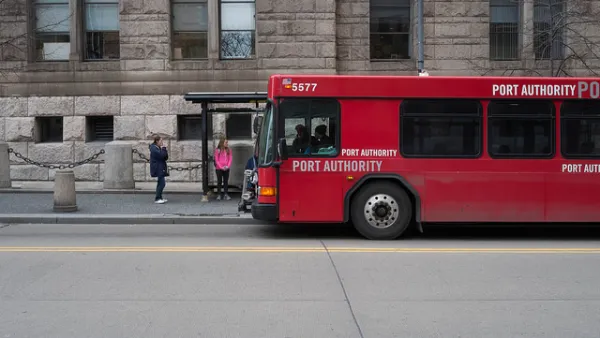
Systemwide Evaluation of Bus Stops Underway in the Pittsburgh Region
The Port Authority of Allegheny County is evaluating how to make improvements at
Suburban Detroit Achieves Long-Awaited Bus Service Expansion
Novi and Bloomfield Hills in Southeast Michigan will have transit service for the first time in 28 years.
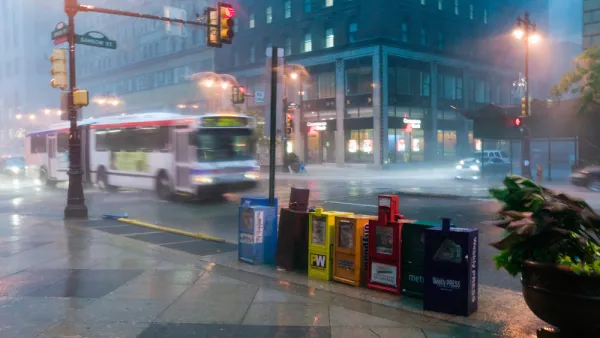
The Bus Revolution Has Been Revised in Philadelphia
The Southeastern Pennsylvania Transportation Authority went back to the drawing board with its Bus Revolution system redesign after an initial round of feedback completed earlier this year.

Planetizen Federal Action Tracker
A weekly monitor of how Trump’s orders and actions are impacting planners and planning in America.

‘Going backwards:’ Baltimore mayor, students rally against state's transit funding plan
Maryland's proposed six-year plan provides no funding for Baltimore’s BMORE bus program and reduces its road maintenance funding.

Detroit to transform waterfront with $2.2 billion investment
Developers will convert about 18 acres of unused parking lot space into civic spaces.

Californians can now transform balconies into power generators
Gov. Gavin Newsom has legalized plug-in solar technology, which allows residents to plug solar panels directly into their outlets

85-year-old ranch is Texas’ newest state park
The 650 acre ranch is one of the largest parcels of land along Lake Palestine.

MIT to create AI-powered hub for public transportation companies
Google awarded the project, titled the Public Transit Intelligence Hub, $2.1 million in funding.

FREE Course: Walkable City 1: Why Walkability?
After describing his path towards focusing on walkability as the essence of good planning, Jeff Speck marches through his five principal reasons for making more walkable places.
Reinventing Malls: Planning Alchemy—Turning Gray Fields Into Gold
The course focuses on the opportunities and imperatives that shape reinvention of mall sites.

City of Thousand Oaks
City of Wisconsin Rapids
Harvard University Graduate School of Design
The Architects Foundation
University of Cincinnati Online
Northern Illinois Transit Authority (NITA)
The Pocatello Development Authority
The Urban Renewal Agency of the City of Pocatello