Transportation investment is struggling to keep pace with population growth.


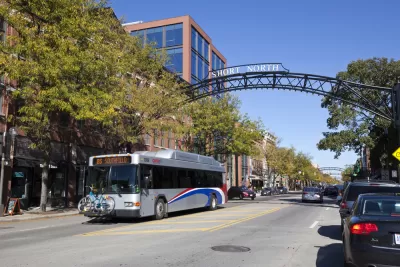
The Columbus Dispatch reports on "modest gains" over the past few years in tackling congestion and promoting sustainable transportation options in Central Ohio. Patrick Cooley explains that while there was a dip in the percentage of commuters who drive, that small achievement was offset by a growth in the overall number of commuters driving.
The Mid-Ohio Regional Planning Commission, using census data, found that the proportion of Franklin County commuters who drive alone to work fell to 81.2 percent, from 81.7 percent, between 2007 and 2016. It's a small decrease, but it reversed an upward trend. However, the total number of people driving alone to work actually increased in that time, to 503,180 from 463,043.
Some of the share of drivers went to public transit ridership, through programs like free bus passes for employees of Downtown businesses and more than doubling the number of high-frequency lines, among other initiatives. Some also went to cycling, with the addition of bike lanes on major streets. But both options are still difficult to access outside of urban cores, Cooley reports.
FULL STORY: Little progress in cutting central Ohio congestion

Congestion Costing Reality Check, Part 2: A congestion costing critique
There are good reasons to be skeptical of highway industry claims that traffic congestion is a growing problem. Their analysis is often incomplete and biased. Let’s pull back the curtain on some major congestion cost studies.
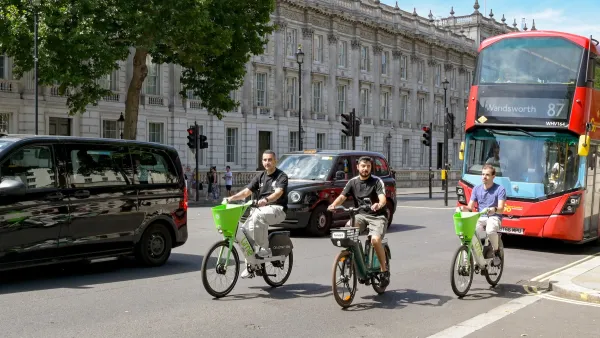
Bike use in London grew by 43% since 2019, but car use remains roughly the same
The city's efforts to reduce car use have stalled despite ambitious programs like congestion pricing and low-traffic neighborhoods.
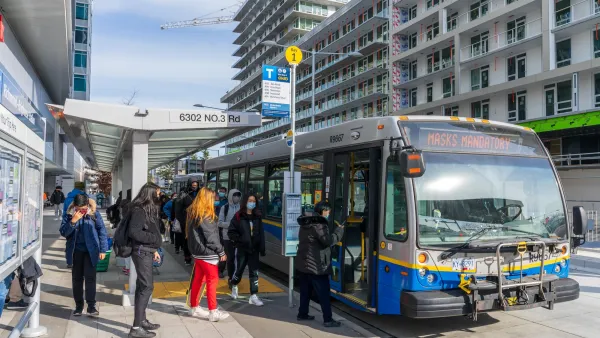
Why “Full Buses are a Car Commuter’s Dream”
Even a 5-10% drop in cars on the road can dramatically ease congestion, making healthy transit systems a win-win for transit users and drivers alike.

Planetizen Federal Action Tracker
A weekly monitor of how Trump’s orders and actions are impacting planners and planning in America.

The state-sanctioned urbicide of Austin
People don’t kill cities. Freeways do.

US to reduce Colorado River water deliveries to Mexico
A new Colorado Treaty amendment reduces Mexico’s Colorado River water allocation by 250,000 acre feet.

5 New England states march closer to 800 megawatt wind energy project
Securing federal approval for the project may be complicated under the Trump administration, which has historically been hostile towards domestic wind power.

Baltimore to break ground on $50 million Transit Priority Project
The project will bring faster bus trips, safer streets and better bike connections to Baltimore.

Airbnb launches $250 million 'last-dollar financing' housing accelerator, makes first investment in Austin
The company will put $6.4 million towards affordable housing development in Texas’ capital.

FREE Course: Walkable City 1: Why Walkability?
After describing his path towards focusing on walkability as the essence of good planning, Jeff Speck marches through his five principal reasons for making more walkable places.
Reinventing Malls: Planning Alchemy—Turning Gray Fields Into Gold
The course focuses on the opportunities and imperatives that shape reinvention of mall sites.

Eagle County Government
Harvard University Graduate School of Design
Nashville Planning Department
The Architects Foundation
University of Cincinnati Online
The Pocatello Development Authority
The Urban Renewal Agency of the City of Pocatello
Journal of the American Planning Association