A political decision by the Texas Transportation Commission last December to drop projects which included toll lanes was thought to doom 15 road expansions from their 10-year capital plan, but some will go forward with HOV as opposed to HOT lanes.


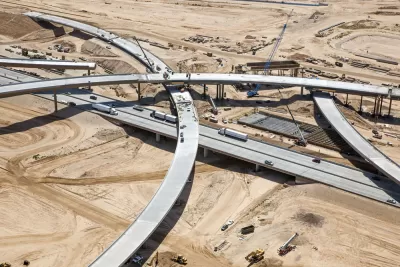
Last December, the Texas Transportation Commission, reacting to pressure from Gov. Greg Abbott and Lt. Gov. Dan Patrick to not spend funds from statewide propositions passed by voters in 2014 and 2015 on express lanes, voted 5-0 to eliminate 15 express lane projects from their 10-year capital plan. Neither ballot measures created new revenue. Instead, both divert existing funding streams (the state's Rainy Day Fund and sales taxes, respectively,) to roads and prohibit spending the revenue on toll lanes.
Ben Wear, who covers transportation for the Austin American-Statesman, reports that some projects will be expanded after all, though not as originally planned.
In a major departure from previously announced proposals, though, the $8.1 billion overhaul of I-35 through Central Texas would include the addition from Round Rock to Buda of nontolled managed lanes in each direction. In practice, that would mean high occupancy vehicle [HOV] lanes — sometimes referred to as carpool lanes — that only vehicles with at least two or perhaps three people aboard would be allowed to use.
The Texas Department of Transportation and local legislators had previously said the addition of lanes to I-35 would be possible financially only with tolls — and the borrowing that charging tolls allows. Now, TxDOT’s “unified transportation plan” [sic] for fiscal 2019 through fiscal 2028 assumes that the agency eventually will expand I-35 without charging tolls.
Motorists may be pleased to hear that "relief" is coming, but Wear reports that TxDOT lacks most of the funds. "How the agency will come up with the lion’s share of the I-35 project’s cost, and when, remains undetermined in this year’s version of the plan," he adds.
Implications beyond financing
Dropping the toll lanes, also known as express or TEXpress Lanes, means limiting access and forfeiting a valuable congestion management strategy. Depending on the roadway and time-of-day, carpools either received free or 50% discounted access to the toll lanes, also generically called high occupancy toll (HOT) lanes if they benefit carpoolers, which not all do.
Solo drivers can access the express lanes that utilize variable congestion-management pricing to ensure traffic speeds of at least 50 miles per hour. Solo drivers who access the carpool lanes risk a hefty fine, and the carpool lane itself will lack the management provided by dynamic tolling.
Extra revenue
TxDOT, "which had estimated it would get $770 million through Proposition 1 this year, instead will get about $1.3 billion, officials said, because of increasing oil prices and production," adds Wear.
Proposition 7 will direct state sales tax of $2.5 billion, a figure estimated to climb in the coming years, to TxDOT, and the agency now receives another $500 million or more each year in gasoline taxes that previously had been allocated to the Texas Department of Public Safety.
Another project Wear mentions is the U.S. 183 expansion in North Austin which would add two tolled lanes and one general purpose lane.
However, the plan now calls for the Central Texas Regional Mobility Authority to undertake the project on its own, with bonded debt.
Related posts:
-
Huge Toll Lane Setback in Texas: December 19, 2017In a landmark, unanimous vote, the Texas Transportation Commission eliminated all 15 express lane projects from their 10-year capital plan despite pleas from Austin area officials to retain the $8 billion, I-35 project that includes four toll lanes.
-
Interstate 35 through Central Austin would be transformed into a three-level roadway with toll lanes in the middle, according to an 8.1 billion vision proposed by TxDOT.
-
Big Expansion Approved for Austin-Area Highway: February 10, 2016The Transportation Policy Board of the Capital Area Metropolitan Planning Organization approved a big spending increase for a project to widen U.S. Highway 183.
Hat tip to IBTTA Smart Brief.
FULL STORY: TxDOT plan now foresees no tolls on I-35 expansion in Central Texas

Huge Toll Lane Setback in Texas
In a landmark, unanimous vote, the Texas Transportation Commission eliminated all 15 express lane projects from their 10-year capital plan despite pleas from Austin area officials to retain the $8 billion, I-35 project that includes four toll lanes.
$8 Billion Transportation Vision for Austin: Three-Level Freeway, Tollway
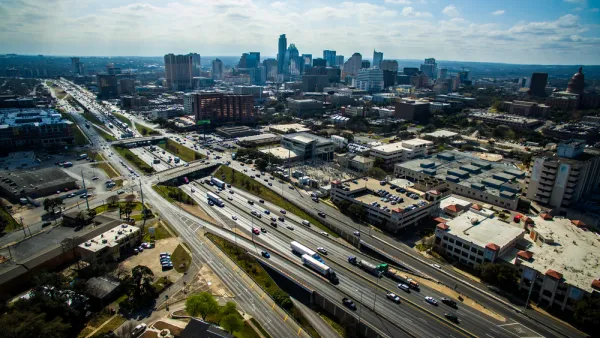
Interstate 35 through Central Austin would be transformed into a three-level roadway wIth toll lanes in the middle, according to an 8.1 billion vision proposed by TxDOT.
When Carpool Lanes Cause Mayhem
A newly widened Bay Area freeway serves as a reminder of the futility of HOV lanes. There are better ways to manage and mitigate traffic.

The state-sanctioned urbicide of Austin
People don’t kill cities. Freeways do.

US to reduce Colorado River water deliveries to Mexico
A new Colorado Treaty amendment reduces Mexico’s Colorado River water allocation by 250,000 acre feet.

New Jersey’s second-largest city bans standalone data centers
Jersey City will continue to allow co-location facilities, such as those meant for research institutions that store their own data.

Amtrak not solely to blame for New Jersey commuter rail's unreliability, report finds
A new study from the Garden State Initiative found that NJ Transit’s budget grew 20% across a 4 year period, but reliability declined significantly over the same period.

EPA erases limits on planet-warming pollution from power plants
Under Monday’s plan, power plants would still have some limits on how much mercury, arsenic and other contaminants they can emit.

Phoenix announces new on-demand transit service, more frequent RAPID buses
Both new services will launch in October, and are part of Phoenix's Project Effective Access Solutions for Easing Congestion.

FREE Course: Walkable City 1: Why Walkability?
After describing his path towards focusing on walkability as the essence of good planning, Jeff Speck marches through his five principal reasons for making more walkable places.
Reinventing Malls: Planning Alchemy—Turning Gray Fields Into Gold
The course focuses on the opportunities and imperatives that shape reinvention of mall sites.

Eagle County Government
Harvard University Graduate School of Design
Nashville Planning Department
The Architects Foundation
University of Cincinnati Online
The Pocatello Development Authority
The Urban Renewal Agency of the City of Pocatello
Journal of the American Planning Association