Lots of dollar signs were flying around on Texas ballots last week, many of which were headed toward road construction measures. The Houston Chronicle, however, points out the shortcomings of the state's patterns of investment.


Dug Begley provides less-than-complimentary commentary on the suite of transportation funding measures on the ballot last week in Texas.
"By huge margins," reports Begley to open the article, "voters Tuesday seized on every opportunity they had to give local and state officials authority to fix ailing highways and county roads. These results, many said, reflect frustration with congestion and a willingness to authorize spending for transportation projects – as long as they don’t directly take more money from voters' pockets."
Voters in Harris and Montgomery counties approved massive road bond measures, of $700 million and $280 million, respectively. Bonds mean borrowing, as Begley points out. "Moreover, the spending is narrowly focused on roads rather than other transportation improvements. Tollways and transit projects were excluded, leaving advocates of public transit and compact development frustrated," adds Begley.
The problem at the state level, according to Begley, is that in its rush to prevent any new taxes, Texas is playing a shell game: "Prop. 7, which passed with more than 80 percent of the vote, moves sales tax money to transportation. That ultimately leaves state legislators less to spend on other government functions."
The article goes on to describe in some detail the current political climate surrounding questions of transportation spending. While car-centric investments are the status quo, public transit has made small gains, with sometimes mixed reviews. Begley closes by noting that officials in the Houston area have already planned for the funding Prop 7 will bring, "[b]ut only time will tell how long those solutions will last before voters demand another round of relief, and whether that set of solutions look a lot like the past ones."
Read the full story: Road spending popular, but effects can be fleeting

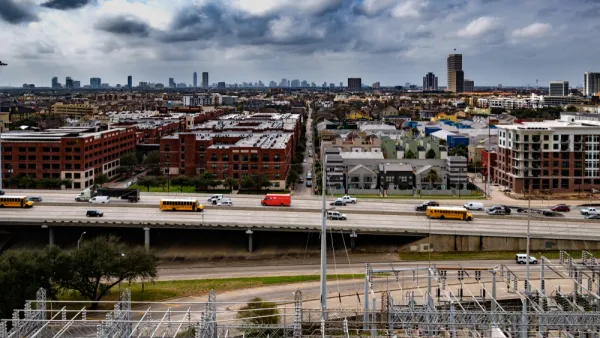
Houston Could End Homelessness With Less Than 2,000 Housing Units
Houston's homeless response program has yielded strong results in the last few years. Just 1,900 new affordable housing units could 'effectively end' homelessness in the city.
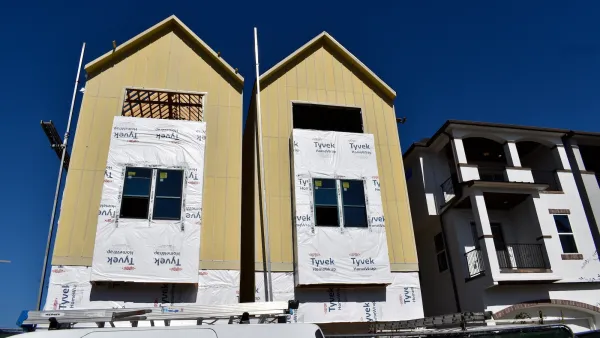
Multifamily construction in the Houston area grew by 4.2% last year, outpacing single-family builds
Harris County added over 30,000 new multifamily housing units in 2024.
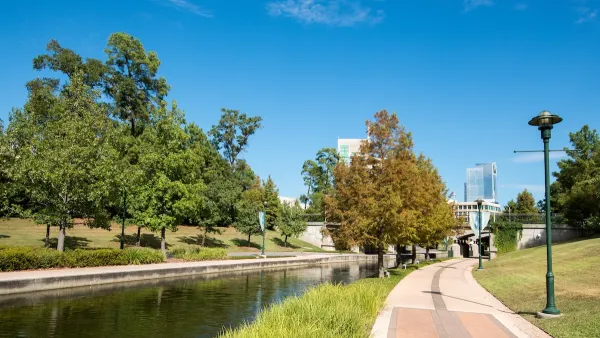
Retro-silient?: America’s First “Eco-burb,” The Woodlands Turns 50
A master-planned community north of Houston offers lessons on green infrastructure and resilient design, but falls short of its founder’s lofty affordability and walkability goals.

Planetizen Federal Action Tracker
A weekly monitor of how Trump’s orders and actions are impacting planners and planning in America.

Amtrak, CN end decades-long dispute with eight-year agreement
The new operating agreement establishes an updated framework for the companies to work together, including processes to resolve disputes.
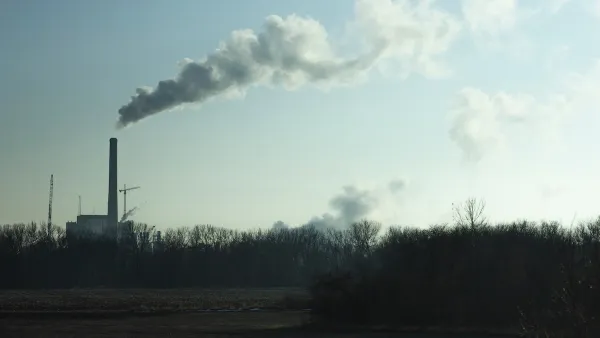
Nation's most wind-powered state turns to coal as data centers increase energy demand
For the first time in decades, Iowa has increased its generation of coal power.

Alabama scores up to $2.5 billion federal loan for largest infrastructure project in state’s history
The Mobile River Bridge and Bayway Project aims to ease congestion at Alabama’s worst bottleneck.

Trump is considering data centers on 6 states' public land — some state officials say they had no idea
If the administration approves the proposed projects, data center and data center-related developments will cover 17,600 acres of public land.

Despite court ruling, Trump is keeping nearly all wind projects in the US on hold
At least 110 wind energy projects have not heard from the government since a federal judge ruled that the Trump administration's freeze on wind turbine clearances was likely illegal.

FREE Course: Walkable City 1: Why Walkability?
After describing his path towards focusing on walkability as the essence of good planning, Jeff Speck marches through his five principal reasons for making more walkable places.
Reinventing Malls: Planning Alchemy—Turning Gray Fields Into Gold
The course focuses on the opportunities and imperatives that shape reinvention of mall sites.

KFH Group Inc.
Greater Baltimore Committee
Eagle County Government
The Architects Foundation
University of Cincinnati Online
The Pocatello Development Authority
The Urban Renewal Agency of the City of Pocatello