Three solutions for bridging the San Francisco transit agency’s budget gap without reducing service for transit-dependent riders.


In a piece for the San Francisco Chronicle, Joe DiMento outlines some ways the city’s Municipal Transportation Agency (Muni) could reduce its massive budget deficit — without cutting service.
It’s a fiscally fraught time. Yet San Franciscans should ask themselves why bus and train service are on the chopping block even as we continue to subsidize the most expensive, inequitable and polluting mode of transportation in the city: the private car.
For DiMento, one of the solutions to the transit agency’s woes lie in the cost of parking. “San Francisco has about 275,500 on-street spaces, but only 10% are metered. The rest are largely free, and permit zones are limited in their geographic coverage.” By adjusting the cost of parking to more closely reflect its actual cost, the agency could significantly reduce its deficit.
Another option for transit funding: congestion pricing. DiMento points to the success of New York City’s program, which despite all the controversy surrounding it has reduced traffic by 13 percent and funded critical MTA projects.
A third proposed solution: extending the hours for the city’s metered parking spots. “We cannot keep asking transit riders to pay more and get less while car owners enjoy vast subsidies and free rein over public space.”
FULL STORY: Three ideas to save S.F. Muni that have nothing to do with cutting service


San Francisco Muni Raises Fares a Second Time
A 10–cent fare hike for adults is part of the agency’s plan to chip away at a growing budget deficit.

San Francisco’s Muni Ridership Grew in 2024
The system saw its highest ridership since before the Covid-19 pandemic, but faces a severe budget shortage in the coming year.
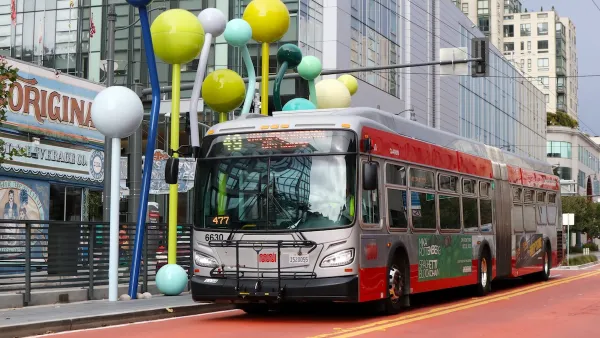
Opinion: San Francisco Needs a Well-Funded Transit System
Muni ridership is above pre-pandemic levels on some lines. Why is the agency still considering service cuts?

The state-sanctioned urbicide of Austin
People don’t kill cities. Freeways do.

US to reduce Colorado River water deliveries to Mexico
A new Colorado Treaty amendment reduces Mexico’s Colorado River water allocation by 250,000 acre feet.

New Jersey’s second-largest city bans standalone data centers
Jersey City will continue to allow co-location facilities, such as those meant for research institutions that store their own data.

Amtrak not solely to blame for New Jersey commuter rail's unreliability, report finds
A new study from the Garden State Initiative found that NJ Transit’s budget grew 20% across a 4 year period, but reliability declined significantly over the same period.

EPA erases limits on planet-warming pollution from power plants
Under Monday’s plan, power plants would still have some limits on how much mercury, arsenic and other contaminants they can emit.

Phoenix announces new on-demand transit service, more frequent RAPID buses
Both new services will launch in October, and are part of Phoenix's Project Effective Access Solutions for Easing Congestion.

FREE Course: Walkable City 1: Why Walkability?
After describing his path towards focusing on walkability as the essence of good planning, Jeff Speck marches through his five principal reasons for making more walkable places.
Reinventing Malls: Planning Alchemy—Turning Gray Fields Into Gold
The course focuses on the opportunities and imperatives that shape reinvention of mall sites.

Eagle County Government
Harvard University Graduate School of Design
Nashville Planning Department
The Architects Foundation
University of Cincinnati Online
The Pocatello Development Authority
The Urban Renewal Agency of the City of Pocatello
Journal of the American Planning Association