In a city not known for its public transit, the 48.5-mile A Line is the longest of its kind on the planet.



When you think of the longest light rail line on earth, Los Angeles may not be the first location that comes to mind — yet that’s exactly what the City of Angels boasts with its A Line, a 48.5-mile rail line with 44 stops that runs from Long Beach to Azusa.
As Jamie Ferrell explains in Secret Los Angeles, the line broke the record in 2023, when the Regional Connector project created more seamless connections in the region’s rail system.
The A Line carries about 15 million riders each year with a 2-hour journey from Downtown Long Beach to Azusa. Starting in Long Beach, the route heads north through South L.A., entering Downtown L.A. at Pico before reaching Union Station. From there, it turns north up to Pasadena, crosses the San Gabriel Valley, and finally reaches its northern terminus at APU/Citrus College in Azusa.
The route will get even longer soon: the Foothill Extension project will extend the line to Pomona, and eventually Claremont and Montclair for a total of 58 miles.
FULL STORY: Los Angeles Quietly Built The Longest Light Rail Line On Earth—And It’s Adding 4 New Stops This Summer

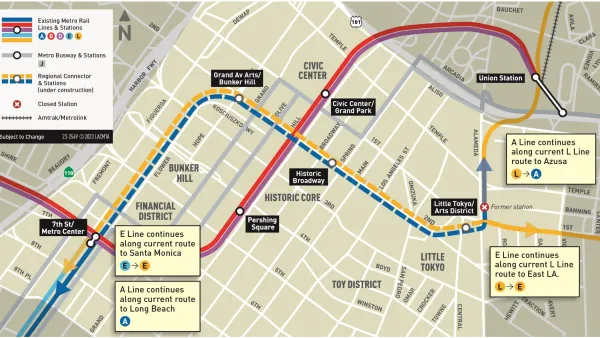
Newly Opened Regional Connector Redefines Light Rail Transit in Los Angeles
Three rail lines have become two rail lines in Los Angeles, providing one-seat rides from four corners of Los Angeles County.
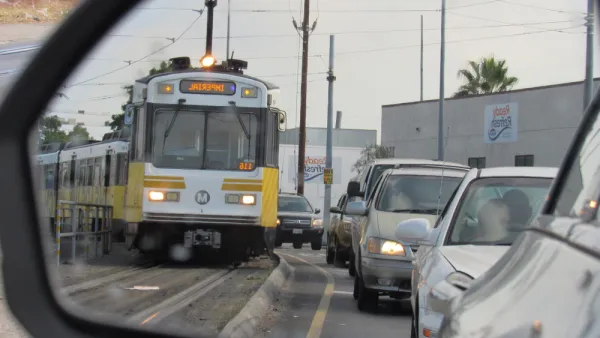
Light Rail Repair Project Falls Short of Promises in Los Angeles
The former Blue Line, now the A Line, with service from Log Beach to Los Angeles, was shut down in segments for ten months (originally scheduled for eight) for repairs. The weeks since the reopening have been marred spotty, slow service.
L.A.'s Blue Line Reopening Soon, With a New Name
The Blue Line light rail line, connecting Los Angeles and Long Beach, is almost finished with a $350 million repair program. When it reopens to service it will be called the A Line.

Planetizen Federal Action Tracker
A weekly monitor of how Trump’s orders and actions are impacting planners and planning in America.

The state-sanctioned urbicide of Austin
People don’t kill cities. Freeways do.

US to reduce Colorado River water deliveries to Mexico
A new Colorado Treaty amendment reduces Mexico’s Colorado River water allocation by 250,000 acre feet.

5 New England states march closer to 800 megawatt wind energy project
Securing federal approval for the project may be complicated under the Trump administration, which has historically been hostile towards domestic wind power.

Baltimore to break ground on $50 million Transit Priority Project
The project will bring faster bus trips, safer streets and better bike connections to Baltimore.

Airbnb launches $250 million 'last-dollar financing' housing accelerator, makes first investment in Austin
The company will put $6.4 million towards affordable housing development in Texas’ capital.

FREE Course: Walkable City 1: Why Walkability?
After describing his path towards focusing on walkability as the essence of good planning, Jeff Speck marches through his five principal reasons for making more walkable places.
Reinventing Malls: Planning Alchemy—Turning Gray Fields Into Gold
The course focuses on the opportunities and imperatives that shape reinvention of mall sites.

Eagle County Government
Harvard University Graduate School of Design
Nashville Planning Department
The Architects Foundation
University of Cincinnati Online
The Pocatello Development Authority
The Urban Renewal Agency of the City of Pocatello
Journal of the American Planning Association