The Los Angeles County Cities Summit convened local leaders to share strategies for advancing sustainability, addressing climate resilience, extreme heat, and other pressing environmental challenges through policy and community-driven solutions.



The Los Angeles County Chief Sustainability Office recently hosted its annual Cities Summit, bringing together local government leaders to discuss sustainability and resilience initiatives. Supervisor Lindsey Horvath opened the event by highlighting the urgency of addressing extreme heat, rising sea levels, and other climate challenges, noting that nearly one-third of County residents lack adequate cooling. She underscored the importance of the County’s upcoming Heat Action Plan, which will help to ensure that communities and ecosystems can thrive in the face of rising temperatures. Discussions also explored nature-based solutions like living shorelines, which can mitigate erosion, enhance biodiversity, and improve public health by keeping harmful bacteria out of coastal waters.
A panel discussion, moderated by environmental journalist Erin Stone, featured experts from various fields who shared insights on integrating sustainability into daily life. Dr. Kelly Turner from UCLA’s Luskin School of Innovation emphasized that residents experience climate impacts at the neighborhood level, advocating for targeted solutions such as public shade structures and revised building codes. Jamiah Hargins, founder of Crop Swap LA, highlighted the importance of community-led resilience efforts, pointing to his work in establishing front-yard gardens that provide food security and promote sustainability. The conversation also touched on equitable decarbonization, with Deana Carr of the California Energy Commission discussing programs that provide financial assistance to low-income households for building retrofits, EV charging stations, and clean energy adoption.
The summit concluded with breakout discussions where city representatives shared strategies on various issues, including energy, urban greening, water conservation, and transportation. For example, San Fernando discussed efforts to improve groundwater infiltration, while Paramount highlighted the importance of community engagement in urban forestry planning. Chief Sustainability Officer Rita Kampalath closed the event by emphasizing that achieving the ambitious goals in the County’s OurCounty plan requires ongoing collaboration. She expressed hope that this summit would serve as a foundation for continued regional discussions and actions to build a more sustainable and climate-resilient future.
FULL STORY: Scaling the Summit

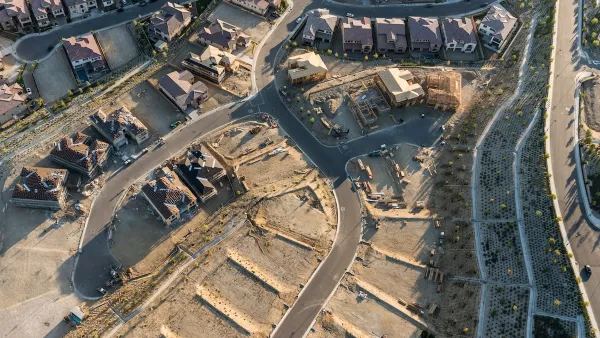
Report Outlines Strategies for Resilient Wildfire Recovery in LA
Project Recovery offers a roadmap for rebuilding more sustainable and climate-resilient communities after wildfires and other disasters.
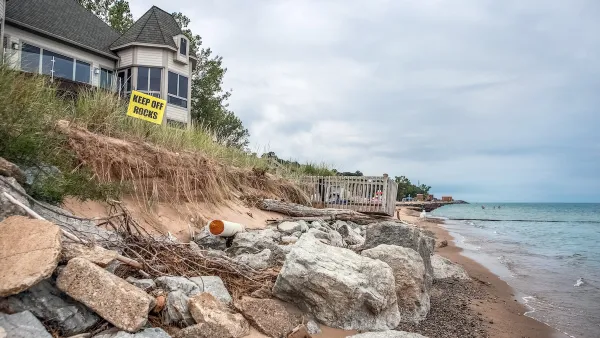
How US Cities Can Prepare for Climate Disasters
Resilience, encompassing infrastructure, governance, economic strength, and social cohesion, is critical for cities to mitigate rising climate risks like flooding, wildfires, and heat, ensuring long-term recovery and adaptability.
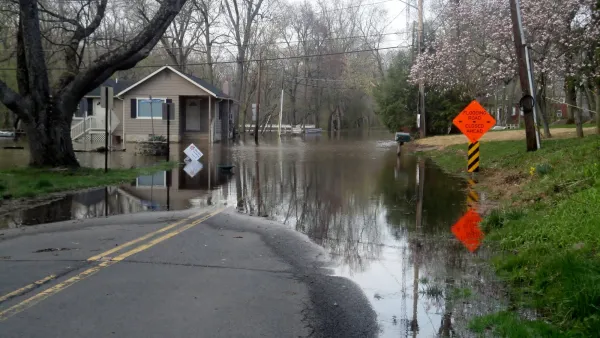
US Department of Energy Announces 10 New Climate Resilience Centers
The Biden administration has awarded $10 million for an additional 10 climate resilience centers as part of the Justice40 Initiative.

Planetizen Federal Action Tracker
A weekly monitor of how Trump’s orders and actions are impacting planners and planning in America.

The state-sanctioned urbicide of Austin
People don’t kill cities. Freeways do.

US to reduce Colorado River water deliveries to Mexico
A new Colorado Treaty amendment reduces Mexico’s Colorado River water allocation by 250,000 acre feet.

5 New England states march closer to 800 megawatt wind energy project
Securing federal approval for the project may be complicated under the Trump administration, which has historically been hostile towards domestic wind power.

Baltimore to break ground on $50 million Transit Priority Project
The project will bring faster bus trips, safer streets and better bike connections to Baltimore.

Airbnb launches $250 million 'last-dollar financing' housing accelerator, makes first investment in Austin
The company will put $6.4 million towards affordable housing development in Texas’ capital.

FREE Course: Walkable City 1: Why Walkability?
After describing his path towards focusing on walkability as the essence of good planning, Jeff Speck marches through his five principal reasons for making more walkable places.
Reinventing Malls: Planning Alchemy—Turning Gray Fields Into Gold
The course focuses on the opportunities and imperatives that shape reinvention of mall sites.

Eagle County Government
Harvard University Graduate School of Design
Nashville Planning Department
The Architects Foundation
University of Cincinnati Online
The Pocatello Development Authority
The Urban Renewal Agency of the City of Pocatello
Journal of the American Planning Association