The Biden administration has awarded $10 million for an additional 10 climate resilience centers as part of the Justice40 Initiative.


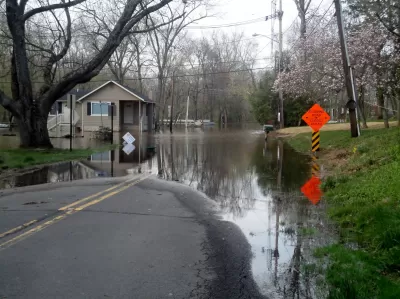
The Biden administration recently announced the formation of 10 university-based climate resilience centers located across the country, reports Ysabelle Kempe for the Utility Dive. According to a press release from the Department of Energy, the CRCs are part of the administration’s Justice40 Initiative and are designed to ensure that all Americans are benefitting from scientific research. The announcement follows the establishment of six climate resilience centers in September 2023 and two research centers focused on heat monitoring and resilience in May 2024.
The goal of the CRCs is to increase communities’ access to science-based information and resources to address the growing threat of climate-fueled extreme weather. Armed with $10 million in funding and access to the resources, including modeling and data, of the DOE’s national laboratories, the latest 10 CRCs are charged with developing the tools that local stakeholders need to build resiliency.
The move comes after the Fifth National Climate Assessment revealed communities’ adaptation efforts are not keeping pace with the so far are not enough to keep pace with the intensifying and more frequent weather related disasters caused by the changing climate, the Utility Dive article reports.
Here is a list of the 10 latest climate resilience centers, located in 10 different states:
- Saint Louis University, Missouri
- City College of New York
- South Dakota School of Mines and Technology
- University of Texas-Arlington and Texas A&M University-Corpus Christi
- Central State University and The Ohio State University
- University of Alaska Fairbanks
- Florida Institute of Technology
- Central Michigan University
- University of Massachusetts Lowell
- Lehigh University, Pennsylvania
FULL STORY: With 10 new climate resilience centers, DOE aims to translate research into local action


Building Resilient Communities: Insights from the LA County Cities Summit
The Los Angeles County Cities Summit convened local leaders to share strategies for advancing sustainability, addressing climate resilience, extreme heat, and other pressing environmental challenges through policy and community-driven solutions.

FEMA Resilience Program Cuts Grant Funding
The Building Resilient Infrastructure and Communities program funded projects from flood prevention to power station upgrades.

Report Outlines Strategies for Resilient Wildfire Recovery in LA
Project Recovery offers a roadmap for rebuilding more sustainable and climate-resilient communities after wildfires and other disasters.

Planetizen Federal Action Tracker
A weekly monitor of how Trump’s orders and actions are impacting planners and planning in America.

The state-sanctioned urbicide of Austin
People don’t kill cities. Freeways do.

US to reduce Colorado River water deliveries to Mexico
A new Colorado Treaty amendment reduces Mexico’s Colorado River water allocation by 250,000 acre feet.

Baltimore to break ground on $50 million Transit Priority Project
The project will bring faster bus trips, safer streets and better bike connections to Baltimore.

Airbnb launches $250 million 'last-dollar financing' housing accelerator, makes first investment in Austin
The company will put $6.4 million towards affordable housing development in Texas’ capital.

Guerilla urbanists are building DIY bus stop benches in Chicago
A before-and-after of one of the bus stops with a new bench. The new benches are not officially sanctioned or permitted, but the residents who placed them hope they will be the start of a network of DIY benches across the city.

FREE Course: Walkable City 1: Why Walkability?
After describing his path towards focusing on walkability as the essence of good planning, Jeff Speck marches through his five principal reasons for making more walkable places.
Reinventing Malls: Planning Alchemy—Turning Gray Fields Into Gold
The course focuses on the opportunities and imperatives that shape reinvention of mall sites.

Eagle County Government
Harvard University Graduate School of Design
Nashville Planning Department
The Architects Foundation
University of Cincinnati Online
The Pocatello Development Authority
The Urban Renewal Agency of the City of Pocatello
Journal of the American Planning Association