The signed legislation grants local communities more authority to restrict oil and gas operations near sensitive areas and address the environmental risks of idle wells, while also ensuring the permanent shutdown of low-production wells.



Governor Gavin Newsom has signed three new laws aimed at restricting oil and gas operations near schools, daycares, and residential communities. These laws grant local governments the authority to limit or ban oil and gas activities within their jurisdictions, empowering cities and counties to protect vulnerable populations from the harmful effects of industrial operations. This legislation also addresses previous legal challenges that had blocked local ordinances, allowing communities to move forward with stronger protections.
In addition to granting local control, the new laws tackle the environmental risks posed by idle oil and gas wells. These wells, often left unattended and unsealed, present a danger to surrounding neighborhoods. The legislation increases fees on idle wells and requires oil companies to decommission them more quickly, preventing potential leaks and contamination. This proactive approach is intended to hold oil companies accountable for the maintenance and safe closure of wells across the state.
One of the laws specifically targets the Inglewood Oil Field, California’s largest urban oil field, where low-production wells will now be shut down permanently. Companies operating these wells will face monthly fines until the wells are plugged and abandoned, with the penalty funds allocated to community improvement projects like parks. These laws are part of California’s broader strategy to reduce pollution and safeguard public health, while holding the oil industry accountable for its impact on local communities.

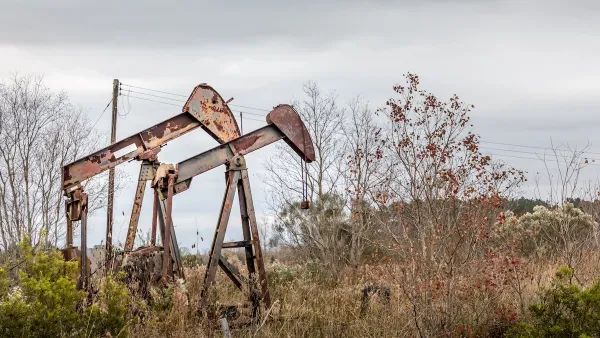
Addressing Orphan Wells for Environmental Justice
Remediating and repurposing some orphan oil and gas wells into parks can turn environmental hazards into community assets, promoting health, environmental justice, and accessible green space for underserved areas.
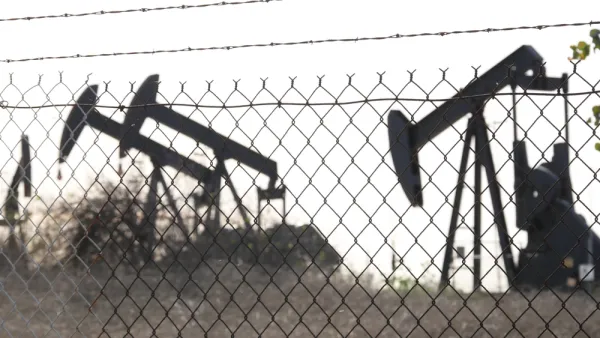
California Seals 21 Urban Oil Wells in South LA After Decades of Activism
The permanent closure of a long-troubled South Los Angeles oil site marks a hard-fought victory for residents and underscores the growing urgency of addressing hazardous idle wells in communities nationwide.

Mapping Groundwater Risks from Orphan Wells Across U.S. Aquifers
A new USGS study reveals that more than half of the nation’s documented orphan wells lie within aquifers supplying the vast majority of U.S. groundwater, posing widespread risks of contamination from aging, unplugged infrastructure.

Planetizen Federal Action Tracker
A weekly monitor of how Trump’s orders and actions are impacting planners and planning in America.

The state-sanctioned urbicide of Austin
People don’t kill cities. Freeways do.

US to reduce Colorado River water deliveries to Mexico
A new Colorado Treaty amendment reduces Mexico’s Colorado River water allocation by 250,000 acre feet.

Baltimore to break ground on $50 million Transit Priority Project
The project will bring faster bus trips, safer streets and better bike connections to Baltimore.

Airbnb launches $250 million 'last-dollar financing' housing accelerator, makes first investment in Austin
The company will put $6.4 million towards affordable housing development in Texas’ capital.

Guerilla urbanists are building DIY bus stop benches in Chicago
A before-and-after of one of the bus stops with a new bench. The new benches are not officially sanctioned or permitted, but the residents who placed them hope they will be the start of a network of DIY benches across the city.

FREE Course: Walkable City 1: Why Walkability?
After describing his path towards focusing on walkability as the essence of good planning, Jeff Speck marches through his five principal reasons for making more walkable places.
Reinventing Malls: Planning Alchemy—Turning Gray Fields Into Gold
The course focuses on the opportunities and imperatives that shape reinvention of mall sites.

Eagle County Government
Harvard University Graduate School of Design
Nashville Planning Department
The Architects Foundation
University of Cincinnati Online
The Pocatello Development Authority
The Urban Renewal Agency of the City of Pocatello
Journal of the American Planning Association