Curb monitoring technology is helping cities build a growing understanding of the shifting demand for this valuable urban space.


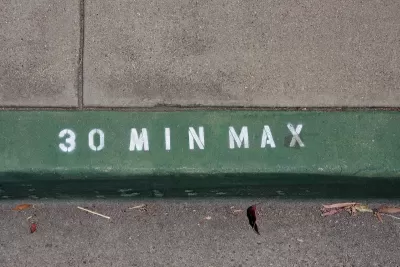
More cities are viewing their curbs as “part of a digital system to support parking, deliveries and the changing dynamic of urban life,” writes Skip Descant in Govtech.
Using technology to monitor curb usage is helping cities implement dynamic parking pricing that adjusts to demand to manage available parking space and evaluate the best uses for curbside space.
Portland, Oregon and Santa Monica, California are both testing ‘zero-emission delivery zones,’ areas in the central business districts of each city that prioritize access for zero-emission delivery vehicles. According to Descant, “Portland officials will learn about the city’s curbs via the curb analytics data collected. A portion of this data will enable them to visualize the operations of B-Line, the micro-freight operator, in the same way Portland already visualizes micromobility data.”
San Jose, California plans to use digital curb data to create its own dynamic parking pricing program. In San Francisco, officials are working to catalog physical street assets such as signage and bus stops in the same platform as curb space and parking spots to create a comprehensive directory of city assets that can help inform policy decisions.
Read the full story: Digital Curb Data Deepens Understanding of Urban Activity
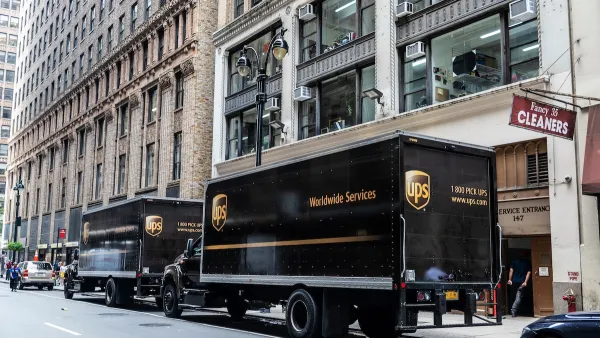
State of Curbs & Parking Report Reveals Glut of Data
As the uses of curb space become more diverse, city officials are working to understand how to best manage this increasingly important urban amenity.
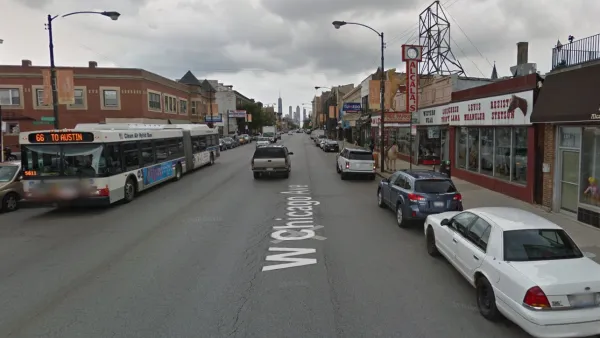
Opinion: Chicago Needs an Office of Parking Management
The city of Chicago needs a local agency empowered to planning, studying, or managing parking, according to a recent opinion piece published by Streetsblog Chicago.

Motorists Sue Chicago Parking Meter Operator
A lawsuit claims a company's 75-year contract to manage the city of Chicago's parking meters amounts to an "unreasonable" monopoly.

Desperate measures: Advocates weigh draining Lake Powell to fill Colorado River
Draining the reservoir could reduce evaporation losses by a couple hundred thousand acre-feet.

Eastern Nebraska is running out of electricity
Data centers and electrification are straining eastern Nebraska’s grid, throttling economic development.
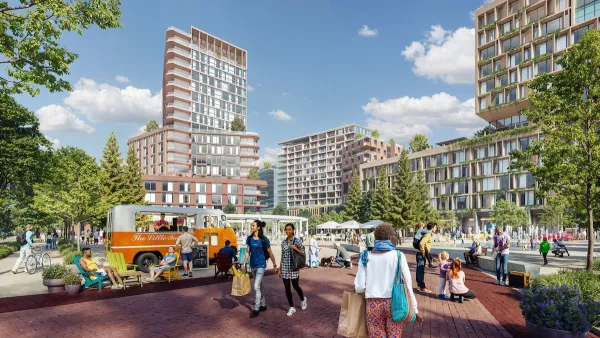
Malls are becoming the midtowns of the future
Mall and office park redevelopments are a generational opportunity to create new nodes of urbanity.

NYC breaks ground on anti-flooding infrastructure project
New York City's new system will reduce stormwater flows to local sewers by 90%.

One Kentucky town’s secret to affordable housing
The Smoketown Community Land Trust has already built seven affordable homes for community members.

Houston gains petal-shaped cooling infrastructure to make streets more ‘delightful’
The city has installed the pavilions along 15 blocks in Houston.

FREE Course: Walkable City 1: Why Walkability?
After describing his path towards focusing on walkability as the essence of good planning, Jeff Speck marches through his five principal reasons for making more walkable places.
Reinventing Malls: Planning Alchemy—Turning Gray Fields Into Gold
The course focuses on the opportunities and imperatives that shape reinvention of mall sites.

City of Rosemead
Rutgers University, Edward J. Bloustein School of Planning and Public Policy
One Hundred Miles
University of Michigan School for Environment and Sustainability (SEAS)
Hunter College, City University of New York (CUNY)
The Architects Foundation
City of Cambridge
Montrose County
The Pocatello Development Authority