The 150-year-old building will see new life as a retail space as part of a flurry of new development along the upcoming high-speed rail line.


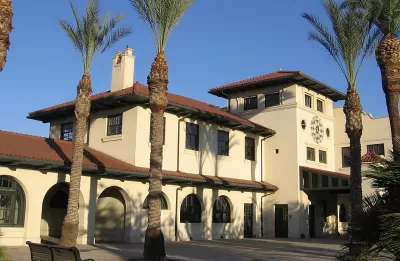
One of the first four stations for California’s north-south high-speed rail line will repurpose a 150-year-old train depot originally built in 1872.
“Designated for potential future use as a hospitality and office space, the original building will sit alongside new public plazas that the California High-Speed Rail Authority hopes to be an alluring gateway to the train system, as well as a spark for economic development in Fresno’s downtown,” writes Nate Berg in Fast Company.
Fresno’s depot is listed in the National Register of Historic Places, and its Queen Anne-style architecture recalls the steam-era of train travel that helped build many parts of the Western U.S. Though it’s been disused since the 1970s, the historic depot sits alongside a freight rail right of way that has been expanded to accommodate the new high-speed train line.
The building is being retrofitted for seismic safety and will likely house restaurants and other businesses.
Read the full story: One of the first stations for California's new high-speed rail line is actually 152 years old

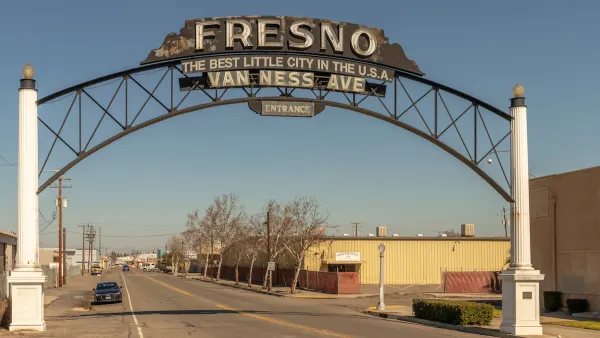
Fresno Pins Economic Hopes on High-Speed Rail
The Central Valley town anticipates an economic boost when the long-awaited California High-Speed Rail begins operations.
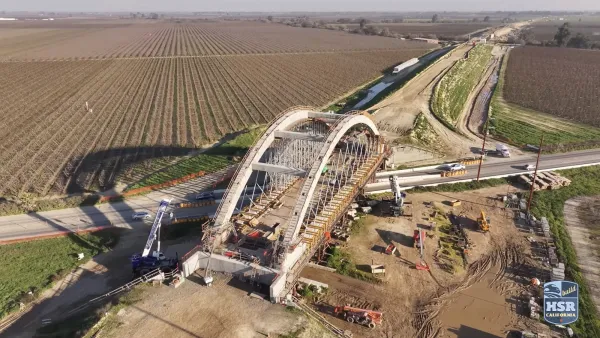
California High-Speed Rail wants to leverage data center revenue to fund trains
By positioning the rail line as a tech and renewable energy corridor, the agency hopes to increase revenue opportunities.
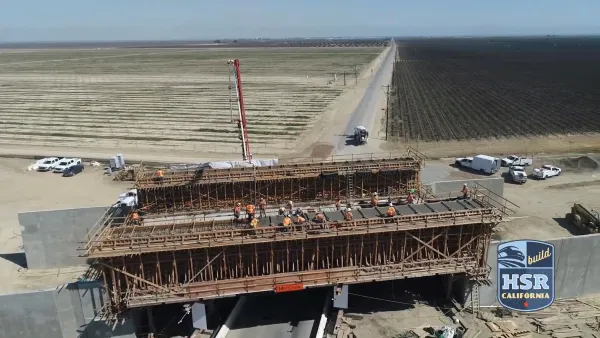
California High-Speed Rail Slashes $1.7B From 2026 Budget
The CHSRA plans to complete the Central Valley segment of the line and begin revenue service as soon as possible.

Planetizen Federal Action Tracker
A weekly monitor of how Trump’s orders and actions are impacting planners and planning in America.

California plans to bury El Niño’s downpour
If the state plays its cards right, it may be able to store a billion acre-feet of El Niño’s water in aquifers.

Desperate measures: Advocates weigh draining Lake Powell to fill Colorado River
Draining the reservoir could reduce evaporation losses by a couple hundred thousand acre-feet.

Non-stop party: Chicago voters weigh permanent festival grounds
A stable place for bleachers, stages and drainage may streamline the setup and teardown of large events.

Metra may invest $9.1 billion in regional rail
The agency released a draft of a study examining potential ways to offer more frequent train service.

California city breaks ground on transit connector
The project includes three mobility hubs and a pedestrian bridge.

FREE Course: Walkable City 1: Why Walkability?
After describing his path towards focusing on walkability as the essence of good planning, Jeff Speck marches through his five principal reasons for making more walkable places.
Reinventing Malls: Planning Alchemy—Turning Gray Fields Into Gold
The course focuses on the opportunities and imperatives that shape reinvention of mall sites.


City of Rosemead
Rutgers University, Edward J. Bloustein School of Planning and Public Policy
One Hundred Miles
Hunter College, City University of New York (CUNY)
The Architects Foundation
University of Cincinnati Online
City of Cambridge
Montrose County
The Pocatello Development Authority