The author of ‘The Great American Transit Disaster’ explains how U.S. transit agencies got to the existential crisis they face today.



In an interview in Bloomberg CityLab, David Zipper speaks with author Nicholas Dagen Bloom about his new book, The Great American Transit Disaster, in which Dagen Bloom describes how “US public transportation has lurched from one crisis to the next throughout the past century.”
Zipper writes, “Focusing on the histories of Atlanta, Baltimore, Boston, Chicago, Detroit and San Francisco, Bloom rejects the idea that there was anything preordained about the descent of private transit operators into bankruptcy or the decline in service offered by the public agencies that have operated buses and trains ever since.”
As Zipper notes, “It’s mind-blowing to consider just how good transit service once was.” In the early 20th century, transit was, Dagen Bloom adds, “a very profitable business,” but not for the reasons we might think. “The big money was always in the land development. Once the transit lines were built, the land was basically developed around them.”
While the rise of automobiles did have an impact on transit ridership, Dagen Bloom believes that “there was a whole series of compounding decisions made by city leaders, state leaders and private sector people” that led to the decline of transit systems. “You didn’t have to build systems of parkways and highways that were so comprehensive that you sacrifice neighborhoods. You didn’t have to completely demolish your downtowns, create massive federal programs that paid for parking ramps and give tax breaks on downtown parking.”
Ultimately, Dagen Bloom concludes, to save American transit, “someone’s got to fund transit” to pull agencies out of their current death spiral.
FULL STORY: Anatomy of an ‘American Transit Disaster’

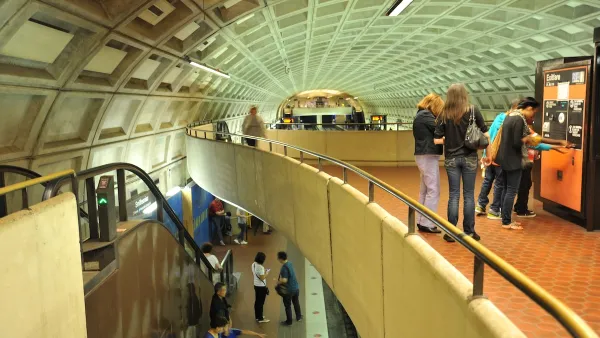
Why Saving Transit Matters
Jarrett Walker argues that letting transit systems die has impacts that go far beyond transit riders.
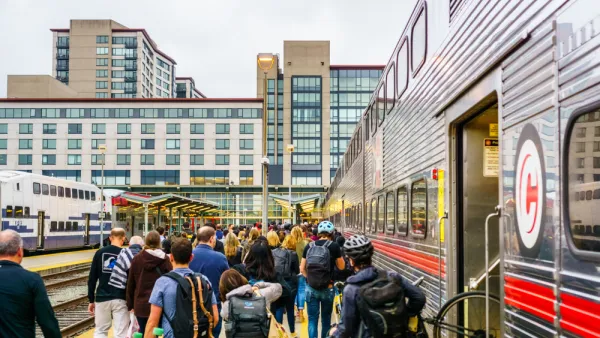
Opinion: California Transit Systems Need State Support
California provides far less in state funding to public transit agencies than other states. Transit advocates say this must change to improve transit service, bring back ridership, and reduce air pollution from the transportation sector.

Minnesota Mayors Call for Increased Transit Funding
An op-ed by three mayors explains their support for expanded transit services, calling for a sales tax increase that would fund a modernized, reliable transit network.

Planetizen Federal Action Tracker
A weekly monitor of how Trump’s orders and actions are impacting planners and planning in America.

The state-sanctioned urbicide of Austin
People don’t kill cities. Freeways do.

US to reduce Colorado River water deliveries to Mexico
A new Colorado Treaty amendment reduces Mexico’s Colorado River water allocation by 250,000 acre feet.

5 New England states march closer to 800 megawatt wind energy project
Securing federal approval for the project may be complicated under the Trump administration, which has historically been hostile towards domestic wind power.

Baltimore to break ground on $50 million Transit Priority Project
The project will bring faster bus trips, safer streets and better bike connections to Baltimore.

Airbnb launches $250 million 'last-dollar financing' housing accelerator, makes first investment in Austin
The company will put $6.4 million towards affordable housing development in Texas’ capital.

FREE Course: Walkable City 1: Why Walkability?
After describing his path towards focusing on walkability as the essence of good planning, Jeff Speck marches through his five principal reasons for making more walkable places.
Reinventing Malls: Planning Alchemy—Turning Gray Fields Into Gold
The course focuses on the opportunities and imperatives that shape reinvention of mall sites.

Eagle County Government
Harvard University Graduate School of Design
Nashville Planning Department
The Architects Foundation
University of Cincinnati Online
The Pocatello Development Authority
The Urban Renewal Agency of the City of Pocatello
Journal of the American Planning Association