The last obstacle to a 2021 bill linking Virginia’s emissions standards to California policy was defeated on a party-line vote in the state’s legislature, paving the way for a shift to electric vehicles.


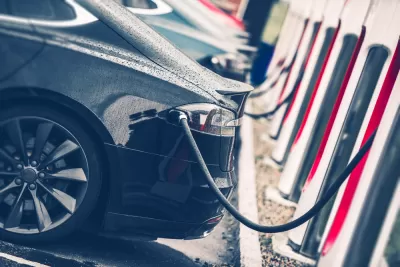
“The last surviving bill from Republicans aimed at rolling back a Virginia law tying the state to emissions standards set by California that will ban the sale of new gas-powered vehicles starting in 2035 reached the end of the road Tuesday,” reports Charlie Paullin in the Virginia Mercury, eliminating the last remaining obstacle to the new law.
According to Paullin, “Virginia Democrats have defended the 2021 law on the grounds that it puts Virginia at the front of the line to receive electric vehicles from automakers who are transitioning their fleets and will improve air quality.”
Tying state regulations to California standards, which call for phasing out the sale of new gas-powered light-duty vehicles by 2035, is one of two options for states to comply with the federal Clean Air Act. The other is following federal standards, which are not as stringent as California’s.
Some Virginia lawmakers argue that meeting the deadlines set by California’s regulations would be impossible for their state, also citing concerns about how an influx of electric vehicles would impact the state’s electric grid. A proposed amendment to delay or stop the bill failed in a party-line vote.
FULL STORY: Senate Democrats defeat remaining bill seeking to repeal Clean Car standards


Hanoi to Ban Gas-Powered Two-Wheelers, Later Cars
City officials hope that electrifying motorcycles, a ‘lifeblood’ of Vietnamese transportation, will have a positive impact on air quality and noise in the city’s downtown.
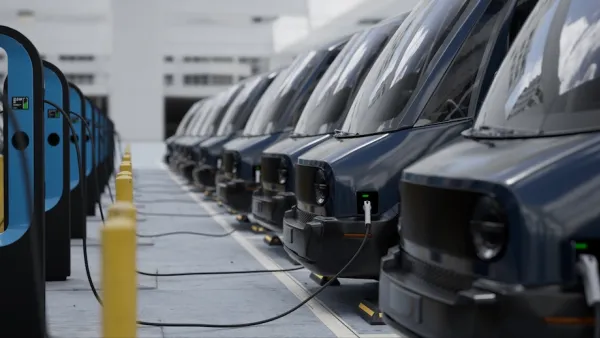
USDOT Unveils Strategies to Achieve Near-Zero Transportation Emissions
Three key strategies — reducing travel distances, increasing energy-efficient travel modes, and transitioning to zero-emission vehicles and fuels — are recommended to meet national climate goals under the Paris Agreement.
'Charging as a Service' Could Accelerate Decarbonization
The proliferation of private EV charging services, coupled with federal investment in charging stations, has the potential to reduce 'charging anxiety' and encourage a faster switch to electric vehicles.

Planetizen Federal Action Tracker
A weekly monitor of how Trump’s orders and actions are impacting planners and planning in America.

The state-sanctioned urbicide of Austin
People don’t kill cities. Freeways do.

US to reduce Colorado River water deliveries to Mexico
A new Colorado Treaty amendment reduces Mexico’s Colorado River water allocation by 250,000 acre feet.

5 New England states march closer to 800 megawatt wind energy project
Securing federal approval for the project may be complicated under the Trump administration, which has historically been hostile towards domestic wind power.

Baltimore to break ground on $50 million Transit Priority Project
The project will bring faster bus trips, safer streets and better bike connections to Baltimore.

Airbnb launches $250 million 'last-dollar financing' housing accelerator, makes first investment in Austin
The company will put $6.4 million towards affordable housing development in Texas’ capital.

FREE Course: Walkable City 1: Why Walkability?
After describing his path towards focusing on walkability as the essence of good planning, Jeff Speck marches through his five principal reasons for making more walkable places.
Reinventing Malls: Planning Alchemy—Turning Gray Fields Into Gold
The course focuses on the opportunities and imperatives that shape reinvention of mall sites.

Eagle County Government
Harvard University Graduate School of Design
Nashville Planning Department
The Architects Foundation
University of Cincinnati Online
The Pocatello Development Authority
The Urban Renewal Agency of the City of Pocatello
Journal of the American Planning Association