Almost half of New Yorkers would drive less if a long-awaited congestion pricing plan is implemented in Manhattan, according to a recent poll.


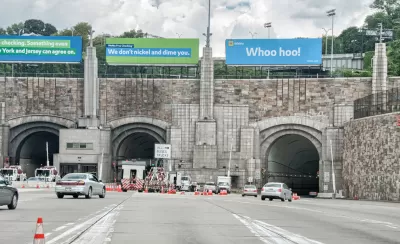
A recent NY1/Sienna College Poll found that New Yorkers intend to respond to congestion pricing in exactly the way one would expect: by driving less and taking more transit trips.
“Some 42% of New Yorkers said they would get behind the wheel less and 64% would switch over to subways and buses should the government start tolling motorists,” writes Kevin Duggan to report the survey findings for AMNY.
The congestion pricing scheme under consideration for New York City would enact “cordon pricing” in Manhattan south of 60th Street. The plan has been on a rollercoaster for years, however—failing in the New York State Legislature in 2008, then winning approval in 2019 and facing delays delayed first by the Trump administration and then the Covid-19 pandemic. The Environmental Assessment for the plan is expected in December 2022. Current New York Governor Kathy Hochul has not been strongly supportive of congestion pricing in recent weeks.
More coverage of the poll can be found in an article by Clayton Guse for the New York Daily News.


Report Reveals Proposed NYC Congestion Pricing Details
The draft proposal indicates most drivers would pay $15 to enter the Central Business District.

Staten Island Sues Over Congestion Pricing, Too
The borough’s president says the plan would bring more traffic to Staten Island and unjustly burden its residents with air pollution and tolls.
Manhattan Congestion Pricing Could Start in 2023
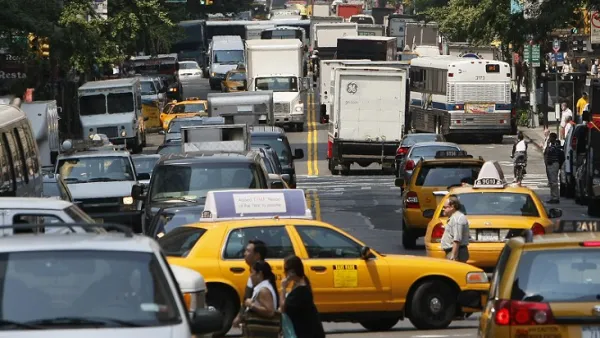
The Metropolitan Transportation Authority has resubmitted its environmental impact assessment to federal officials, who sent the agency over 400 additional questions earlier this year.

The state-sanctioned urbicide of Austin
People don’t kill cities. Freeways do.

US to reduce Colorado River water deliveries to Mexico
A new Colorado Treaty amendment reduces Mexico’s Colorado River water allocation by 250,000 acre feet.

New Jersey’s second-largest city bans standalone data centers
Jersey City will continue to allow co-location facilities, such as those meant for research institutions that store their own data.

Amtrak not solely to blame for New Jersey commuter rail's unreliability, report finds
A new study from the Garden State Initiative found that NJ Transit’s budget grew 20% across a 4 year period, but reliability declined significantly over the same period.

EPA erases limits on planet-warming pollution from power plants
Under Monday’s plan, power plants would still have some limits on how much mercury, arsenic and other contaminants they can emit.

Phoenix announces new on-demand transit service, more frequent RAPID buses
Both new services will launch in October, and are part of Phoenix's Project Effective Access Solutions for Easing Congestion.

FREE Course: Walkable City 1: Why Walkability?
After describing his path towards focusing on walkability as the essence of good planning, Jeff Speck marches through his five principal reasons for making more walkable places.
Reinventing Malls: Planning Alchemy—Turning Gray Fields Into Gold
The course focuses on the opportunities and imperatives that shape reinvention of mall sites.

Eagle County Government
Harvard University Graduate School of Design
Nashville Planning Department
The Architects Foundation
University of Cincinnati Online
The Pocatello Development Authority
The Urban Renewal Agency of the City of Pocatello
Journal of the American Planning Association