D.C. Mayor Muriel Bowser wants to add hundreds of new traffic enforcement cameras to stem the city's rising rate of traffic fatalities.


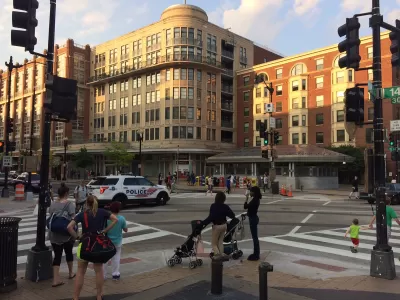
Luz Lazo reports on D.C. Mayor Muriel Bowser's plan to expand the District's automated traffic enforcement program in an effort to improve traffic safety. "Bowser’s pitch to expand the traffic camera program comes as the city is experiencing a rise in severe traffic crashes resulting in deaths and injuries. Forty people were killed in traffic collisions in 2021, the most since 2007, and nine people have died this year — one more than at this time last year."
"Bowser (D) is proposing a large-scale modernization and expansion of the city’s automated enforcement program, promising to more than triple the number of traffic cameras that issue fines by the end of next year." The proposal would add 170 new speed cameras in addition to dozens of others that catch drivers running red lights and stop signs and other violations. "Forty new full-time positions would be added at DDOT to oversee the increased volume of tickets that would accompany the expansion, according to budget documents."
Critics of automated enforcement say it's an excuse for the city to generate extra revenue at the expense of motorists. But "The city, owed about $500 million in unpaid parking and traffic fines, has few mechanisms to ensure offenders face consequences," notes Luz, adding that "Bowser’s plan also calls for more resources for the city’s towing and booting program."
The D.C. Council will review the proposed budget for the program on April 4.
Read the full story: D.C. proposes expanding the number of traffic cameras that issue fines
Landscapes of love and loss
As urban planners, every piece of infrastructure we build is a memorial — whether we know it or not.
DC Traffic Deaths Dropping ‘Substantially’ in 2025
Between January and June 2024, 29 people died in traffic crashes in the District. This year, that number fell to nine.
NYC Pedestrian Deaths Rose in 2024
The city’s Vision Zero efforts seem to have stalled.

Planetizen Federal Action Tracker
A weekly monitor of how Trump’s orders and actions are impacting planners and planning in America.

California plans to bury El Niño’s downpour
If the state plays its cards right, it may be able to store a billion acre-feet of El Niño’s water in aquifers.

Desperate measures: Advocates weigh draining Lake Powell to fill Colorado River
Draining the reservoir could reduce evaporation losses by a couple hundred thousand acre-feet.

Mamdani’s pied-à-terre tax survives legal challenge
A panel of judges found that the plaintiffs failed to demonstrate injury as a result of New York City's implementation of the tax.

Eastern Nebraska is running out of electricity
Data centers and electrification are straining eastern Nebraska’s grid, throttling economic development.

Seattle passes record-breaking transit services expansion
Proposition 1 will double the city’s transit tax to add 95,000 more bus trips and preserve 180,000 bus trips annually.

FREE Course: Walkable City 1: Why Walkability?
After describing his path towards focusing on walkability as the essence of good planning, Jeff Speck marches through his five principal reasons for making more walkable places.
Reinventing Malls: Planning Alchemy—Turning Gray Fields Into Gold
The course focuses on the opportunities and imperatives that shape reinvention of mall sites.

City of Rosemead
Rutgers University, Edward J. Bloustein School of Planning and Public Policy
One Hundred Miles
University of Michigan School for Environment and Sustainability (SEAS)
Hunter College, City University of New York (CUNY)
The Architects Foundation
City of Cambridge
Montrose County
The Pocatello Development Authority