Want to know which streets are most likely to produce a negative emotional response among Seattle transportation safety advocates? Read on.


Charles Mudede produces an emotional cartography of the worst streets in Seattle,
Mudede explains how Galvanic Skin Response (GSR) technology, which combines cellphone and lie detector technologies to track social-emotional responses to the city, revolutionized the practice of psychogeography. Mudede credits artist, designer, and psychogeographer Christian Nold with the use of GSR o produce social-emotional maps of cities.
The article, however, relies on expert opinion, rather than GSR, to call out the five streets in Seattle that sharply increase negative feelings.
Topping Mudede's list is Rainier Avenue, which Seattle Greenways cited as the worst street in the city, "hands down." The head of the Transit Riders Union, local reporter Ryan Packer, and even the Seattle Department of Transportation's Twitter feed are called in corroborate that assessment.
Also included on the list are Pike Place at Pike Place Market (!!), 15th Ave NW, Denny Way, and Martin Luther King Jr Way.
Read the full story: The Seattle Streets We Really Hate
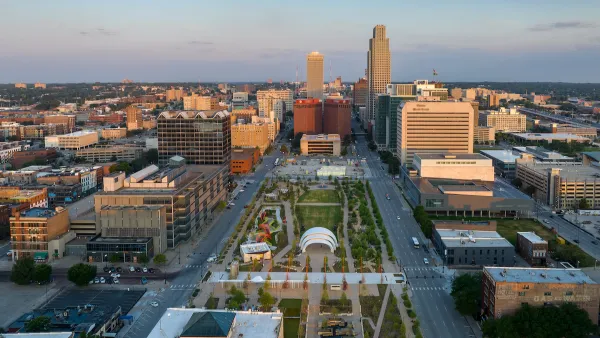
Downtown Omaha Planning for its Post-One-Way-Streets Era
The Omaha City Council has decided to reverse the transportation model adopted in the city in the 1950s, for the benefit of traffic safety and local retail activity.
Planning for Congestion Relief
The third and final installment of Planetizen's examination of the role of the planning profession in both perpetuating and solving traffic congestion.
How Planning Fails to Solve Congestion
Solutions for congestion are never as simple and easy as armchair planners and engineers would like you to believe—especially those who suggest that congestion can be solved by forever building more roadway capacity.

Planetizen Federal Action Tracker
A weekly monitor of how Trump’s orders and actions are impacting planners and planning in America.

California plans to bury El Niño’s downpour
If the state plays its cards right, it may be able to store a billion acre-feet of El Niño’s water in aquifers.

Desperate measures: Advocates weigh draining Lake Powell to fill Colorado River
Draining the reservoir could reduce evaporation losses by a couple hundred thousand acre-feet.

Housing is the top priority of Seattle’s sole new councilmember
Jenks campaigned on building 1,000 new units of affordable housing.

New tax cuts may slash $1.5 billion in funding for Miami transit, public parks
Amendment 3 will save Miami-Dade homeowners $2,700 in 2028.

Arizona, Wisconsin, Pennsylvania hope to finally advance climate goals post-midterms
The three states have spent years under Republican or divided control.

FREE Course: Walkable City 1: Why Walkability?
After describing his path towards focusing on walkability as the essence of good planning, Jeff Speck marches through his five principal reasons for making more walkable places.
Reinventing Malls: Planning Alchemy—Turning Gray Fields Into Gold
The course focuses on the opportunities and imperatives that shape reinvention of mall sites.

City of Rosemead
Rutgers University, Edward J. Bloustein School of Planning and Public Policy
One Hundred Miles
University of Michigan School for Environment and Sustainability (SEAS)
Hunter College, City University of New York (CUNY)
The Architects Foundation
City of Cambridge
Montrose County
The Pocatello Development Authority