The policy whiplash from the Obama administration to the Trump administration and now to the Biden administration continues.


"The U.S. Department of Transportation (U.S. DOT) today published a Notice of Funding Opportunity (NOFO) to apply for $1 billion in Fiscal Year (FY) 2021 discretionary grant funding through the Rebuilding American Infrastructure with Sustainability and Equity (RAISE) grants," according to a U.S. DOT press release published on April 13, 2021.
The new RAISE grants will replace the BUILD grants of the Trump administration, which, in turn, replaced the TIGER grants of the Obama administration. The grant programs collectively have awarded over $8.935 billion in grants to projects in all 50 states, the District of Columbia and Puerto Rico since 2009, though each iteration of the discretionary grant funding program has taken a different on spending priorities. While TIGER helped fund a wave of streetcar projects and other urban mobility projects, BUILD focused on rural road projects. Now RAISE promises to advance equity and sustainability.
"Projects for RAISE funding will be evaluated based on merit criteria that include safety, environmental sustainability, quality of life, economic competitiveness, state of good repair, innovation, and partnership. Within these criteria, the Department will prioritize projects that can demonstrate improvements to racial equity, reduce impacts of climate change and create good-paying jobs," according to the press release.
The application deadline is set for July 12, 2021, and the U.S. DOT is hosting a series of informational webinars in the interim.
Hat tip to Jeff Davis, senior fellow at the Eno Transportation Center, for sharing the news of the RAISE program on Twitter.
Read the full story: U.S. Secretary of Transportation Pete Buttigieg Announces Availability of $1 Billion to Modernize and Create New American Infras

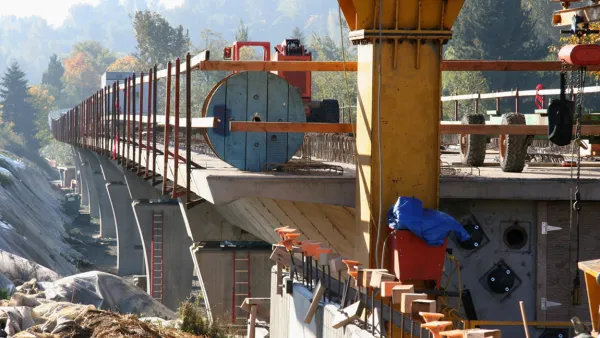
U.S. DOT's 2022 RAISE Grants to Target Emissions Reductions, Racial Equity
The RAISE grant program continues to make history as a distinct departure from U.S. transportation planning tradition.
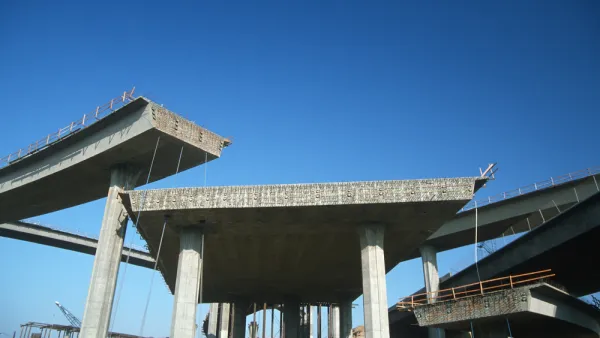
How RAISE Grants Promote Car-Free Mobility
While there are many reasons to break away from automobile dominance, the RAISE grant program is the only federal effort fully reflecting a public transit and active transportation priorities.
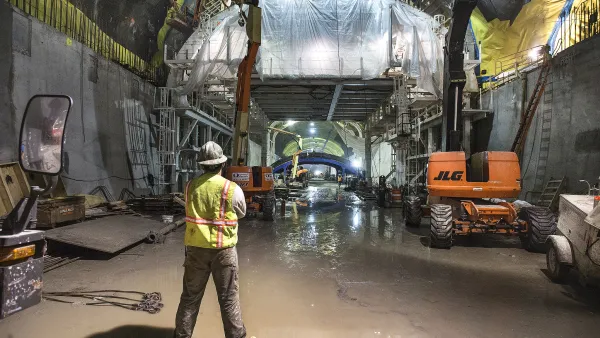
RAISE Grants Announced: U.S. DOT Shifts to a Greener Vision for Transportation
News broke early this morning the U.S. Department of Transportation had announced the first round of funding for the Biden administration's new discretionary grant funding program.

Planetizen Federal Action Tracker
A weekly monitor of how Trump’s orders and actions are impacting planners and planning in America.

California plans to bury El Niño’s downpour
If the state plays its cards right, it may be able to store a billion acre-feet of El Niño’s water in aquifers.

Chicago breaks ground on $3 billion megadevelopment
The new neighborhood, titled Foundry Park, will one day host 3,700 residences.

California High-Speed Rail Authority CEO resigns after $600,000 scandal
Under Ian Choudri, the authority used taxpayer dollars to fund first class flights and trips to nightclubs.

Want to study the Missouri River? Soon, you may need unanimous approval from 10 states
Legislation would require 10 governors’ permission to study or build projects moving water outside the basin.

Desperate measures: Advocates weigh draining Lake Powell to fill Colorado River
Draining the reservoir could reduce evaporation losses by a couple hundred thousand acre-feet.

FREE Course: Walkable City 1: Why Walkability?
After describing his path towards focusing on walkability as the essence of good planning, Jeff Speck marches through his five principal reasons for making more walkable places.
Reinventing Malls: Planning Alchemy—Turning Gray Fields Into Gold
The course focuses on the opportunities and imperatives that shape reinvention of mall sites.

City of Rosemead
Rutgers University, Edward J. Bloustein School of Planning and Public Policy
One Hundred Miles
Hunter College, City University of New York (CUNY)
The Architects Foundation
University of Cincinnati Online
City of Cambridge
Montrose County
The Pocatello Development Authority