Federal stimulus spending will enable the Charlottesville Area Transit to operate without fares for three years. The agency is also considering a plan to make the fare-free service permanent.



"Charlottesville Area Transit is planning not to charge for rides during the next three years," reports Katherine Knott.
Charlottesville Area Transit (CAT) Director Garland Williams last week informed the Regional Transit Partnership of the fare-free program, crediting funding from the CARES Act, approved in March 2020, and the more recent American Rescue Plan, approved in March 2021.
CAT has operating fare-free throughout the pandemic, according to Knott as a way to limit physical contact between drivers and riders. In addition to the three-year fare-free program, Williams also announced that CAT is studying making the transit system fare free permanently.
An article from earlier in March by Allison Wrabel also reports that CAT is working on a plan to restore service to pre-pandemic levels while restructuring bus service on a high frequency grid. That proposal includes an could potentially yield an increase in service hours, new weekend service, and improved frequencies and heavily used routes.
FULL STORY: CAT planning to stay fare-free for three years

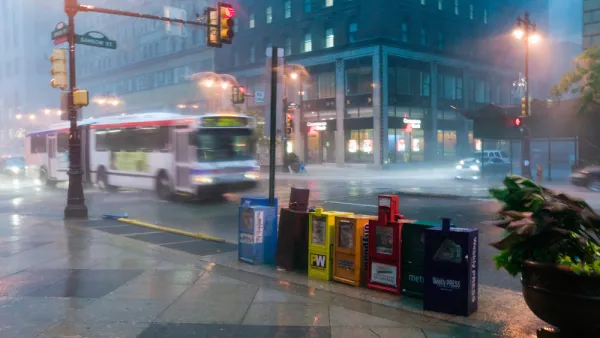
The Bus Revolution Has Been Revised in Philadelphia
The Southeastern Pennsylvania Transportation Authority went back to the drawing board with its Bus Revolution system redesign after an initial round of feedback completed earlier this year.
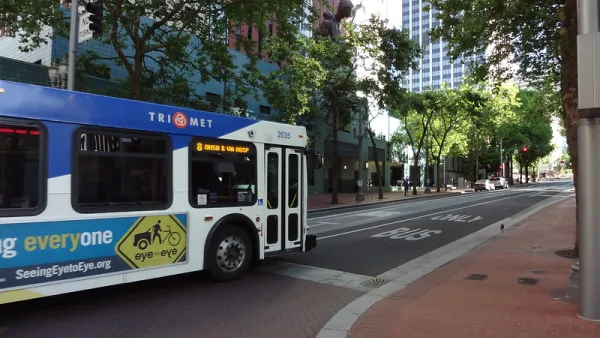
‘Forward Together’ Bus System Redesign Rolling Out in Portland
Portland is redesigning its bus system to respond to the changing patterns of the post-pandemic world—with twin goals of increasing ridership and improving equity.
Suburban Detroit Achieves Long-Awaited Bus Service Expansion
Novi and Bloomfield Hills in Southeast Michigan will have transit service for the first time in 28 years.

The state-sanctioned urbicide of Austin
People don’t kill cities. Freeways do.

US to reduce Colorado River water deliveries to Mexico
A new Colorado Treaty amendment reduces Mexico’s Colorado River water allocation by 250,000 acre feet.

New Jersey’s second-largest city bans standalone data centers
Jersey City will continue to allow co-location facilities, such as those meant for research institutions that store their own data.

Amtrak not solely to blame for New Jersey commuter rail's unreliability, report finds
A new study from the Garden State Initiative found that NJ Transit’s budget grew 20% across a 4 year period, but reliability declined significantly over the same period.

EPA erases limits on planet-warming pollution from power plants
Under Monday’s plan, power plants would still have some limits on how much mercury, arsenic and other contaminants they can emit.

Phoenix announces new on-demand transit service, more frequent RAPID buses
Both new services will launch in October, and are part of Phoenix's Project Effective Access Solutions for Easing Congestion.

FREE Course: Walkable City 1: Why Walkability?
After describing his path towards focusing on walkability as the essence of good planning, Jeff Speck marches through his five principal reasons for making more walkable places.
Reinventing Malls: Planning Alchemy—Turning Gray Fields Into Gold
The course focuses on the opportunities and imperatives that shape reinvention of mall sites.

Eagle County Government
Harvard University Graduate School of Design
Nashville Planning Department
The Architects Foundation
University of Cincinnati Online
The Pocatello Development Authority
The Urban Renewal Agency of the City of Pocatello
Journal of the American Planning Association