Construction on the Brooklyn-Queens Streetcar, a potential legacy project for New York Mayor Bill de Blasio, was supposed to begin in 2019. The fate of the heavily debated project will rest with the next mayor.


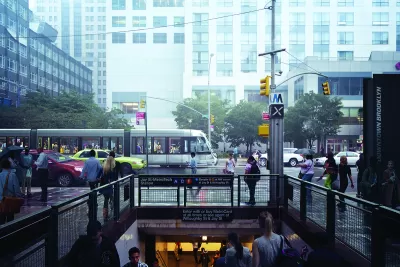
"A 16-mile streetcar line along the East River in Brooklyn and Queens was going to be one of Mayor Bill de Blasio's signature projects, expanding transportation access to neighborhoods like Red Hook that are relatively far from the subway," writes Dan Rivoli.
But with the original expected construction date already well past, Mayor de Blasio has conceded that the fate of the Brooklyn-Queens Connector will rest with the city's next mayor, who will be elected in 2021.
"The project has faced mounting challenges, including questions about de Blasio's plan to pay for it with tax revenues from new development along the line. Three years ago, he downsized the plan to 11 miles, but raised the cost and called for federal financing," explains Rivoli of the numerous roadblocks the streetcar was navigating before the pandemic. Since the pandemic, the project has ground to a halt.
NY1 reached out to nine Democratic candidates for mayor, finding just one, Loree Sutton, who vowed to build the streetcar. Sutton has since dropped out of the race.
FULL STORY: Brooklyn-Queens Streetcar Is in Hands of Next Mayor, But No Democrat Running Fully Embraces It

The Brooklyn-Queens Streetcar Plan Won't Die
The Brooklyn-Queens Connector, known as the BQX streetcar, was spotted making plans on the Internet earlier this month.
Brooklyn-Queens Connector Streetcar Plans Released
Plans for the Brooklyn-Queens Connector, otherwise known as the BQX, are still on the table, despite reports of the project's demise.
BQX Streetcar Lacks Funding in de Blasio's Proposed Budget
It's been awhile since the proposed BQX Streetcar project had any forward momentum in New York City.

The state-sanctioned urbicide of Austin
People don’t kill cities. Freeways do.

US to reduce Colorado River water deliveries to Mexico
A new Colorado Treaty amendment reduces Mexico’s Colorado River water allocation by 250,000 acre feet.

New Jersey’s second-largest city bans standalone data centers
Jersey City will continue to allow co-location facilities, such as those meant for research institutions that store their own data.

Amtrak not solely to blame for New Jersey commuter rail's unreliability, report finds
A new study from the Garden State Initiative found that NJ Transit’s budget grew 20% across a 4 year period, but reliability declined significantly over the same period.

EPA erases limits on planet-warming pollution from power plants
Under Monday’s plan, power plants would still have some limits on how much mercury, arsenic and other contaminants they can emit.

Phoenix announces new on-demand transit service, more frequent RAPID buses
Both new services will launch in October, and are part of Phoenix's Project Effective Access Solutions for Easing Congestion.

FREE Course: Walkable City 1: Why Walkability?
After describing his path towards focusing on walkability as the essence of good planning, Jeff Speck marches through his five principal reasons for making more walkable places.
Reinventing Malls: Planning Alchemy—Turning Gray Fields Into Gold
The course focuses on the opportunities and imperatives that shape reinvention of mall sites.

Eagle County Government
Harvard University Graduate School of Design
Nashville Planning Department
The Architects Foundation
University of Cincinnati Online
The Pocatello Development Authority
The Urban Renewal Agency of the City of Pocatello
Journal of the American Planning Association