The Infrastructure for Rebuilding America program will, for the first time, support projects aimed specifically at reducing emissions and fighting the effects of climate change and environmental racism.


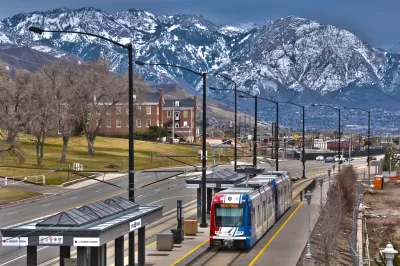
For the first time ever, the federal Department of Transportation's Infrastructure for Rebuilding America program will devote part of its grant funding to "projects addressing climate change and environmental justice" as part of the Biden administration's commitment to "building back in a way that positions American communities for success in the future." The program distributes close to $900 million in grants to transportation-related projects.
"The projects will be evaluated on whether they were planned as part of a comprehensive strategy to address climate change, or whether they support strategies to reduce greenhouse gas emissions such as deploying zero-emission-vehicle infrastructure or encouraging shifts in modes of transportation or vehicle miles traveled," reports Jonathan Shieber for TechCrunch.
The agency also plans to consider racial equity and require "equity-focused community outreach and projects designed to benefit underserved communities." Grants will be distributed to large and small projects that could include "reconstruction, rehabilitation, acquisition of property (including land related to the project and improvements to the land), environmental mitigation, construction contingencies, equipment acquisition and operational improvements directly related to system performance." The program hopes to quickly fund clean energy startups and promote more comprehensive infrastructure such as broader charging networks for electric vehicles.
FULL STORY: For the first time the US DOT is carving out budget for climate and environmental justice projects


Calls for Environmental Action Increasing as Coronavirus Lingers
We can't go back to the way of life that makes pollution and climate change acceptable, according to multiple articles published on and around Earth Day. It's time for change.
EPA Guts Emissions Regulations
The agency is eliminating the endangerment finding that underpins the agency’s authority to regulate greenhouse gas emissions.
21 Climate Resilience Projects Cancelled by the EPA
The federal government has pulled funding for at least 21 projects related to farming, food systems, and environmental justice to comply with one of Trump’s early executive orders.

Planetizen Federal Action Tracker
A weekly monitor of how Trump’s orders and actions are impacting planners and planning in America.

The state-sanctioned urbicide of Austin
People don’t kill cities. Freeways do.

US to reduce Colorado River water deliveries to Mexico
A new Colorado Treaty amendment reduces Mexico’s Colorado River water allocation by 250,000 acre feet.

Airbnb launches $250 million 'last-dollar financing' housing accelerator, makes first investment in Austin
The company will put $6.4 million towards affordable housing development in Texas’ capital.

Guerilla urbanists are building DIY bus stop benches in Chicago
A before-and-after of one of the bus stops with a new bench. The new benches are not officially sanctioned or permitted, but the residents who placed them hope they will be the start of a network of DIY benches across the city.

Mamdani overhauls NYC's Vision Zero plan with 100 new policy goals
The overhaul aims to reduce traffic deaths and make streets safer for pedestrians, cyclists and drivers through lower speed limits, new safety infrastructure and more.

FREE Course: Walkable City 1: Why Walkability?
After describing his path towards focusing on walkability as the essence of good planning, Jeff Speck marches through his five principal reasons for making more walkable places.
Reinventing Malls: Planning Alchemy—Turning Gray Fields Into Gold
The course focuses on the opportunities and imperatives that shape reinvention of mall sites.

Eagle County Government
Harvard University Graduate School of Design
Nashville Planning Department
The Architects Foundation
University of Cincinnati Online
The Pocatello Development Authority
The Urban Renewal Agency of the City of Pocatello
Journal of the American Planning Association