Coronavirus infections, while at record-high levels, have decreased during the past week, unlike hospitalizations, which are still surging. Public health experts expect it to get a lot worse due to the Thanksgiving holiday travel.


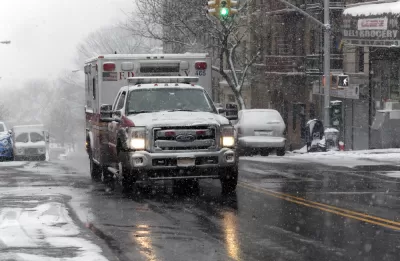
Public health experts are expecting to see a surge of new coronavirus infections followed by an additional surge of hospitalizations resulting from Thanksgiving travel that the Centers for Disease Control and Prevention had advised against doing.
"The nation averaged just over 161,000 coronavirus cases during the past week, an increase of 2 percent from the average two weeks earlier," according to The New York Times coronavirus tracker on December 2, although the Thanksgiving holiday likely led to some underreporting. During the last week, daily new cases declined by 8%, resulting in a case incidence rate in the U.S overall of 50 per 100,000 residents based on a 7-day rolling average, according to The Washington Post tracker.
Of course, the incidence varies by geography, with South Dakota averaging 100 new cases per 100k, the nation's highest, and Hawaii the lowest at 6 per 100k. Seven states, led by Tennessee, saw a double-digit percentage increase in daily cases in the last week, while 26 states, led by North Dakota, saw a double-digit percentage decline during the last seven days, according to the Post's tracker.
Hospitalizations are at an all-time high, almost 99,000 on the first day of December, according to the Times tracker, an increase of 32% from two weeks ago. The previous peaks of just below 60,000 occurred in mid-April during the spring surge in the Northeast and late July during the summer surge in the South and West, shown on this graph by the COVID Tracking Project.
Hospitalizations are surging by at least 10% in 29 states, led by Delaware with a 49% increase from last week, according to the Post tracker on Dec. 2. Only Iowa saw a decrease greater than 10%.
Northeast hospitals hit hard
"Hospitalizations in the most densely populated region of the U.S. are up 63% in the past 14 days to 14,071, the most alarming momentum in the nation, according to Covid Tracking Project data," report Jonathan Levin and Keshia Clukey for Bloomberg News on Dec. 1 (source article).
Patients hospitalized with Covid-19 have increased by 79% and 80% each in New York and Pennsylvania, respectively, in the past two weeks and even more in the less-populous states of Maine and New Hampshire. Per capita hospitalizations are still much higher in many Midwest states, where they have just recently begun to decline from all-time highs.
Levin and Clukey note that "the Thanksgiving holiday led to a temporary distortion in case and death statistics" in the form of underreporting, which has led to more of a focus on hospitalization data.
According to the Covid Act Now database on Dec. 2, three states: Oklahoma, New Jersey, and New Mexico have used 100% of their intensive care unit (ICU) capacity, with Tennessee, South Dakota, and Georgia not far behind.
Related in Planetizen:
-
Thanksgiving Air Travel Breaks Pandemic Records, Dec. 1, 2020
-
'We are Entering the Steep Slope of the Epidemic Curve', November 1, 2020
-
Texas Hits Pause as Hospital Beds Fill Up, June 26, 2020
FULL STORY: Northeast Has Worst Momentum in U.S. Covid Hospitalization Surge


Wisconsin in Crisis
Hospitals in parts of Wisconsin are experiencing a medical crisis reminiscent of New York and Arizona—they are running out of beds due to a surge of COVID-19 patients. The outbreak is statewide, showing no relationship with density.

Are We 'Rounding the Corner' in the Pandemic?
All the coronavirus data is moving in the right direction in most of the U.S., yet 130,000 additional Americans are projected to die from COVID-19 by June according to one widely used model.

Your Date With Omicron
“All of us have a date with omicron,” Dr. Amesh Adalja, a senior scholar at the Johns Hopkins Center for Health Security, told The Associated Press on Dec. 20, adding "...and the best way you can encounter this is to be fully vaccinated.”

Planetizen Federal Action Tracker
A weekly monitor of how Trump’s orders and actions are impacting planners and planning in America.

The state-sanctioned urbicide of Austin
People don’t kill cities. Freeways do.

US to reduce Colorado River water deliveries to Mexico
A new Colorado Treaty amendment reduces Mexico’s Colorado River water allocation by 250,000 acre feet.

Baltimore to break ground on $50 million Transit Priority Project
The project will bring faster bus trips, safer streets and better bike connections to Baltimore.

Airbnb launches $250 million 'last-dollar financing' housing accelerator, makes first investment in Austin
The company will put $6.4 million towards affordable housing development in Texas’ capital.

Guerilla urbanists are building DIY bus stop benches in Chicago
A before-and-after of one of the bus stops with a new bench. The new benches are not officially sanctioned or permitted, but the residents who placed them hope they will be the start of a network of DIY benches across the city.

FREE Course: Walkable City 1: Why Walkability?
After describing his path towards focusing on walkability as the essence of good planning, Jeff Speck marches through his five principal reasons for making more walkable places.
Reinventing Malls: Planning Alchemy—Turning Gray Fields Into Gold
The course focuses on the opportunities and imperatives that shape reinvention of mall sites.

Eagle County Government
Harvard University Graduate School of Design
Nashville Planning Department
The Architects Foundation
University of Cincinnati Online
The Pocatello Development Authority
The Urban Renewal Agency of the City of Pocatello
Journal of the American Planning Association