Political will is building behind the idea of improving bus infrastructure to support frontlines workers in the most heavily effected parts of Canada's largest city.


"There's a call at Toronto's city hall this week to ramp up a plan to create buses-only lanes on some busy suburban streets as a way to help tackle COVID-19's impact on the city's vulnerable neighbourhoods," reports Michael Smee.
As of this writing, two Toronto city councillors are expected to introduce a motion "to accelerate their plan to ban cars and other non-TTC vehicles from curb lanes in five busy corridors that serve a handful of priority neighbourhoods," according to Smee. The existing plan to expand bus priority in the neighborhoods of Scarborough and North York, both disproportionately suffering the effects of COVID-19, was intended to be deployed over five years.
Toronto would join New York City in expanding bus priority during the pandemic, after the U.S. city announced plans recently to add 20 miles of bus lanes and busways to provide alternatives to automobile travel in the wake of the pandemic. Toronto already has a track record of success in converting streets to transit priority, with the example of King Street.
Read the full story: City may speed up plans to prioritize TTC bus service on 5 of Toronto's busiest routes

Pandemic Bus Lanes Show Promise as Permanent Solutions
As cities streamline approval processes for bus-only lanes during the pandemic, transit experts hope the projects will lead to lasting change.
Bus Priority Falling to Local Political Opposition in New York City
An ambitious program to add 20 miles of bus lanes and protected bus ways in the city of New York has been diminished by political opposition in parts of the city.
20 Miles of Bus Lanes and Car-Free Busways Coming to New York City
While it falls short of a more ambitious proposal pitched by the MTA recently, a new plan to expand bus priority on the streets of New York City would mark a significant expansion of a trend that started on 14th Street in Manhattan.

Planetizen Federal Action Tracker
A weekly monitor of how Trump’s orders and actions are impacting planners and planning in America.

Northwest rail fans eager for Sept. 30 debut of Amtrak’s Airo fleet
Get ready for that new train smell and more seats. But they won’t go faster or run more frequently on the Cascades route in Washington and Oregon.
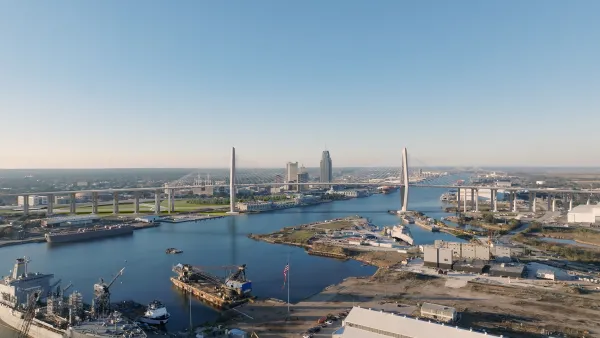
Alabama scores up to $2.5 billion federal loan for largest infrastructure project in state’s history
The Mobile River Bridge and Bayway Project aims to ease congestion at Alabama’s worst bottleneck.

Novel study finds extreme state-by-state disparity in housing construction timelines
The first comprehensive working paper on U.S. construction timelines also found that the permitting process for multi-family projects has slowed nationwide.

California may destroy its beaches trying to save homes from El Niño
Boulders and seawalls can protect homes from waves, but ultimately destroy sandy beaches.

California high-speed rail accomplishes only one legislative goal in 2026
The majority of the agency's failed pitches were never developed into written proposals.

FREE Course: Walkable City 1: Why Walkability?
After describing his path towards focusing on walkability as the essence of good planning, Jeff Speck marches through his five principal reasons for making more walkable places.
Reinventing Malls: Planning Alchemy—Turning Gray Fields Into Gold
The course focuses on the opportunities and imperatives that shape reinvention of mall sites.

City of Thousand Oaks
City of Wisconsin Rapids
Harvard University Graduate School of Design
The Architects Foundation
University of Cincinnati Online
Northern Illinois Transit Authority (NITA)
The Pocatello Development Authority
The Urban Renewal Agency of the City of Pocatello