Denver now has more than 13 miles of streets closed to car traffic. Only Minneapolis has more.


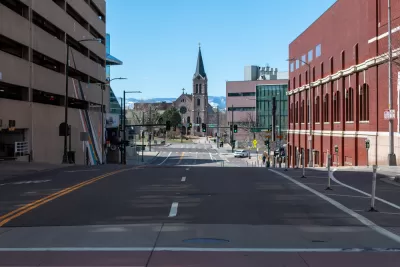
"The city government will close segments of East 11th Avenue, Bryon Place, Stuart Street and East 16th Avenue to cars," reports David Sachs.
The plans to open streets for non-automotive transportation was announced by Denver Mayor Michael Hancock on Friday of last week, and the city began implementing changes over the weekend.
While Denver followed the lead of cities like Philadelphia in closing streets to cars to allow more space for pedestrians and people on bikes, the city of Denver now has more miles of open streets as a tactical response to the coronavirus pandemic than any other city. Tactical urbanism expert Mike Lydon is keeping track of the tally on a Google Spreadsheet, in case you also want to keep track at home.
The only city with more open streets than Denver, as noted in the spreadsheet: Minneapolis, with 18 miles of open streets.
Read the full story: Some Denver streets will close to cars, giving people who walk and bike more elbow room during the coronavirus pandemic

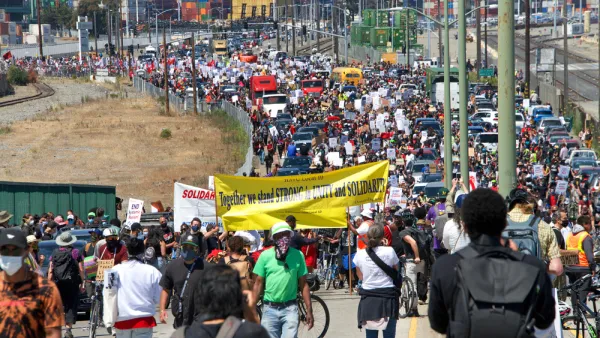
How Oakland Is Fixing its Pandemic Planning Equity Problem
The Oakland Slow Streets program, one of the most controversial developments of the early pandemic, has evolved to become the Essential Places initiative, thanks to new planning practices and a commitment to equity in Oakland, California.
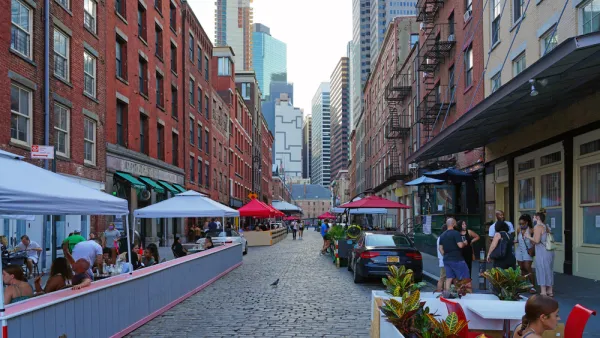
New York Outdoor Dining, Open Streets Programs Now Permanent
New York City will now be measurably less car-centric for the indefinite future.
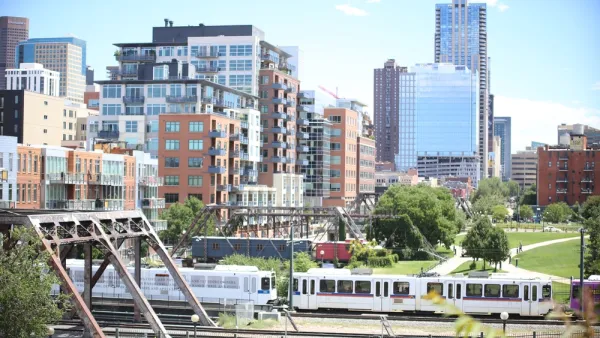
Pandemic Casts a Shadow Over Today's Big Rail Line Opening in Denver
The N Line between Denver and its northern suburbs opens today to the public, but N Line trains are expected to carry far fewer passengers, and lower frequencies, than originally planned.

Planetizen Federal Action Tracker
A weekly monitor of how Trump’s orders and actions are impacting planners and planning in America.

California plans to bury El Niño’s downpour
If the state plays its cards right, it may be able to store a billion acre-feet of El Niño’s water in aquifers.

Chicago breaks ground on $3 billion megadevelopment
The new neighborhood, titled Foundry Park, will one day host 3,700 residences.

Satanic place names
From streams and lakes to valleys and canyons, I mapped more than 1,000 places named after the Devil.

California High-Speed Rail Authority CEO resigns after $600,000 scandal
Under Ian Choudri, the authority used taxpayer dollars to fund first class flights and trips to nightclubs.

Want to study the Missouri River? Soon, you may need unanimous approval from 10 states
Legislation would require 10 governors’ permission to study or build projects moving water outside the basin.

FREE Course: Walkable City 1: Why Walkability?
After describing his path towards focusing on walkability as the essence of good planning, Jeff Speck marches through his five principal reasons for making more walkable places.
Reinventing Malls: Planning Alchemy—Turning Gray Fields Into Gold
The course focuses on the opportunities and imperatives that shape reinvention of mall sites.

City of Rosemead
Rutgers University, Edward J. Bloustein School of Planning and Public Policy
One Hundred Miles
Hunter College, City University of New York (CUNY)
The Architects Foundation
University of Cincinnati Online
City of Cambridge
Montrose County
The Pocatello Development Authority