Pittsburgh is expected to release its Bike(+) Plan later this year.



The city of Pittsburgh is preparing to release a new bike plan, called Bike(+) Plan, later this year, and Emily Nonko provides a preview of the plan's ambitions to respond to "modern-day challenges that include climate change and new mobility options like electric bicycles."
"Perhaps most importantly, the city’s transportation planners are framing this plan as a necessary shift in accommodating new forms of mobility," writes Nonko.
To achieve that shift, the plan currently proposes "an additional 156 miles of safe bicycle facilities, expanding the total network from 30 miles of on-street facilities and 44 miles of trail to 150 miles on street and 76 miles of trails for a total of over 226 miles of travel lanes for bicycles and other low-speed travel modes," according to Nonko.
The article includes background about the political process that cleared the way for the new plan (Pittsburgh has the oldest bike plan of the country's largest 60 cities, dating back to 1999), the goals guiding the plan, and the plan's community engagement process.
FULL STORY: Pittsburgh’s New Bike Plan Pulls No Punches

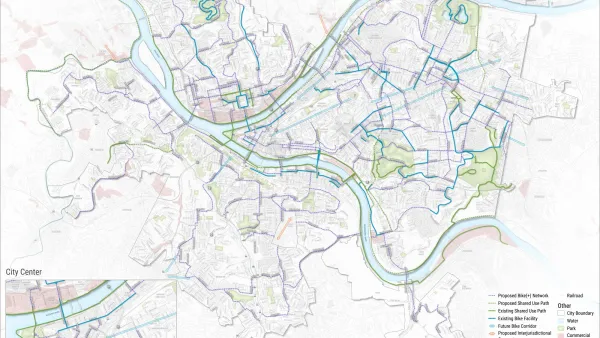
Hundreds of Miles of New Bike Lanes Coming to Pittsburgh
Checking in with the Bike(+) Plan in Pittsburgh.
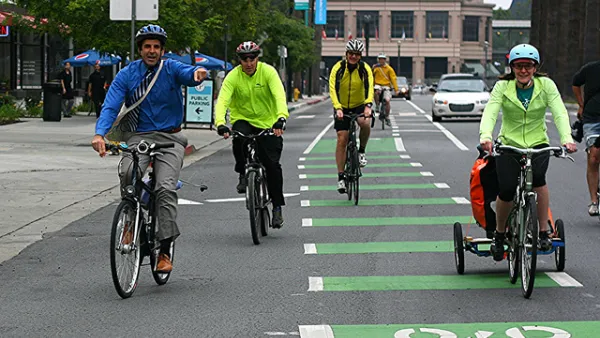
Better Bike Plan 2025 Adopted in San Jose
California's third most populous city has a new plan to add hundreds of miles of protected bike lanes.
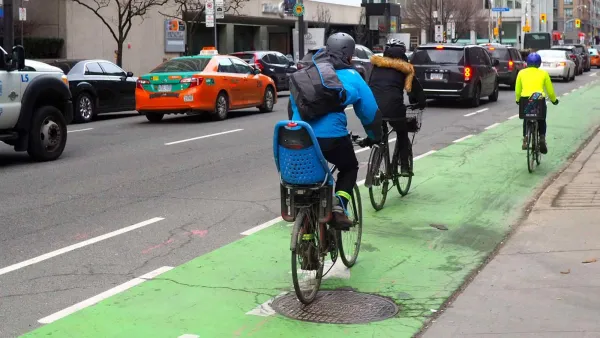
Toronto's Expanded its Bike Infrastructure Network to Run Parallel to Transit Lines
The Toronto City Council approved a quick expansion of bike lanes around the city to provide an alternative to public transit during and after the pandemic.

Planetizen Federal Action Tracker
A weekly monitor of how Trump’s orders and actions are impacting planners and planning in America.

The state-sanctioned urbicide of Austin
People don’t kill cities. Freeways do.

US to reduce Colorado River water deliveries to Mexico
A new Colorado Treaty amendment reduces Mexico’s Colorado River water allocation by 250,000 acre feet.

5 New England states march closer to 800 megawatt wind energy project
Securing federal approval for the project may be complicated under the Trump administration, which has historically been hostile towards domestic wind power.

Baltimore to break ground on $50 million Transit Priority Project
The project will bring faster bus trips, safer streets and better bike connections to Baltimore.

Airbnb launches $250 million 'last-dollar financing' housing accelerator, makes first investment in Austin
The company will put $6.4 million towards affordable housing development in Texas’ capital.

FREE Course: Walkable City 1: Why Walkability?
After describing his path towards focusing on walkability as the essence of good planning, Jeff Speck marches through his five principal reasons for making more walkable places.
Reinventing Malls: Planning Alchemy—Turning Gray Fields Into Gold
The course focuses on the opportunities and imperatives that shape reinvention of mall sites.

Eagle County Government
Harvard University Graduate School of Design
Nashville Planning Department
The Architects Foundation
University of Cincinnati Online
The Pocatello Development Authority
The Urban Renewal Agency of the City of Pocatello
Journal of the American Planning Association