Katy Young Yaroslavsky discusses the the Measure W Implementation Ordinance and the committee appointees tasked with determining how this new funding will flow into community water projects.


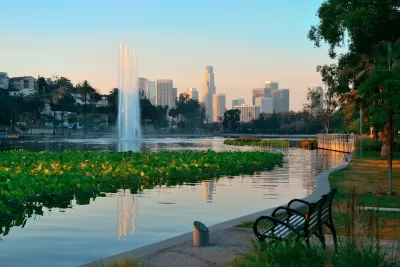
Passed by voters in November 2018, Measure W—the Safe, Clean Water Program—imposed a 2.5 cent/sq. ft. parcel tax on impermeable surface construction in Los Angeles County and is set to provide upwards of $300 million annually to support stormwater and clean water infrastructure projects.
The Planning Report spoke with Katy Young Yaroslavsky, Supervisor Sheila Kuehl's deputy for the environment and arts, on the Board of Supervisors' recent approval of the Measure W Implementation Ordinance and the committee appointees tasked with determining how this new funding will flow into Los Angeles County community water projects. Yaroslavsky explains how Measure W was:
"born out of a desire to modernize our water infrastructure so we can capture, clean and store more of our storm water...[and] ramp up our region’s transition away from imported water and towards increasing our local water supply."
Read the full interview at The Planning Report.
FULL STORY: Katy Young Yaroslavsky Unpacks Measure W Implementation of LA’s ‘Safe, Clean Water Program’

$300 Million Property Tax to Fund Stormwater Infrastructure on the Ballot in Los Angeles County
The proposed property tax would double the county's stormwater capture capacity.
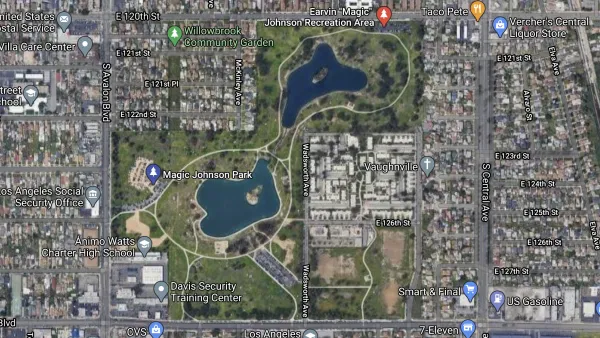
South Los Angeles Park Offers Hidden Benefits
Not only does the redevelopment of a large section of Earvin Magic Johnson Park in Willowbrook offer much needed green space and new amenities, it also helps to conserve water and improve water quality.
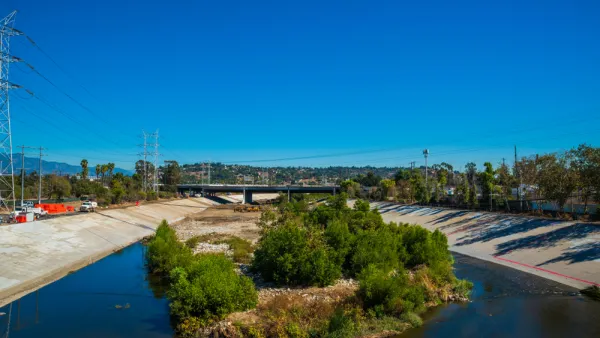
A Comment for the L.A. River Master Plan
Five themes proposed to achieve justice and sustainability for the Los Angeles River and its surrounding communities.

Planetizen Federal Action Tracker
A weekly monitor of how Trump’s orders and actions are impacting planners and planning in America.

The state-sanctioned urbicide of Austin
People don’t kill cities. Freeways do.

US to reduce Colorado River water deliveries to Mexico
A new Colorado Treaty amendment reduces Mexico’s Colorado River water allocation by 250,000 acre feet.

5 New England states march closer to 800 megawatt wind energy project
Securing federal approval for the project may be complicated under the Trump administration, which has historically been hostile towards domestic wind power.

Baltimore to break ground on $50 million Transit Priority Project
The project will bring faster bus trips, safer streets and better bike connections to Baltimore.

Airbnb launches $250 million 'last-dollar financing' housing accelerator, makes first investment in Austin
The company will put $6.4 million towards affordable housing development in Texas’ capital.

FREE Course: Walkable City 1: Why Walkability?
After describing his path towards focusing on walkability as the essence of good planning, Jeff Speck marches through his five principal reasons for making more walkable places.
Reinventing Malls: Planning Alchemy—Turning Gray Fields Into Gold
The course focuses on the opportunities and imperatives that shape reinvention of mall sites.

Eagle County Government
Harvard University Graduate School of Design
Nashville Planning Department
The Architects Foundation
University of Cincinnati Online
The Pocatello Development Authority
The Urban Renewal Agency of the City of Pocatello
Journal of the American Planning Association