Not only does the redevelopment of a large section of Earvin Magic Johnson Park in Willowbrook offer much needed green space and new amenities, it also helps to conserve water and improve water quality.


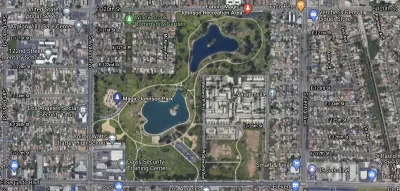
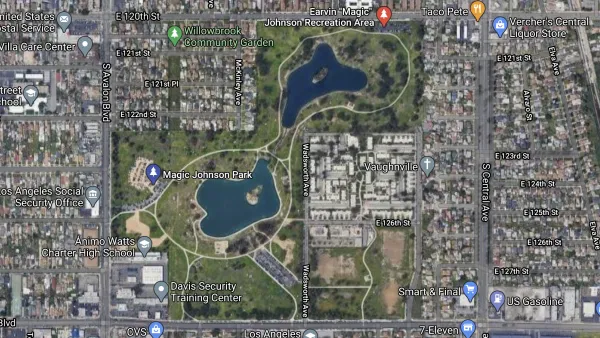
Earvin "Magic" Johnson Park is one of the largest parks in South Los Angeles and is an oasis in a region lacking green spaces. The park is located in the unincorporated community of Willowbrook and is operated by the Los Angeles County Department of Parks and Recreation (DPR). The redevelopment of the park is being guided by a Master Plan first adopted in 2016 and has since been modified twice.
The first phase of the Master Plan is being implemented, with the transformation of a 37-acre area in the lower section of the park completed recently. DPR worked with landscape architecture firm AHBE/MIG to add new amenities and improve existing features which include: a new community event center; a half-mile lakeside community loop trail with picnic areas; a children’s play area with a splash pad; an outdoor classrooms and educational graphics; California native coastal sage scrub and freshwater marsh wetland habitats; and a wedding lawn.
In addition to these much needed amenities, the park is helping to conserve water and improve water quality in South Los Angeles, as detailed by Carolina A. Miranda in this Los Angeles Times article. A new pump located beneath the park's surface diverts stormwater runoff from a 375-acre watershed that feeds into Compton Creek, which is then channeled into the lake at the park's center. The new landscaping and wetlands area along the perimeter of the manmade lake provides natural filtration of the water, which is then treated, stored, and reused for park irrigation. To learn more, please read the source article.
FULL STORY: What’s hiding in plain sight at Magic Johnson Park? Maybe a solution to our water problem

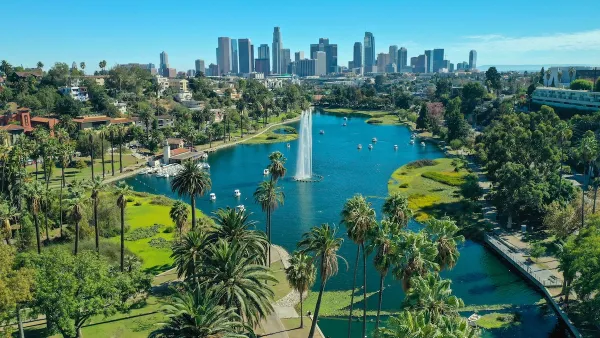
Transformation of South Los Angeles Park Offers Hope to the Community
Earvin "Magic" Johnson Park in Willowbrook has been transformed with $70 million worth of improvements, including a 20,000-square foot event center for community gatherings and events.
A Sustainable Future for LA: Updating the OurCounty Plan
Los Angeles County is updating its Sustainability Plan to refine its vision for climate action, environmental justice, and community well-being, with residents encouraged to participate by taking the OurCounty 2025 Update Community Survey.
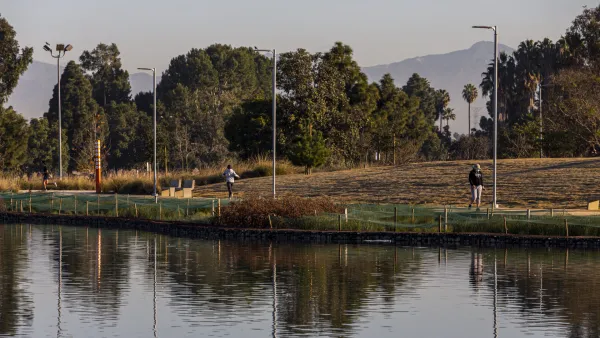
Magic Johnson Park to Reopen in February
A much-needed park in South Los Angeles will reopen to the public after undergoing major renovations.

Planetizen Federal Action Tracker
A weekly monitor of how Trump’s orders and actions are impacting planners and planning in America.

The state-sanctioned urbicide of Austin
People don’t kill cities. Freeways do.

US to reduce Colorado River water deliveries to Mexico
A new Colorado Treaty amendment reduces Mexico’s Colorado River water allocation by 250,000 acre feet.

5 New England states march closer to 800 megawatt wind energy project
Securing federal approval for the project may be complicated under the Trump administration, which has historically been hostile towards domestic wind power.

Baltimore to break ground on $50 million Transit Priority Project
The project will bring faster bus trips, safer streets and better bike connections to Baltimore.

Airbnb launches $250 million 'last-dollar financing' housing accelerator, makes first investment in Austin
The company will put $6.4 million towards affordable housing development in Texas’ capital.

FREE Course: Walkable City 1: Why Walkability?
After describing his path towards focusing on walkability as the essence of good planning, Jeff Speck marches through his five principal reasons for making more walkable places.
Reinventing Malls: Planning Alchemy—Turning Gray Fields Into Gold
The course focuses on the opportunities and imperatives that shape reinvention of mall sites.

Eagle County Government
Harvard University Graduate School of Design
Nashville Planning Department
The Architects Foundation
University of Cincinnati Online
The Pocatello Development Authority
The Urban Renewal Agency of the City of Pocatello
Journal of the American Planning Association