Judge Eileen Rakower decided New York can move forward with bus improvements that will create a temporary bus lane on 14th street.


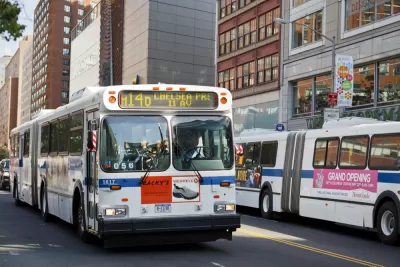
A court decision earlier this week cleared the way for construction on an 18-month pilot project that "all but bans cars" on 14th street, in a "major traffic experiment," according to a New York Times article by Winnie Hu published today.
The project will create a busway closed to private cars. Only emergency vehicles, buses, and trucks will be allowed on 14th Street between 3rd and 9th avenues on 14th Street.
"Drivers will be allowed onto the street for just a block or two to make deliveries and pick up and drop off passengers. Then they will have to turn off," according to Wu."
According to Wu, the pilot project reflects a larger trend of cities rethinking the role of cars in the private realm:
The sweeping restrictions come as New York and other cities fundamentally rethink the role of cars in the face of unrelenting traffic that is choking their streets, poisoning the environment and crippling public transit systems by trapping buses and light rail systems in gridlock.
The 14th Street bus project, originally scheduled to start construction in July, cleared a final judicial hurdle earlier this week, reports Ryan Deffenbaugh in a separate article published after the decision. "The state Supreme Court in Manhattan ruled that the city’s Department of Transportation complied with state’s requirement to take a 'hard look' at the impact of its plan to limit cars on the street."
FULL STORY: Major Traffic Experiment in N.Y.C.: Cars All but Banned on Major Street

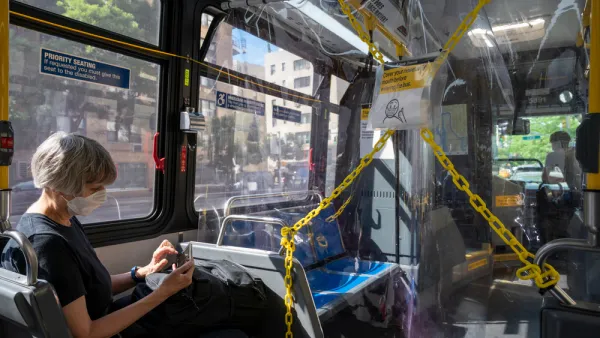
Backtracking From Ambitious Bus Lane Promises in New York City
Back in June, the city of New York seemed poised for a major shift in transportation priority. In October, reality is setting in about how hard a sell the transformation will be.
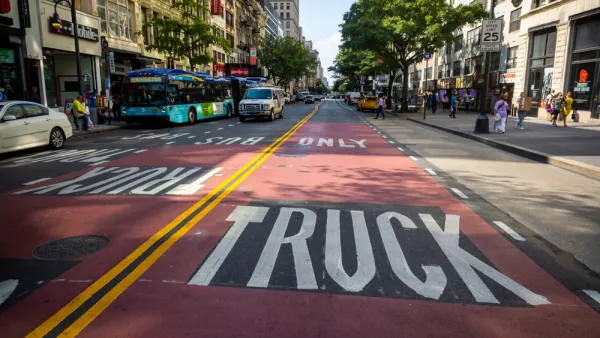
Bus Priority Falling to Local Political Opposition in New York City
An ambitious program to add 20 miles of bus lanes and protected bus ways in the city of New York has been diminished by political opposition in parts of the city.
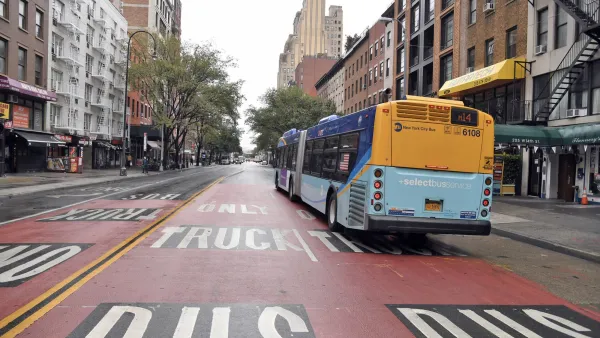
New York's Bus Lane Program Slow to Start
It's a case of arrested development, as local opposition has derailed ambitious plans to greatly expand bus priority on streets around the city of New York.

The state-sanctioned urbicide of Austin
People don’t kill cities. Freeways do.

US to reduce Colorado River water deliveries to Mexico
A new Colorado Treaty amendment reduces Mexico’s Colorado River water allocation by 250,000 acre feet.

New Jersey’s second-largest city bans standalone data centers
Jersey City will continue to allow co-location facilities, such as those meant for research institutions that store their own data.

Amtrak not solely to blame for New Jersey commuter rail's unreliability, report finds
A new study from the Garden State Initiative found that NJ Transit’s budget grew 20% across a 4 year period, but reliability declined significantly over the same period.

EPA erases limits on planet-warming pollution from power plants
Under Monday’s plan, power plants would still have some limits on how much mercury, arsenic and other contaminants they can emit.

Phoenix announces new on-demand transit service, more frequent RAPID buses
Both new services will launch in October, and are part of Phoenix's Project Effective Access Solutions for Easing Congestion.

FREE Course: Walkable City 1: Why Walkability?
After describing his path towards focusing on walkability as the essence of good planning, Jeff Speck marches through his five principal reasons for making more walkable places.
Reinventing Malls: Planning Alchemy—Turning Gray Fields Into Gold
The course focuses on the opportunities and imperatives that shape reinvention of mall sites.

Eagle County Government
Harvard University Graduate School of Design
Nashville Planning Department
The Architects Foundation
University of Cincinnati Online
The Pocatello Development Authority
The Urban Renewal Agency of the City of Pocatello
Journal of the American Planning Association