The New York City MTA has changed the story, twice, about its plans for little used WiFi service on the city buses.


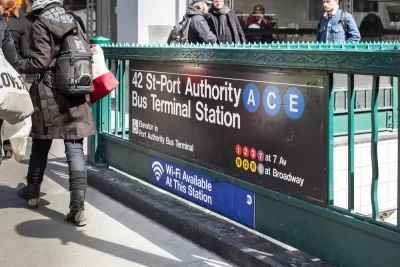
"The MTA spelled out plans in its latest budget to eliminate lightly used Wi-Fi service on thousands of buses — then backtracked after THE CITY inquired about the proposed cut," reports Jose Martinez.
The agency then announced it was still preparing to cut back WiFi service on buses, "noting it had overestimated how much riders would use Wi-Fi on buses," according to Martinez. A few days later, however, the agency said it wasn't cutting the service at all.
There is evidence that WiFi isn't used very much, probably because so many riders have cellular service. "In January — when more than 40 million people rode buses — there were 630,000 log-ons to bus Wi-Fi, according to an MTA statement given to THE CITY in March," reports Martinez.
Governor Andrew Cuomo announced WiFi service on MTA buses with much fanfare in 2016, but the additional amenity hasn't been enough to prevent ridership from declining on the city's buses.
FULL STORY: MTA SENDS SCRAMBLED SIGNALS ON LITTLE-USED $2.5M BUS WI-FI

New York Mayor's 'Gridlock Alerts' Go Unheeded
Mobility advocates say the city must do more to make transit and alternative transportation modes more convenient for drivers.
NYC Transit Needs Its Commuters Back
With ridership still at less than half of pre-pandemic levels, the region's transit agencies face billions of dollars in budget shortfalls after federal assistance runs out.
NYC to Upgrade 1/3 of its Subway Car Fleet
The MTA is seeking proposals for up to 2,390 new subway cars to upgrade its aging fleet.

Planetizen Federal Action Tracker
A weekly monitor of how Trump’s orders and actions are impacting planners and planning in America.

The state-sanctioned urbicide of Austin
People don’t kill cities. Freeways do.

US to reduce Colorado River water deliveries to Mexico
A new Colorado Treaty amendment reduces Mexico’s Colorado River water allocation by 250,000 acre feet.

5 New England states march closer to 800 megawatt wind energy project
Securing federal approval for the project may be complicated under the Trump administration, which has historically been hostile towards domestic wind power.

Baltimore to break ground on $50 million Transit Priority Project
The project will bring faster bus trips, safer streets and better bike connections to Baltimore.

Airbnb launches $250 million 'last-dollar financing' housing accelerator, makes first investment in Austin
The company will put $6.4 million towards affordable housing development in Texas’ capital.

FREE Course: Walkable City 1: Why Walkability?
After describing his path towards focusing on walkability as the essence of good planning, Jeff Speck marches through his five principal reasons for making more walkable places.
Reinventing Malls: Planning Alchemy—Turning Gray Fields Into Gold
The course focuses on the opportunities and imperatives that shape reinvention of mall sites.

Eagle County Government
Harvard University Graduate School of Design
Nashville Planning Department
The Architects Foundation
University of Cincinnati Online
The Pocatello Development Authority
The Urban Renewal Agency of the City of Pocatello
Journal of the American Planning Association