BART is a financial and operational mess, and its new inspector general has a slew of major issues to tackle.


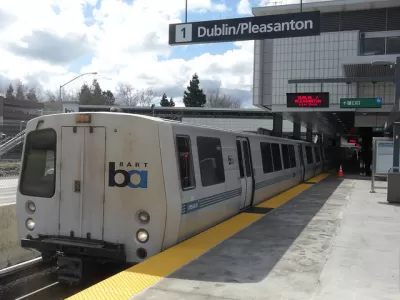
The Bay Area Rapid Transit agency is facing a long list of fiscal and operational issues, and the first BART inspector general, Harriet Richardson, has her work cut out for her, says Daniel Borenstein. "BART officials never wanted an inspector general auditing and investigating their work. But the new position was forced on them as part of a legislative deal under which BART receives $1.1 billion from Bay Area bridge toll increases."
The agency is facing a fiscal crisis that is partly the result of decreasing ridership and labor agreements that Borenstein argues favored BART labor unions rather than taxpayers and riders. He says the agency was also not forthcoming about a $3.5 billion bond measure for capital replacement. "A bend-the-rules and win-at-any-cost mentality turned publicly funded staff members into political operatives."
Borenstein hopes that Richardson can guide the agency down the path of fiscal and operational responsibility without interference from the BART board. "The strength of her backbone and the willingness of BART directors to listen to her will be key to ensuring that clean, safe trains run on time at a price riders and taxpayers can afford."
FULL STORY: Borenstein: On cusp of San Jose service, will BART let new auditor it didn’t want do her job?


San Francisco Bay Area Transit Fare Discount to Start This Fall
Low-income transit users desperately need a break on fares. A discount is on its way, but won’t be available until later in the year, and transit advocates say it’s not enough.

Should Planners Run for Public Office?
In an opinion piece bemoaning the passage of legislation that gives the BART board new land use planning authority, BART Director Deborah Allen argues that planners won't make good directors because they lack independence.
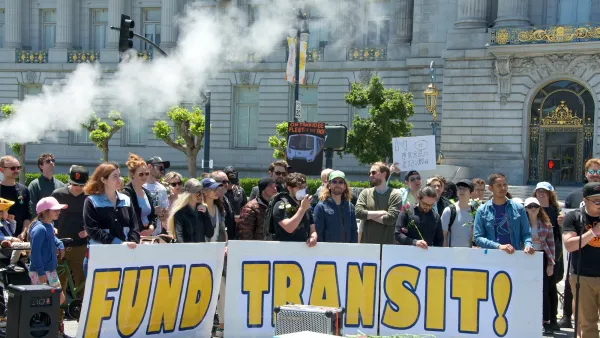
BART approves 2027 budget with no cuts, banking on November ballot measure for new funding
The Bay Area transit agency hopes to move forward without service cuts or fare increases.

The state-sanctioned urbicide of Austin
People don’t kill cities. Freeways do.

US to reduce Colorado River water deliveries to Mexico
A new Colorado Treaty amendment reduces Mexico’s Colorado River water allocation by 250,000 acre feet.

New Jersey’s second-largest city bans standalone data centers
Jersey City will continue to allow co-location facilities, such as those meant for research institutions that store their own data.

Amtrak not solely to blame for New Jersey commuter rail's unreliability, report finds
A new study from the Garden State Initiative found that NJ Transit’s budget grew 20% across a 4 year period, but reliability declined significantly over the same period.

EPA erases limits on planet-warming pollution from power plants
Under Monday’s plan, power plants would still have some limits on how much mercury, arsenic and other contaminants they can emit.

Phoenix announces new on-demand transit service, more frequent RAPID buses
Both new services will launch in October, and are part of Phoenix's Project Effective Access Solutions for Easing Congestion.

FREE Course: Walkable City 1: Why Walkability?
After describing his path towards focusing on walkability as the essence of good planning, Jeff Speck marches through his five principal reasons for making more walkable places.
Reinventing Malls: Planning Alchemy—Turning Gray Fields Into Gold
The course focuses on the opportunities and imperatives that shape reinvention of mall sites.

Eagle County Government
Harvard University Graduate School of Design
Nashville Planning Department
The Architects Foundation
University of Cincinnati Online
The Pocatello Development Authority
The Urban Renewal Agency of the City of Pocatello
Journal of the American Planning Association