A surprising number of puns get squeezed into an article rat complaints as a better harbinger of gentrification than...rats.



"Where there are people, there are rats. Or, more accurately: Where there are well-off white people, there are complaints about rats," according to an article Emily Lipstein.
Lipstein is taking umbrage with publications that don't note the distinction between those two points, namely, the New York Times and the Washington Post.
I’ve lost my mind twice in the past year (for rat-related reasons) after reading pieces from the New York Times and the Washington Post about the supposedly exploding rat populations in New York and D.C. The problem is that claims about where these cities are the rattiest are being based on the public records of calls to 311 about them. And there are some very important qualifiers you’re going to want to keep in mind when using that data.
In the interest of disclosure, Planetizen picked up a story about increasing rat complaints in New York City in 2018. But basing a story about increasing numbers of rats based on the number of rat complaints placed to 311 is exactly the editorial choice Lipstein is concerned about. According to Lipstein's research, mapping 311 reveals more about gentrification than the rat population. "It became clear that mapping 311 calls isn’t a good way to tell where rats are; it’s a way to tell where the wealthy white people live."
Click through to see how many puns and rat jokes Lipstein can make while making this point.
Read the full story: You’re Not Mapping Rats, You’re Mapping Gentrification


A Bronx Community Fights to Have its Voice Heard
After organizing and giving input for decades, the community around the Kingsbridge Armory might actually see it redeveloped — and they want to continue to have a say in how it goes.
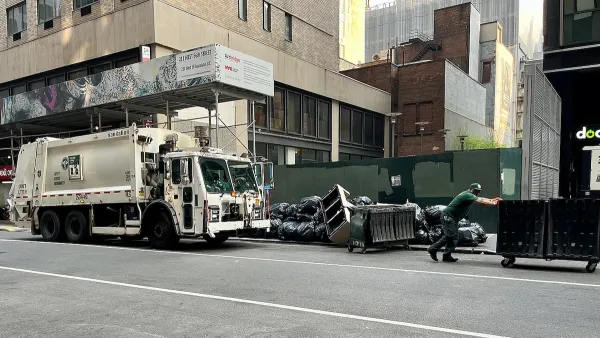
Parked Cars Hamper NYC Trash Containerization Effort
Sanitation workers must manually collect bags from containers blocked by parked cars, slowing a process that is meant to be safer and more efficient.
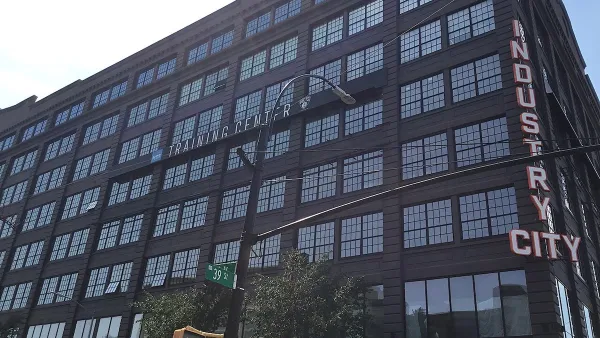
‘Emergent City’ Documentary Highlights Rare Anti-Gentrification Victory
The film charts the saga of a Brooklyn site called Industry City.

Planetizen Federal Action Tracker
A weekly monitor of how Trump’s orders and actions are impacting planners and planning in America.

The state-sanctioned urbicide of Austin
People don’t kill cities. Freeways do.

US to reduce Colorado River water deliveries to Mexico
A new Colorado Treaty amendment reduces Mexico’s Colorado River water allocation by 250,000 acre feet.

Nation's most wind-powered state turns to coal as data centers increase energy demand
For the first time in decades, Iowa has increased its generation of coal power.

NYC cools commuters with city's first rain garden above a bus stop
New York City officials say the plants in the rain garden can absorb 16 gallons of rainwater during heavy storms.

Brightline West’s future may rely on $6 billion federal loan
The company has until Nov. 2 to make a $400 million equity investment into its proposed high-speed rail line.

FREE Course: Walkable City 1: Why Walkability?
After describing his path towards focusing on walkability as the essence of good planning, Jeff Speck marches through his five principal reasons for making more walkable places.
Reinventing Malls: Planning Alchemy—Turning Gray Fields Into Gold
The course focuses on the opportunities and imperatives that shape reinvention of mall sites.

Greater Baltimore Committee
Eagle County Government
Harvard University Graduate School of Design
The Architects Foundation
University of Cincinnati Online
The Pocatello Development Authority
The Urban Renewal Agency of the City of Pocatello
Journal of the American Planning Association