The Southwest Corridor could become the most parking-heavy rail line every created by TriMet. Even parking-lite planning scenarios would spend as much as $100 million on parking garages.


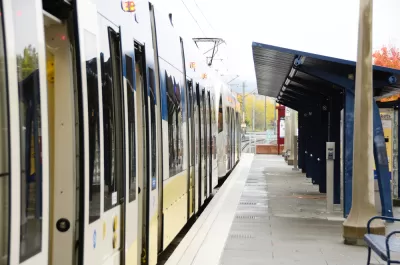
Michael Andersen sounds a warning about plans to build $168 million worth of parking garages along the Southwest Corridor light rail line in Greater Portland.
Greater Portland’s “Southwest Corridor” line, as the route mostly along Barbur Boulevard and Interstate 5 is known, could become the most parking-heavy rail line in the history of TriMet, Portland’s regional transit agency. Tucked into one of the scenarios for the $2.7 billion, 13-station project are five free-to-use parking garages with up to 3,350 structured parking spaces among them.
According to Andersen, the parking heavy plan is an example of what not to do. So much so, Andersen breaks down the math of how much not parking that $168 million could fund: "to build or acquire roughly 1,000 below-market-rate homes along the line; to install networks of protected bike lanes for miles in every direction around each proposed rail station; or to double the scale of TriMet’s big 2018 regionwide bus service improvement for the next 12 years."
A detailed and lengthy case against the parking rage proposals follows.
FULL STORY: PORTLAND MIGHT SPEND TWICE AS MUCH ON FREE PARKING LOTS AS AFFORDABLE HOUSING ALONG ITS NEXT RAIL LINE

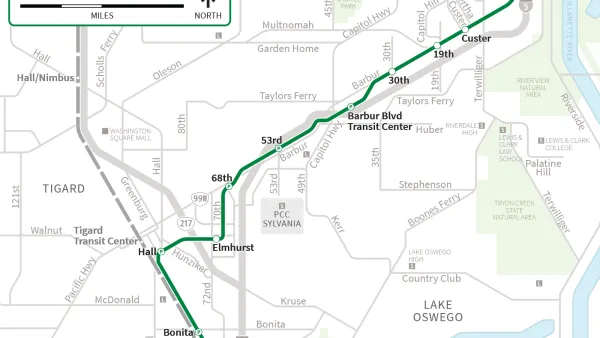
Portland Transit Vote Kills SW Transit Corridor Light Rail Project
In a pair of articles, Jonathan Maus reports on the final moments of the SW Corridor Light Rail Project, as project supporters deals with a loss at the ballot box.
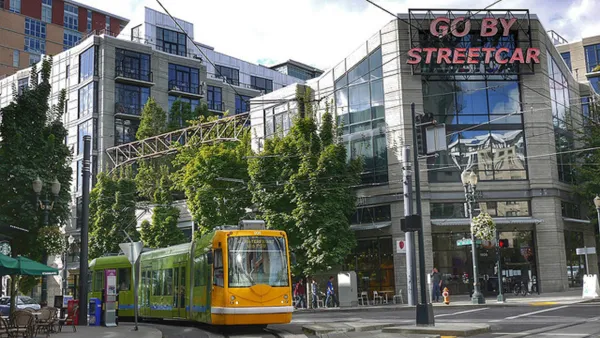
New Details for Portland's Transit Plan as Voters Head to the Polls
Voters in Portland-area voters will decide on a transportation funding measure for the "Get Moving 2020" plan, with details of four bus rapid transit project targeted for funding announced within weeks of the election.
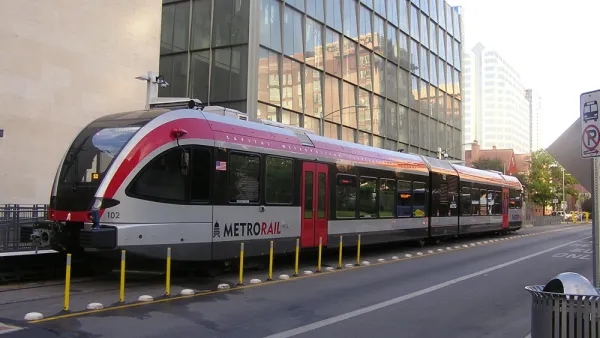
State and Local Votes Reveal Widespread Support for Public Transit
There's a narrative to be built from the results of state and local elections on issues of public transit funding: voters continue to support more funding for public transit projects and programs.

Planetizen Federal Action Tracker
A weekly monitor of how Trump’s orders and actions are impacting planners and planning in America.

The state-sanctioned urbicide of Austin
People don’t kill cities. Freeways do.

US to reduce Colorado River water deliveries to Mexico
A new Colorado Treaty amendment reduces Mexico’s Colorado River water allocation by 250,000 acre feet.

Baltimore to break ground on $50 million Transit Priority Project
The project will bring faster bus trips, safer streets and better bike connections to Baltimore.

Airbnb launches $250 million 'last-dollar financing' housing accelerator, makes first investment in Austin
The company will put $6.4 million towards affordable housing development in Texas’ capital.

Guerilla urbanists are building DIY bus stop benches in Chicago
A before-and-after of one of the bus stops with a new bench. The new benches are not officially sanctioned or permitted, but the residents who placed them hope they will be the start of a network of DIY benches across the city.

FREE Course: Walkable City 1: Why Walkability?
After describing his path towards focusing on walkability as the essence of good planning, Jeff Speck marches through his five principal reasons for making more walkable places.
Reinventing Malls: Planning Alchemy—Turning Gray Fields Into Gold
The course focuses on the opportunities and imperatives that shape reinvention of mall sites.

Eagle County Government
Harvard University Graduate School of Design
Nashville Planning Department
The Architects Foundation
University of Cincinnati Online
The Pocatello Development Authority
The Urban Renewal Agency of the City of Pocatello
Journal of the American Planning Association