A report suggests that the older a state is, the more likely it is that special interests have entrenched themselves, negatively impacting the public purse.


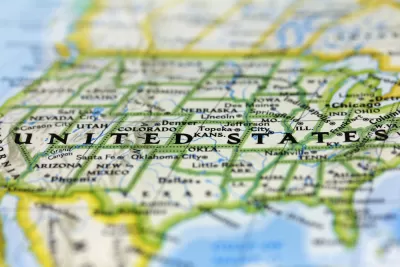
William Bergman, director of research for Truth in Accounting, has found that older states are more prone to financial problems. Drawing from one of his organization's reports, Bergman points to factors like gerrymandering and the proliferation of lawyers as signs that special interest groups have particular sway in a state.
Illinois, Louisiana, Maryland, Massachusetts, New Jersey, and Pennsylvania are some of the states that fit the bill, writes Liz Farmer for Governing. "These states, says Bergman, have allowed special interests groups to run up debt in the form of unfunded pension and retiree health-care benefits. These debts, in turn, are hurting economic growth."
Bergman wants states with relatively low levels of debt to take note. "In other words, younger states like Idaho and Utah, both admitted to the Union in the 1890s, aren't necessarily doomed to face the same fate. As it stands, they both have a taxpayer surplus and relatively low levels of political machinery by traditional economic measures," Farmer writes.
FULL STORY: How a State's Age Affects Its Financial Health


Minneapolis Activists Use DIY Traffic Circles to Identify, Slow ICE
Residents are using the pop-up roundabouts to slow traffic and make their presence known on Minneapolis streets.
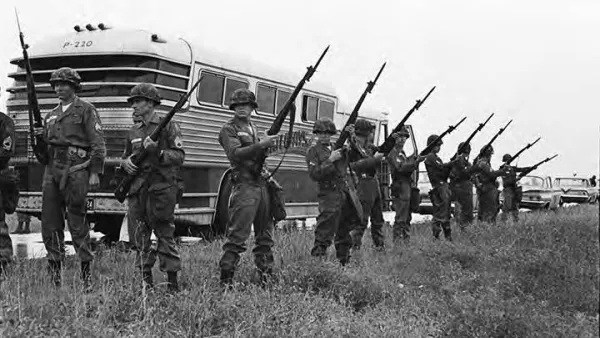
Reclaiming Transportation as a Place of Resistance
The systems that move us are not neutral — and we don’t have to pretend like they are.
Red Cities, Blue Cities and (Property) Crime: A Sequel
Like urban violent crime, urban property crime is often a political football. Republicans claim that crime in Democrat-run cities is proof that Democrats are incapable of maintaining public order. Do they have a point?

Planetizen Federal Action Tracker
A weekly monitor of how Trump’s orders and actions are impacting planners and planning in America.

The state-sanctioned urbicide of Austin
People don’t kill cities. Freeways do.

US to reduce Colorado River water deliveries to Mexico
A new Colorado Treaty amendment reduces Mexico’s Colorado River water allocation by 250,000 acre feet.

Amtrak not solely to blame for New Jersey commuter rail's unreliability, report finds
A new study from the Garden State initiative found that NJ Transit’s budget grew 20% across a 4 year period, but reliability declined significantly over the same period.

EPA erases limits on planet-warming pollution from power plants
Under Monday’s plan, power plants would still have some limits on how much mercury, arsenic and other contaminants they can emit.

Phoenix announces new on-demand transit service, more frequent RAPID buses
Both new services will launch in October, and are part of Phoenix's Project Effective Access Solutions for Easing Congestion.

FREE Course: Walkable City 1: Why Walkability?
After describing his path towards focusing on walkability as the essence of good planning, Jeff Speck marches through his five principal reasons for making more walkable places.
Reinventing Malls: Planning Alchemy—Turning Gray Fields Into Gold
The course focuses on the opportunities and imperatives that shape reinvention of mall sites.

Eagle County Government
Harvard University Graduate School of Design
Nashville Planning Department
The Architects Foundation
University of Cincinnati Online
The Pocatello Development Authority
The Urban Renewal Agency of the City of Pocatello
Journal of the American Planning Association