A system in disrepair is losing riders when it could use the fare box revenue the most.


"In another alarming sign of the crisis plaguing New York City’s subway, ridership dropped for the second year in a row as passengers flee the system for Uber and other ride-hailing services, draining the transit system of badly needed revenue," reports Emma G. Fitzsimmons.
"Annual subway ridership fell in 2017 to about 1.73 billion trips, down about 2 percent from 2015, according to statistics from the Metropolitan Transportation Authority, and subway officials said ridership continues to slip, falling during the first five months of this year by about 2 percent," adds Fitzsimmons.
It was as recent as 2015 that ridership numbers of the New York subway were soaring to heights not seen since the 1940s. Now, the City Council is considering legislation that would cap the number of ride-hailing vehicles in the city, in a move that could return some riders to the public transit system.
FULL STORY: Subway Ridership Dropped Again in New York as Passengers Flee to Uber

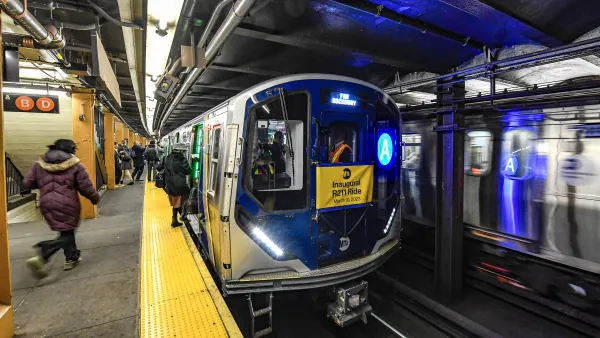
Fancy New Subway Cars Join the New York Subway System
New York has been planning on adding these new subway cars for years, finally achieving their goal in March 2023. More than a thousand of the new R211 trains will be running in New York within two years if all goes according to plan.
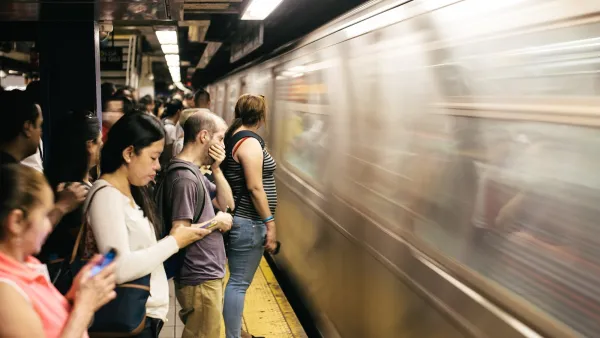
New York Subway Will Pilot Platform Barriers To Improve Rider Safety
After a shocking death and an overall rise in violent crime at its stations, New York City's transit authority will install platform barriers to prevent intentional or accidental falls onto tracks.
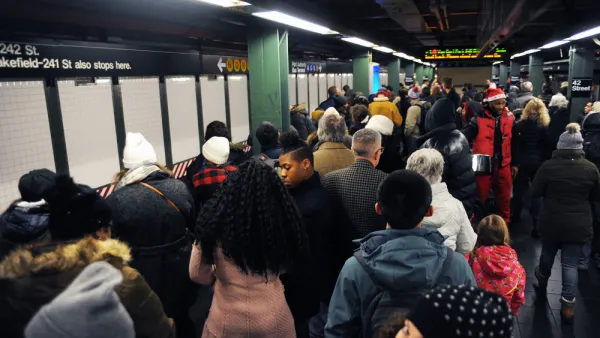
NYC Transit Needs Its Commuters Back
With ridership still at less than half of pre-pandemic levels, the region's transit agencies face billions of dollars in budget shortfalls after federal assistance runs out.

Planetizen Federal Action Tracker
A weekly monitor of how Trump’s orders and actions are impacting planners and planning in America.

The state-sanctioned urbicide of Austin
People don’t kill cities. Freeways do.

US to reduce Colorado River water deliveries to Mexico
A new Colorado Treaty amendment reduces Mexico’s Colorado River water allocation by 250,000 acre feet.

5 New England states march closer to 800 megawatt wind energy project
Securing federal approval for the project may be complicated under the Trump administration, which has historically been hostile towards domestic wind power.

Baltimore to break ground on $50 million Transit Priority Project
The project will bring faster bus trips, safer streets and better bike connections to Baltimore.

Airbnb launches $250 million 'last-dollar financing' housing accelerator, makes first investment in Austin
The company will put $6.4 million towards affordable housing development in Texas’ capital.

FREE Course: Walkable City 1: Why Walkability?
After describing his path towards focusing on walkability as the essence of good planning, Jeff Speck marches through his five principal reasons for making more walkable places.
Reinventing Malls: Planning Alchemy—Turning Gray Fields Into Gold
The course focuses on the opportunities and imperatives that shape reinvention of mall sites.

Eagle County Government
Harvard University Graduate School of Design
Nashville Planning Department
The Architects Foundation
University of Cincinnati Online
The Pocatello Development Authority
The Urban Renewal Agency of the City of Pocatello
Journal of the American Planning Association