Essentially, Uber and Lyft chose a tax on rides instead of a gross-receipts tax.



"San Francisco lawmakers want to tax Uber and Lyft rides, and both companies say that’s OK with them," reports Carolyn Said.
"The proposed tax, which applies only to trips that originate in San Francisco, would levy a 3.25 percent tax on net rider fares for single-party trips and 1.5 percent on shared rides," according to Said.
The San Francisco County Transportation Authority will be responsible for spending the $30 million in expected revenue generated by the new tax on transit projects, if the State Legislature grants San Francisco powers to tax ride-hailing trips.
The ride tax eliminates the need for a ballot initiative planned for November "that would have asked voters to tax ride-hailing companies’ gross receipts at rates up to 0.975 percent." Rachel Swan reported in more detail on that proposal by Supervisor Aaron Peskin in April 2018.
The potential for a political fight over the gross-receipts tax paved the way for the new tax on rides, according to Said.
FULL STORY: In compromise with SF Supervisor Peskin, Uber and Lyft agree to new ride tax

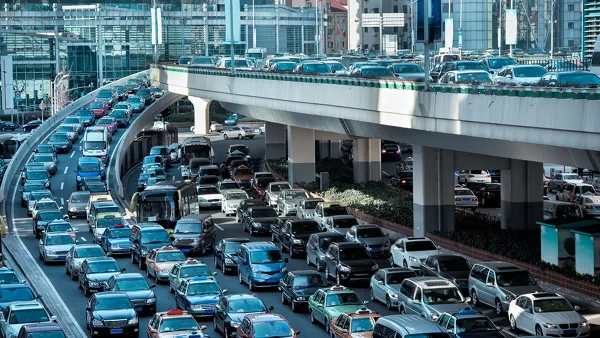
How Much of Traffic is Created by Uber and Lyft?
New data from Fehr & Peers shows services like Uber and Lyft account for a larger share of the total traffic than previously thought, especially in city centers.
Ride-Hailing Prices Skyrocket as the U.S. Emerges From the Pandemic
A shortage of drivers and spiking demand are driving Uber and Lyft prices higher than ever as the companies struggle to achieve profitability.
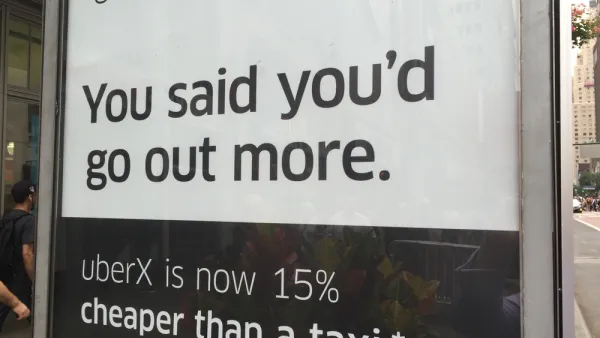
Report: Ride-Hailing Drastically Increases Vehicle Miles Traveled
New research published in Transport Policy finds that ride-hailing companies increase vehicle miles traveled of users by 97 percent in Chicago, 114 percent in New York City, and 118 percent in San Francisco.

The state-sanctioned urbicide of Austin
People don’t kill cities. Freeways do.

US to reduce Colorado River water deliveries to Mexico
A new Colorado Treaty amendment reduces Mexico’s Colorado River water allocation by 250,000 acre feet.

New Jersey’s second-largest city bans standalone data centers
Jersey City will continue to allow co-location facilities, such as those meant for research institutions that store their own data.

Amtrak not solely to blame for New Jersey commuter rail's unreliability, report finds
A new study from the Garden State Initiative found that NJ Transit’s budget grew 20% across a 4 year period, but reliability declined significantly over the same period.

EPA erases limits on planet-warming pollution from power plants
Under Monday’s plan, power plants would still have some limits on how much mercury, arsenic and other contaminants they can emit.

Phoenix announces new on-demand transit service, more frequent RAPID buses
Both new services will launch in October, and are part of Phoenix's Project Effective Access Solutions for Easing Congestion.

FREE Course: Walkable City 1: Why Walkability?
After describing his path towards focusing on walkability as the essence of good planning, Jeff Speck marches through his five principal reasons for making more walkable places.
Reinventing Malls: Planning Alchemy—Turning Gray Fields Into Gold
The course focuses on the opportunities and imperatives that shape reinvention of mall sites.

Eagle County Government
Harvard University Graduate School of Design
Nashville Planning Department
The Architects Foundation
University of Cincinnati Online
The Pocatello Development Authority
The Urban Renewal Agency of the City of Pocatello
Journal of the American Planning Association