Dr. Katharine Hayhoe is the leading expert in how to have difficult conversations about climate change—like the kind when facts aren't enough.


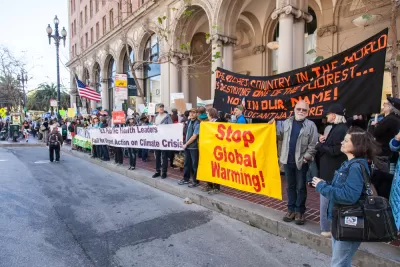
Conversations about climate aren’t always as simple as the realities of climate change: "Climate change is real. It’s us. It’s bad. And there are all kinds of solutions," according to the premise of an article by Aven Frey.
Frey is sharing the work of Dr. Katharine Hayhoe, who writes and lectures on the subject of climate change, and how to talk about climate change. Dr. Hayhoe recently wrote for Science on the same subject, and Frey caught her lecture in Washington in May.
Increasing numbers of Americans, liberal and conservative, say they are worried about climate change, but too many (including plenty of the people in charge, elected or otherwise) are in different stages of complacency or compartmentalization—or denial. Dr. Hayhoe says the best thing we can do is talk about climate change more with people we know—and in personal terms. She reminds us to start with values, not facts. Piling on more facts and data doesn’t work and can even backfire.
Frey answers the question why that last statement is true and reveals Dr. Hayhoe's three-part formula for climate change conversations: bond (find common ground and shared values), connect (find personal ways to show climate change matters), and inspire (demonstrate real-life successes).
Read the full story: THREE STEPS TO BETTER CLIMATE CONVERSATIONS
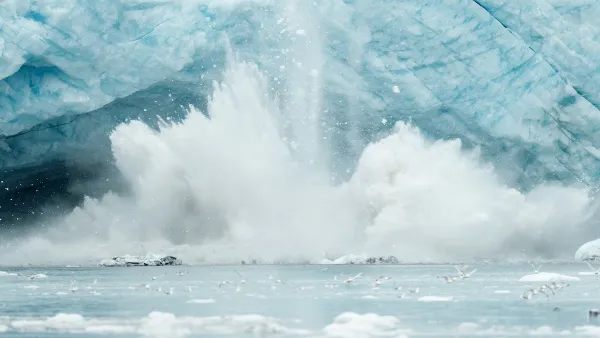
Who pays when a remote Alaska village can no longer stay?
A year after ex-Typhoon Halong, the struggle for two communities to find safer ground has become part of a national debate over who should bear the costs of the climate crisis.
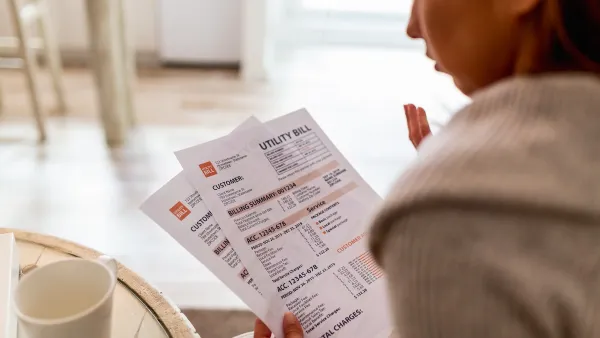
'Something we’ve never seen before:' rising utility rates could strain city finances nationwide
Data centers, climate change and other factors have caused utility rates in the United States to increase by 38% since 2020.
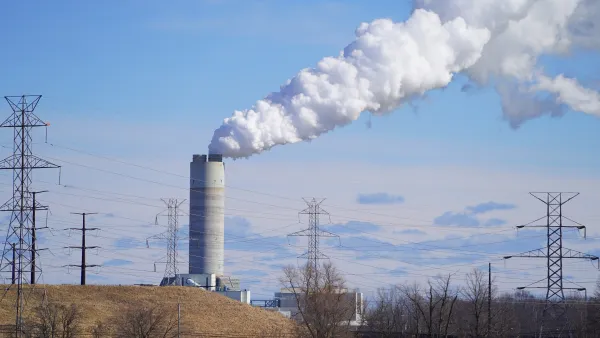
EPA erases limits on planet-warming pollution from power plants
Under Monday’s plan, power plants would still have some limits on how much mercury, arsenic and other contaminants they can emit.

Desperate measures: Advocates weigh draining Lake Powell to fill Colorado River
Draining the reservoir could reduce evaporation losses by a couple hundred thousand acre-feet.

Eastern Nebraska is running out of electricity
Data centers and electrification are straining eastern Nebraska’s grid, throttling economic development.

Malls are becoming the midtowns of the future
Mall and office park redevelopments are a generational opportunity to create new nodes of urbanity.

NYC breaks ground on anti-flooding infrastructure project
New York City's new system will reduce stormwater flows to local sewers by 90%.

One Kentucky town’s secret to affordable housing
The Smoketown Community Land Trust has already built seven affordable homes for community members.

Houston gains petal-shaped cooling infrastructure to make streets more ‘delightful’
The city has installed the pavilions along 15 blocks in Houston.

FREE Course: Walkable City 1: Why Walkability?
After describing his path towards focusing on walkability as the essence of good planning, Jeff Speck marches through his five principal reasons for making more walkable places.
Reinventing Malls: Planning Alchemy—Turning Gray Fields Into Gold
The course focuses on the opportunities and imperatives that shape reinvention of mall sites.

City of Rosemead
Rutgers University, Edward J. Bloustein School of Planning and Public Policy
One Hundred Miles
University of Michigan School for Environment and Sustainability (SEAS)
Hunter College, City University of New York (CUNY)
The Architects Foundation
City of Cambridge
Montrose County
The Pocatello Development Authority