Mayor Bowser's 2019 budget also continues investments designed to create affordable housing and distribute homeless shelters throughout the city.


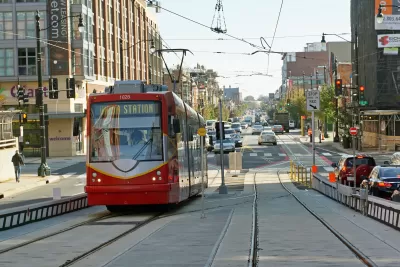
"The District would raise taxes on sales, commercial property and ride-hailing services such as Lyft and Uber to increase funding for Metro under the 2019 budget Mayor Muriel E. Bowser (D) proposed," The Washington Post reports.
Together, the taxes would raise about $80 million toward the $178.5 million that D.C. has committed to Metro as part of a joint plan with Maryland and Virginia to improve the regional transit system. They break down as follows, per the Post:
The commercial property tax rate would increase 2 cents from $1.85 per $100 of assessed value.
The sales tax would rise from 5.75 percent to 6 percent, smaller than the regional 1 percentage point sales tax increase that District leaders proposed as a permanent Metro funding source. The restaurant and hotels tax would also rise by a quarter- percentage point.
And the tax on gross receipts on "for-hire" vehicle services, passed onto customers as city fees on trips, would rise from 1 percent to 4.75 percent. That would mean a dime charge on a $10 trip would become a 47-cent charge.
Bowser's budget would also invest another $100 million in the District's beleaguered Housing Production Trust Fund, provide $6 million in relief for low-income residents' water bills, and allocate $10.9 million to complete the demolition of the "notorious" D.C. General Hospital homeless shelter, the Post reports.
FULL STORY: Bowser proposes tax increases, including on Lyft and Uber rides, to pay for Metro

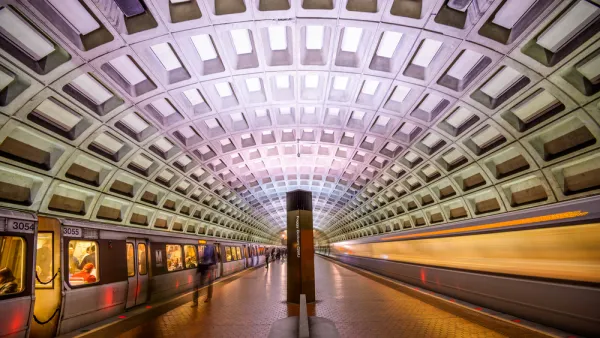
D.C. Metro to Test Free WiFi at Six Subway Stations
The beleaguered D.C.-area transit agency finally had something to talk about besides repair schedules, delays, and debt.
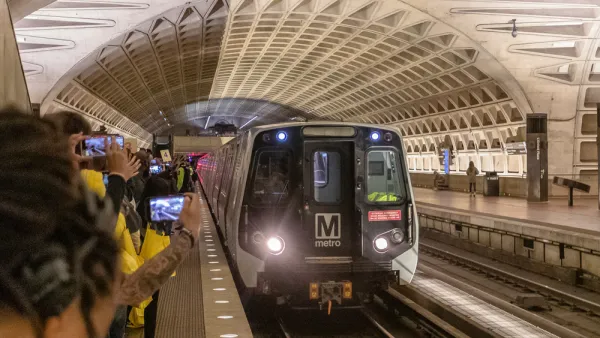
Congressman Proposes Bill to Rename DC Metro “Trump Train”
The Make Autorail Great Again Act would withhold federal funding to the system until the Washington Metropolitan Area Transit Authority (WMATA), rebrands as the Washington Metropolitan Authority for Greater Access (WMAGA).
Mobile App Makes DC Transit Easy to Navigate for Visually Impaired Riders
The app gives step-by-step directions and audio and visual cues accessible from anywhere for thousands of bus stops and rail stations.

The state-sanctioned urbicide of Austin
People don’t kill cities. Freeways do.

US to reduce Colorado River water deliveries to Mexico
A new Colorado Treaty amendment reduces Mexico’s Colorado River water allocation by 250,000 acre feet.

New Jersey’s second-largest city bans standalone data centers
Jersey City will continue to allow co-location facilities, such as those meant for research institutions that store their own data.

Amtrak not solely to blame for New Jersey commuter rail's unreliability, report finds
A new study from the Garden State Initiative found that NJ Transit’s budget grew 20% across a 4 year period, but reliability declined significantly over the same period.

EPA erases limits on planet-warming pollution from power plants
Under Monday’s plan, power plants would still have some limits on how much mercury, arsenic and other contaminants they can emit.

Phoenix announces new on-demand transit service, more frequent RAPID buses
Both new services will launch in October, and are part of Phoenix's Project Effective Access Solutions for Easing Congestion.

FREE Course: Walkable City 1: Why Walkability?
After describing his path towards focusing on walkability as the essence of good planning, Jeff Speck marches through his five principal reasons for making more walkable places.
Reinventing Malls: Planning Alchemy—Turning Gray Fields Into Gold
The course focuses on the opportunities and imperatives that shape reinvention of mall sites.

Eagle County Government
Harvard University Graduate School of Design
Nashville Planning Department
The Architects Foundation
University of Cincinnati Online
The Pocatello Development Authority
The Urban Renewal Agency of the City of Pocatello
Journal of the American Planning Association