Can a $52 million plan to close the D.C. General emergency shelter rely on the generosity of landlords in providing houses for the homeless?


Washington D.C. Mayor Vincent C. Gray last week announced a plan to close the beleaguered homeless shelter at the former D.C. General Hospital—"a plan that depends on persuading landlords and other property owners to free up units and buildings to shelter the homeless," reports Robert Samuels.
"The plan envisions the city leasing about 300 units between a half-dozen buildings sprinkled throughout the city" by convincing "charitable landlords" to accept rapid rehousing vouchers. According to the article by Samuels, that critical consideration has raised concerns about the tenability of the plan.
"In the past six months, the city has found more than 800 units for which landlords have been willing to accept rapid rehousing vouchers. Still, according to an Urban Institute study [pdf], the city is more than 22,000 units short of the number needed to house those who make less than 30 percent of the region’s median income, which is nearly $105,000."
Read the full story: Landlords face crisis of their own in D.C.’s push to house the homeless


The 'Latino Homeless Paradox'
The city of Philadelphia provides a case study of the so-called "Latino Homeless Paradox." There are many more low-income and homeless Latinos than reflected in the numbers of those using supportive services in the city.
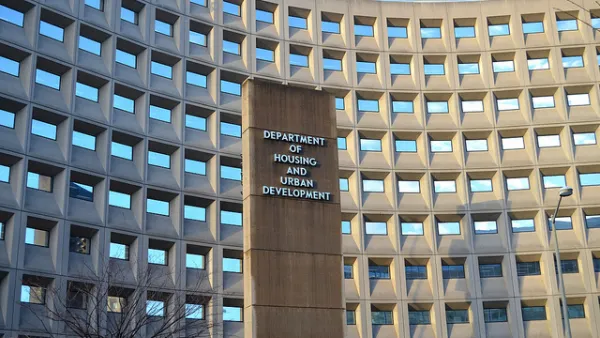
Carson: HUD No Longer Raising Rents for Subsidized Households
Blame it on the federal budget, says Department of Housing and Urban Development Secretary Carson.

'Housing Insights' Mapping Tool Designed to Preserve Subsidized Housing in D.C.
The Housing Insights team of volunteer civic hackers hopes you'll use their software in other cities, too.

Planetizen Federal Action Tracker
A weekly monitor of how Trump’s orders and actions are impacting planners and planning in America.

California plans to bury El Niño’s downpour
If the state plays its cards right, it may be able to store a billion acre-feet of El Niño’s water in aquifers.

Chicago breaks ground on $3 billion megadevelopment
The new neighborhood, titled Foundry Park, will one day host 3,700 residences.

California High-Speed Rail Authority CEO resigns after $600,000 scandal
Under Ian Choudri, the authority used taxpayer dollars to fund first class flights and trips to nightclubs.

Want to study the Missouri River? Soon, you may need unanimous approval from 10 states
Legislation would require 10 governors’ permission to study or build projects moving water outside the basin.

Desperate measures: Advocates weigh draining Lake Powell to fill Colorado River
Draining the reservoir could reduce evaporation losses by a couple hundred thousand acre-feet.

FREE Course: Walkable City 1: Why Walkability?
After describing his path towards focusing on walkability as the essence of good planning, Jeff Speck marches through his five principal reasons for making more walkable places.
Reinventing Malls: Planning Alchemy—Turning Gray Fields Into Gold
The course focuses on the opportunities and imperatives that shape reinvention of mall sites.

City of Rosemead
Rutgers University, Edward J. Bloustein School of Planning and Public Policy
One Hundred Miles
Hunter College, City University of New York (CUNY)
The Architects Foundation
University of Cincinnati Online
City of Cambridge
Montrose County
The Pocatello Development Authority