To close a $14 million budget shortfall, TriMet may scale back aspects of the planned bus line.


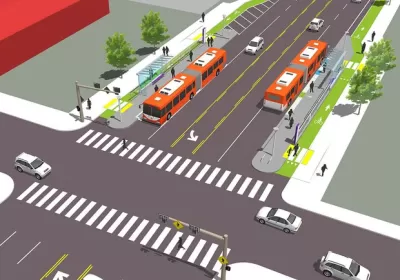
"A proposal to run a high-capacity express line bus along Southeast Division Street between Gresham and Portland faces a $14 million shortfall, and resolving it could delay the project by a year," reports Elliot Njus for Oregon Live. The line's new opening date would be in 2022.
The Division Transit Project—described by transit writer Jarrett Walker as not-quite-a-BRT—would run between Downtown Portland and the Cleveland Park & Ride in Gresham, a route that sees more than 10,000 rides every day. The new line is expected to cut travel times by 20 percent.
The cost of new, larger buses, as well as infrastructure improvements along the route, have brought the project's budget from $175 million to $189 million, potentially making it ineligible for federal funding this year. The project has already been scaled down to cut costs, and further reductions are on the table:
Some possible cost-cutting options include redesigning certain intersections to minimize the need to buy roadside real-estate and reducing the height of boarding platforms at stops, which would require riders to step up to the bus. The rapid line buses would have ramps.
FULL STORY: Division transit project likely delayed due to budget shortfall

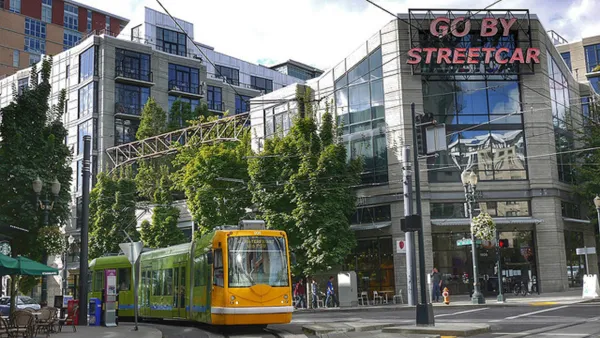
New Details for Portland's Transit Plan as Voters Head to the Polls
Voters in Portland-area voters will decide on a transportation funding measure for the "Get Moving 2020" plan, with details of four bus rapid transit project targeted for funding announced within weeks of the election.
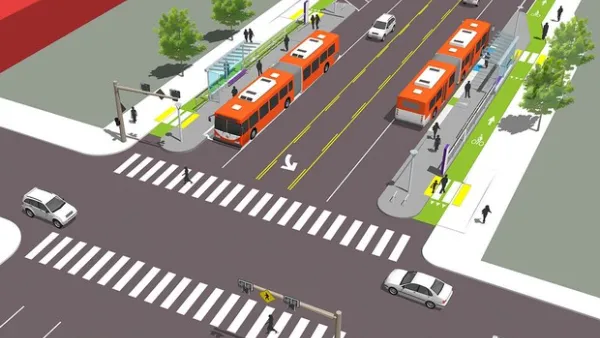
Funding Pieces Starting to Come Together for Portland Bus Rapid Transit Project
The Division Transit Project recently received some badly needed funding from the city of Portland, finally reversing a streak of bad news. The project will still need a substantial allocation from the federal government.
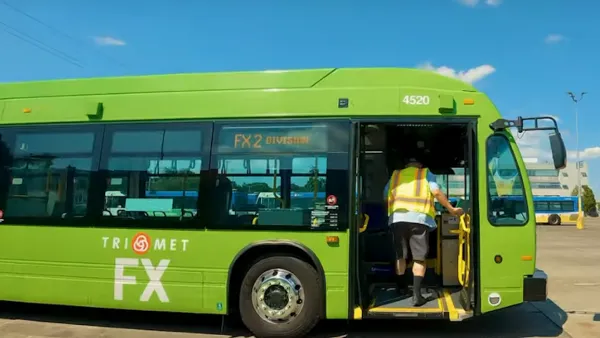
Portland ‘BRT Light’ Line Shows Promise
Despite not having fully dedicated bus lanes, Portland’s new ‘light’ bus rapid transit line is significantly reducing travel times.

The state-sanctioned urbicide of Austin
People don’t kill cities. Freeways do.

US to reduce Colorado River water deliveries to Mexico
A new Colorado Treaty amendment reduces Mexico’s Colorado River water allocation by 250,000 acre feet.

New Jersey’s second-largest city bans standalone data centers
Jersey City will continue to allow co-location facilities, such as those meant for research institutions that store their own data.

Amtrak not solely to blame for New Jersey commuter rail's unreliability, report finds
A new study from the Garden State Initiative found that NJ Transit’s budget grew 20% across a 4 year period, but reliability declined significantly over the same period.

EPA erases limits on planet-warming pollution from power plants
Under Monday’s plan, power plants would still have some limits on how much mercury, arsenic and other contaminants they can emit.

Phoenix announces new on-demand transit service, more frequent RAPID buses
Both new services will launch in October, and are part of Phoenix's Project Effective Access Solutions for Easing Congestion.

FREE Course: Walkable City 1: Why Walkability?
After describing his path towards focusing on walkability as the essence of good planning, Jeff Speck marches through his five principal reasons for making more walkable places.
Reinventing Malls: Planning Alchemy—Turning Gray Fields Into Gold
The course focuses on the opportunities and imperatives that shape reinvention of mall sites.

Eagle County Government
Harvard University Graduate School of Design
Nashville Planning Department
The Architects Foundation
University of Cincinnati Online
The Pocatello Development Authority
The Urban Renewal Agency of the City of Pocatello
Journal of the American Planning Association