Donald Trump ran on an "America First" platform for president. The latest news from the climate talks in Bonn, Germany, though, shows that it is now "America Alone" in terms of nations who haven't adopted the Paris climate agreement.



"Syria’s decision to join the accord brought another round of rebukes for the Trump administration," adds Dennis.
Trump’s decision drew swift, sharp condemnation from foreign leaders, environmental groups and corporate titans, who argued that the U.S. exit from the Paris accord would represent a failure of American leadership in the face of irrefutable scientific evidence.
"As if it wasn’t already crystal clear, every single other country in the world is moving forward together to tackle the climate crisis, while Donald Trump’s has isolated the United States on the world stage in an embarrassing and dangerous position,” Michael Brune, executive director of the Sierra Club, said in a statement.
"Irrefutable scientific evidence" is not how Trump's nominee to lead the White House’s Council on Environmental Quality sees climate change, though, reports Chris Mooney for The Post on Nov. 8.
Kathleen Hartnett White, President Trump’s pick to serve as his top White House environmental official, told the Senate Wednesday that she had doubts about the link between human activity and climate change.
“I’m not a scientist, but in my personal capacity, I have many questions that remain unanswered by current climate policy,” Hartnett White, told senators Wednesday at her confirmation hearing. “I think we indeed need to have more precise explanations of the human role and the natural role.”
Of course, she is not alone in that belief. Scott Pruitt, administrator of the U.S. Environmental Protection Administration, also disputes that human activity contributes to climate change.
Hat tip to Chris Mooney, editor of Washington Post Energy and Environment newsletter.
FULL STORY: As Syria embraces Paris climate deal, it’s the United States against the world

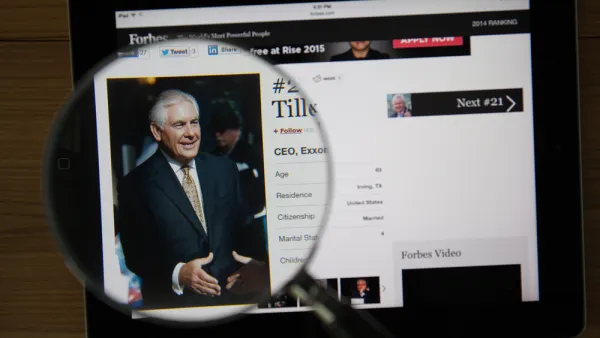
The Surprising Climate Change Believer Among Trump's Cabinet Picks
Compared to nominees for cabinet positions that deal with energy and the environment, Rex Tillerson, Trump's choice for Secretary of State, appears to be the only 'climate believer' even though he heads America's largest oil and gas corporation.
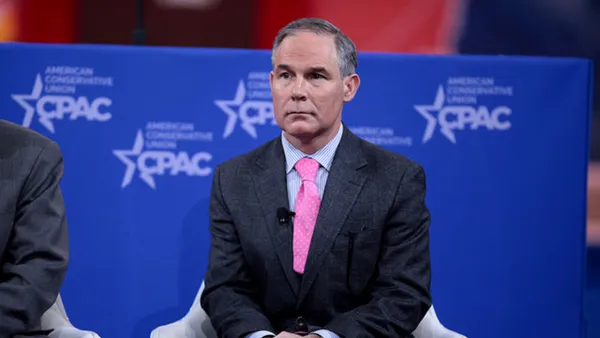
Pressure on Trump Administration to Release Climate Report
Scientist are concerned that a congressionally mandated climate assessment, originally authorized under President George H.W. Bush, may not be released by the Trump Administration because it contradicts their rejection of climate science.
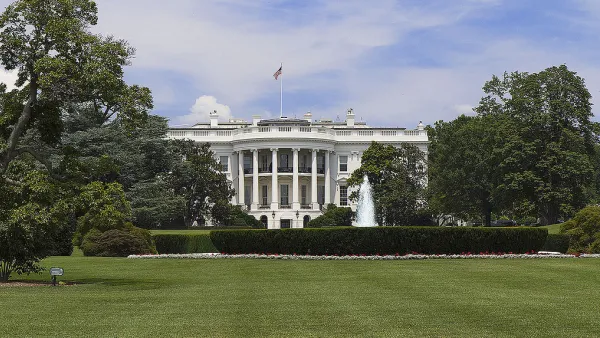
Next White House Struggle: Whether to Exit the Paris Climate Agreement
Ending Obama's so-called "war on coal" may go international with the exit from the December 2015 Paris Climate Agreement if EPA Administrator Scott Pruitt has his way, but he may encounter formidable opposition from Trump's administration and family.

The state-sanctioned urbicide of Austin
People don’t kill cities. Freeways do.

US to reduce Colorado River water deliveries to Mexico
A new Colorado Treaty amendment reduces Mexico’s Colorado River water allocation by 250,000 acre feet.

New Jersey’s second-largest city bans standalone data centers
Jersey City will continue to allow co-location facilities, such as those meant for research institutions that store their own data.

Amtrak not solely to blame for New Jersey commuter rail's unreliability, report finds
A new study from the Garden State Initiative found that NJ Transit’s budget grew 20% across a 4 year period, but reliability declined significantly over the same period.

EPA erases limits on planet-warming pollution from power plants
Under Monday’s plan, power plants would still have some limits on how much mercury, arsenic and other contaminants they can emit.

Phoenix announces new on-demand transit service, more frequent RAPID buses
Both new services will launch in October, and are part of Phoenix's Project Effective Access Solutions for Easing Congestion.

FREE Course: Walkable City 1: Why Walkability?
After describing his path towards focusing on walkability as the essence of good planning, Jeff Speck marches through his five principal reasons for making more walkable places.
Reinventing Malls: Planning Alchemy—Turning Gray Fields Into Gold
The course focuses on the opportunities and imperatives that shape reinvention of mall sites.

Eagle County Government
Harvard University Graduate School of Design
Nashville Planning Department
The Architects Foundation
University of Cincinnati Online
The Pocatello Development Authority
The Urban Renewal Agency of the City of Pocatello
Journal of the American Planning Association