A new plan in San Francisco aims to reduce the city's chronically homeless population 50 percent by December 2022. Other goals include ending family homelessness and eliminating large, long-term tent encampments.


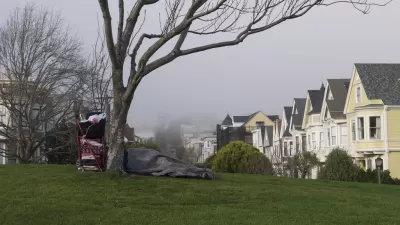
The city of San Francisco has announced a "Five-Year Strategic Framework" that sets ambitious targets to reduce homelessness by 2022.
Kevin Fagan reports on the new plan, calling it San Francisco's most ambitious homelessness strategy in a decade. The thinking on the plan is too bundle all the city's homeless strategies to better coordinate services.
"That coordination will come through what he has dubbed the Homelessness Response System, which will tie together the 15 independent databases now being used to track homeless people through housing, medical and other services," according to Fagan.
The plan will also expand the Moving On Initiative and calls for 1,367 new supportive housing units.
FULL STORY: SF’s ambitious homeless strategy seeks sharp cuts, coordinated outreach

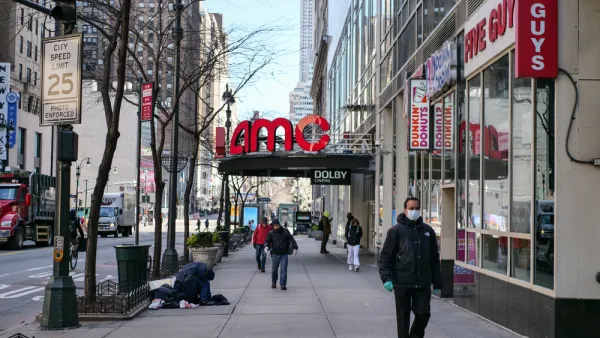
Late Action, Local Opposition Frustrate Emergency Homeless Shelter Plans
Some progress, but not nearly enough, has been reported as California and its cities scramble to procure temporary shelters to house homeless people during the pandemic.
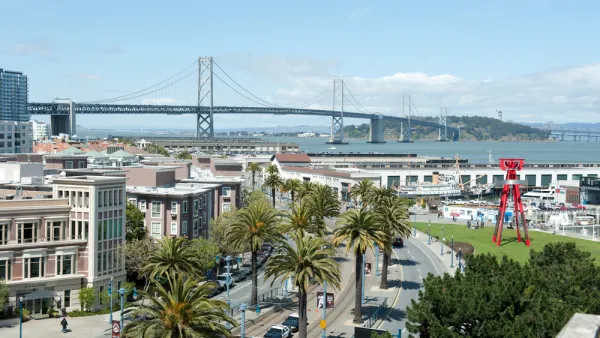
Amid Opposition, S.F. Homeless Navigation Center Completed
A new facility providing shelter and services to San Francisco’s homeless will open this month, even after a year of community pushback.

A 'Safe' Parking Lot for the Homeless Proposed in San Francisco
If approved, a new facility in San Francisco will allow homeless people living in RVs and vans a safe place to park. Access to support services will also be available at the site.

The state-sanctioned urbicide of Austin
People don’t kill cities. Freeways do.

US to reduce Colorado River water deliveries to Mexico
A new Colorado Treaty amendment reduces Mexico’s Colorado River water allocation by 250,000 acre feet.

New Jersey’s second-largest city bans standalone data centers
Jersey City will continue to allow co-location facilities, such as those meant for research institutions that store their own data.

Amtrak not solely to blame for New Jersey commuter rail's unreliability, report finds
A new study from the Garden State Initiative found that NJ Transit’s budget grew 20% across a 4 year period, but reliability declined significantly over the same period.

EPA erases limits on planet-warming pollution from power plants
Under Monday’s plan, power plants would still have some limits on how much mercury, arsenic and other contaminants they can emit.

Phoenix announces new on-demand transit service, more frequent RAPID buses
Both new services will launch in October, and are part of Phoenix's Project Effective Access Solutions for Easing Congestion.

FREE Course: Walkable City 1: Why Walkability?
After describing his path towards focusing on walkability as the essence of good planning, Jeff Speck marches through his five principal reasons for making more walkable places.
Reinventing Malls: Planning Alchemy—Turning Gray Fields Into Gold
The course focuses on the opportunities and imperatives that shape reinvention of mall sites.

Eagle County Government
Harvard University Graduate School of Design
Nashville Planning Department
The Architects Foundation
University of Cincinnati Online
The Pocatello Development Authority
The Urban Renewal Agency of the City of Pocatello
Journal of the American Planning Association