Exclusives

FEATURE
What Is a 'Great' Neighborhood? An Analysis of APA's Top-Rated Places
A study recently published in the Journal of the American Planning Association finds that the APA's definition of "great neighborhoods" might be leaving low-income and minority populations behind.

BLOG POST
2015 Urban Mobility Scorecard: Still Measuring Urban Travel Conditions Incorrectly
The new Urban Mobility Scorecard measures traffic congestion with greater precision, but incorrectly. As with previous editions, it exaggerates congestion costs and undervalues the congestion reduction benefits of alternative modes and Smart Growth.

BLOG POST
Cities, the Middle Class, and Children
Joel Kotkin argues that Jane Jacobs's insights are of limited value because cities are no longer useful for middle-class families.

BLOG POST
Smart Planning for Economic Opportunity
The Center for Opportunity Urbanism has a wonderful goal—to improve economic opportunities for working class households—but uses terrible research to reach confusing recommendations about which policies are best. Please do better!
BLOG POST
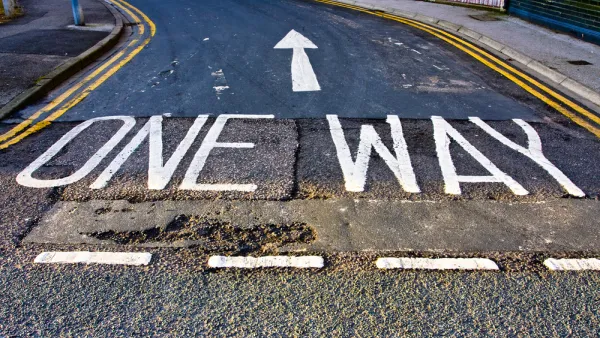
America's Streets: Two Ways to Urban Regeneration
Dr. William (Billy) Riggs guest blogs about his new research in Journal of Planning Education & Research. Dr. Riggs is Assistant Professor at Cal Poly San Luis Obispo focusing on quantitative community analysis and urban planning policies.

BLOG POST
A State of Thirst
In the middle of a population boom, Texas is looking across state lines for more water. The U.S. Supreme Court said no the first time; does that mean it will say no again?

BLOG POST
Transportation Apps Designed to Ease the Commute
We all travel, so it's great when a handy new mobile app makes it easier to move around. Whether it is navigating the city, parking, or making our ride safer, there is likely a transportation app for that.

BLOG POST
Better City-Making Means Breaking Down Silos—Here's How
How can city hall leaders break down silos between departments and disciplines, and get to a more holistic approach to city-making? It takes more than just organizational restructuring—it takes real culture change. Here's how.

FEATURE
NIMBY Obstruction and the Density Paradox
An op-ed describes a paradox produced by the ongoing debates over density while also presenting potential solutions for overcoming the resulting impasse.

BLOG POST
The Failure of Preservation
Attempts to limit new construction to preserve neighborhood character are an example of "beggar thy neighbor" politics.
BLOG POST
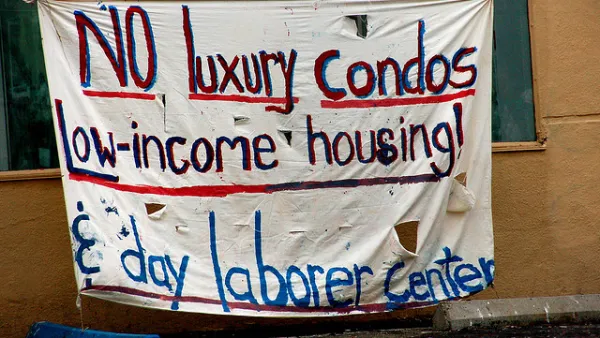
What's the Matter With the Planning Process?
Current planning models places housing affordability and preservation fundamentally at odds with one another. We must be willing to re-evaluate our processes if we are to truly move forward.
FEATURE
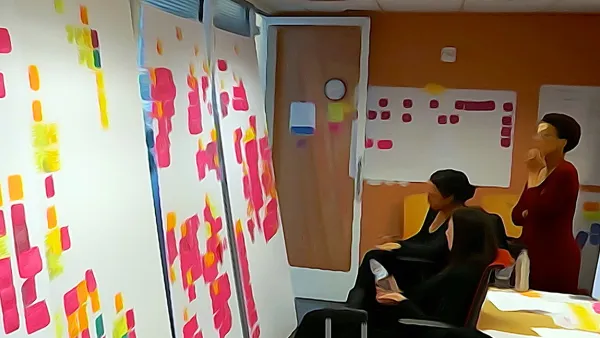
Innovating the Planning Process Through Community-Centered Design
Sean O'Malley and Andrew Watkins, of the landscape architecture, planning, and urban design firm SWA, describe the benefits of a design process that empowers people and communities to participate.

BLOG POST
More Rational Analysis Of Seniors' Driving Risks And Safety Strategies
A new American Automobile Association study argues that efforts to reduce driving by higher-risk seniors threaten their health. This analysis is backward: seniors benefit most from reduced driving and improved transport options.

FEATURE
Planners Across America: Josh Whitehead Helps Memphis Live Within Limits
Josh Whitehead, planning director of the Memphis and Shelby County Office of Planning & Development (OPD), discusses competing with suburbs, implementing a new zoning code, and redeveloping, for a second time, historic streetcar corridors.

BLOG POST
I Use the Word 'Vibrant' (and You Can Too)
Planners and designers should not be afraid to reclaim overused and misused words—as long as they know what they're doing.

BLOG POST
Not Racist—but Similar to Racism
Low-density zoning is not racist in the narrowest sense of the term—but it does have similar goals to racist housing policies and creates similar problems.
BLOG POST
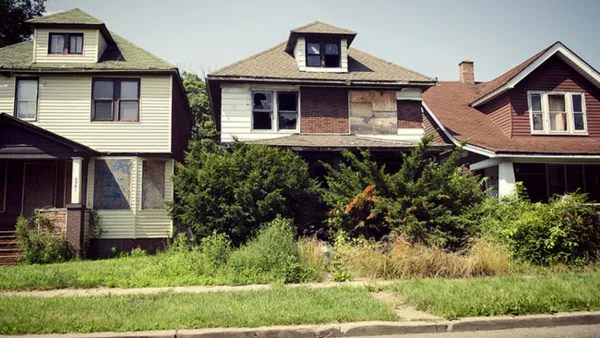
A Better Solution to Reusing Abandoned Property: Evidence from Flint and Detroit
Margaret Dewar of the University of Michigan blogs about her new article in Journal of Planning Education and Research, which investigates reuse of abandoned property in Detroit and Flint. You can download the article free until August 31, 2015.

BLOG POST
Celebrating Chicago's Must-See Public Realm (Part 1)
Chicago has recently opened some of the most exciting urban landscapes we have seen in a while. And, as with New York and other cities, landscape architects are leading the charge.

BLOG POST
A Sad Goodbye to Peter Lindsay Schaudt
The death of the Chicago landscape architect, Peter Schaudt, leaves an unfinished body of work and a deep void within the profession that adored him.

BLOG POST
Airbnb and Affordable Housing, Part 2
This post discusses the argument that even if Airbnb affects an extremely small portion of the rental market, it still matters because of the low vacancy rates of some cities.
City of Rosemead
Rutgers University, Edward J. Bloustein School of Planning and Public Policy
One Hundred Miles
University of Michigan School for Environment and Sustainability (SEAS)
Hunter College, City University of New York (CUNY)
The Architects Foundation
City of Cambridge
Montrose County
The Pocatello Development Authority

FREE Course: Walkable City 1: Why Walkability?
After describing his path towards focusing on walkability as the essence of good planning, Jeff Speck marches through his five principal reasons for making more walkable places.
Reinventing Malls: Planning Alchemy—Turning Gray Fields Into Gold
The course focuses on the opportunities and imperatives that shape reinvention of mall sites.











